
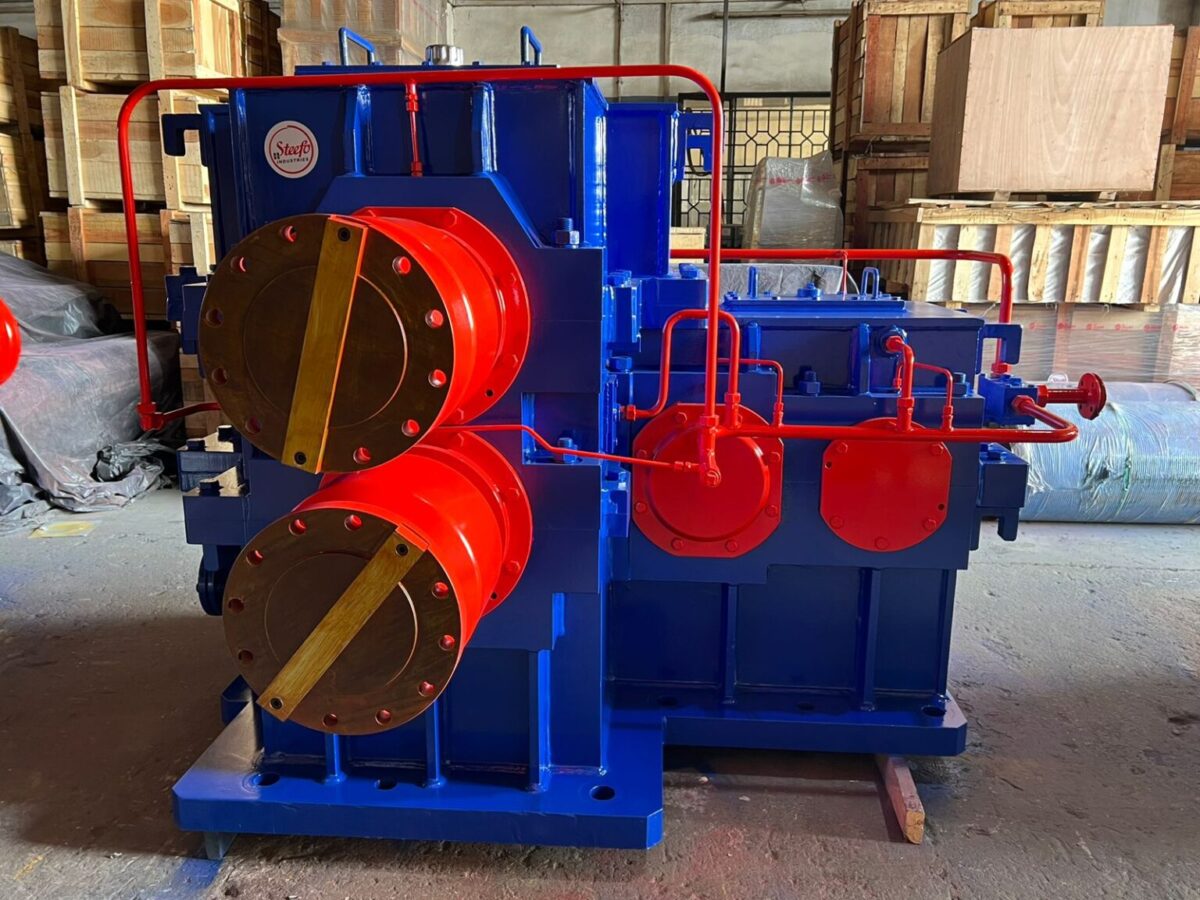
In a hot rolling mill, the gearbox is the silent engine. It works behind the scenes to keep production moving. If it fails, the entire production line grinds to a halt. Your return on investment stops immediately.
TMT and structural steel plants face hard challenges every day. You deal with high shock loads and extreme heat. You also run operations 24 hours a day. These environments destroy standard equipment. That is why choosing the right rolling mill gearbox is the most critical decision for a plant engineer.
This guide provides a technical roadmap for you. It will help you select a gearbox that ensures maximum uptime and energy efficiency. We will look at what makes a gearbox last longer and perform better in a heavy duty setting.
Technical Requirements for TMT and Structural Mills
Every steel plant is different. A plant making TMT bars has different needs than one making heavy structural beams. A universal solution simply does not work in this industry. You need to understand the specific stresses your rolling mill places on the drive system.
Handling High Shock Loads in Rolling
Rolling steel involves violence. When a hot billet enters the mill stand, it creates a massive shock. This is called an impact load. This happens thousands of times a day in a TMT plant.
Standard industrial gearboxes are not built for this. They are built for steady and smooth running. If you use a standard box, the gear teeth will crack under the shock. You need a rolling mill gearbox explicitly designed for high impact. The internal components must absorb this energy without breaking. This protects the rest of your machinery from damage.
Balancing Speed and Torque Requirements
Different parts of your mill need different things. The roughing stands are at the start of the line. They need vast amounts of torque to reduce the thick billet. They run at slower speeds but push very hard.
The finishing stands are at the end. They need high speed to shape the final product. For TMT bars or wire rods, these speeds are breakneck. Your gearbox selection must match these specific zones. A gearbox meant for high torque will overheat if you force it to run at high finishing speeds. You must match the gear ratio and design to the specific stand in the layout.
The Importance of Duty Cycle in Steel Plants
Manufacturing plants often talk about duty cycles. A standard machine might run for eight hours and then rest. A steel plant does not have that luxury. You likely run a continuous duty cycle.
This means the rolling mill gearbox never gets a chance to cool down naturally. It is under constant stress for weeks or months. The design must account for this non-stop operation. The bearings and gears must be rated for infinite life under these loads. If you ignore the duty cycle, you will face premature fatigue failure.
Engineering Checklist for Selecting the Best Rolling Mill Gearbox
You need a strict checklist when evaluating suppliers. Do not just look at the price tag. Look at the engineering inside the box. Here are the key criteria you must evaluate.
Why Gear Geometry and Design Matter
The shape of the gear teeth determines performance. Old mills used spur gears. These have straight teeth. They are noisy and cannot handle smooth load transfers.
Modern high-performance mills use helical gears. The teeth are cut at an angle. This allows more than one tooth to be in contact at a time. It spreads the load out over a larger area. The result is a much quieter operation and higher strength.
You should also look for hardened and ground gears. The manufacturing process matters. We recommend Double Helical or Herringbone gears for heavy loads. They cancel out axial thrust forces. This removes the need for massive thrust bearings and simplifies the design.
The Value of Case Carburising
Surface hardness is non-negotiable. The best gearboxes undergo a process called Case Carburising. This is a heat treatment method. It adds carbon to the surface of the steel gears.
This process creates a tough outer shell. This shell resists wear and pitting from metal-on-metal contact. However, the inside or core of the gear remains tough and slightly softer. This is crucial. If the whole gear were rugged, it would shatter like glass when the billet hits the stand. The soft core allows the gear to flex slightly and absorb shock. This combination gives you long life and durability.
Managing Heat with Thermal Ratings
Heat is the enemy of machinery. A rolling mill gearbox generates its own heat from friction. It also sits in a hot environment near red-hot steel. If the gearbox gets too hot, the oil breaks down. When the oil fails, metal touches metal.
You must check the thermal rating of the unit. The gearbox must be able to dissipate heat effectively. Look for designs with large surface areas on the housing.
For larger units, passive cooling is not enough. You need internal cooling coils. These circulate cool water through the oil sump. You might also need external heat exchangers. These pump the oil out, cool it down, and put it back in. Ensure your supplier calculates the thermal rating based on your specific plant temperature, not a standard lab environment.
Selecting the Right Housing and Rigidity
The outer shell of the rolling mill gearbox is the housing. It holds everything in place. It must be rigid. If the housing flexes under load, the gears inside will misalign. This leads to rapid wear.
There is a shift happening in the industry. Manufacturers are moving from standard cast iron to Graded Cast Iron or Fabricated Steel housings. Fabricated steel is excellent for custom sizes and high strength. It handles shock loads better than brittle cast iron. The housing should also have internal ribs. These ribs add strength and help dampen vibration. Less vibration means a quieter mill and less wear on bearings.
The Steefo Advantage Through Advanced Design Software
Engineering has moved beyond manual calculations. Today, we use advanced software to predict the future. At The Steefo Group, we believe in simulation before fabrication.
Precision Engineering with KISSsoft
We utilise advanced tools like KISSsoft. This is a powerful gear calculation software. It allows engineers to model the entire drive train. We can simulate real-world stresses before a single piece of steel is cut.
This software lets us test different gear profiles. We can see exactly how the contact patch shifts under load. We can adjust the micro-geometry of the teeth to ensure perfect meshing. This eliminates guesswork. When you receive a gearbox designed this way, you know it will perform. It has already passed the test in the digital world.
Optimisation for Energy Efficiency
Energy costs are a considerable part of your operational expenses. An inefficient rolling mill gearbox wastes power. It turns expensive electricity into useless heat.
Software-driven design allows for optimisation. We can reduce the weight of the gears without sacrificing strength. We can optimise the oil flow to reduce churn losses. Churning happens when gears splash through too much oil. This creates drag. By optimising the internal design, we reduce this drag. The result is a gearbox that transfers more power to the rolls and wastes less energy. Over a year, this saves you a significant amount on power bills.
Common Pitfalls to Avoid When Selecting Rolling Mill Gearbox
Even experienced engineers make mistakes. Avoiding these common errors will save you money and frustration.
The High Cost of Under-Sizing Gearboxes
The biggest mistake is under-sizing. This usually happens to save money on the initial purchase. You might choose a smaller box that barely meets the requirements.
This is a false economy. A cheaper, underpowered rolling mill gearbox will fail. It might last six months instead of ten years. When it fails, you lose production. The cost of downtime in a steel plant is enormous. It costs ten times more than the money you saved on the purchase. Always buy the gearbox that meets your peak loads, not just your average loads.
Ignoring the Lubrication System
Lubrication is the lifeblood of the gearbox. Many buyers ignore the lubrication method. There are two main types. These are splash lubrication and forced lubrication.
Splash lubrication works by gears dipping into oil. This is fine for simple, slow applications. It is often risky for high-performance mills. If the speed is too slow, the oil does not splash enough. If it is too fast, the oil foams up.
Forced lubrication is superior for critical stands. A pump forces oil directly into the bearings and gear mesh. It ensures a constant film of oil regardless of speed. It also filters the oil to remove metal particles. Do not compromise on this system.
Neglecting Maintenance Accessibility
Machines need maintenance. Engineers often forget to check how easy the gearbox is to fix. A complex design might look good on paper but be a nightmare to service.
Choose a design with a split housing if possible. This allows you to lift the top off to inspect the gears. Look for large inspection covers. You should be able to check the condition of the gear teeth without dismantling the whole unit. Ensure the oil drain and fill points are easy to reach. If maintenance is hard, your team will skip it. This leads to failure.
Integration and Matching the Motor to the Mill Stand
A rolling mill gearbox does not work alone. It is the middleman. It connects the motor (the prime mover) to the pinion stand.
You must view this as a complete system. The alignment between these three components is critical. Even a slight misalignment creates a huge vibration. This vibration destroys couplings and bearings.
You also need to match the inertia. The motor and gearbox should work in harmony. If the gearbox is too heavy for the motor to accelerate, you will have starting issues. If the motor is too powerful for the gearbox, you risk snapping shafts.
This is the benefit of choosing an integrated solution provider like Steefo. We look at the whole picture. We match the motor torque characteristics to the gearbox capability. We ensure the base plate is rigid enough to hold the alignment. When these components work in perfect harmony, you get a smooth rolling process.
Final Insights
The heart of your TMT or structural steel plant is the rolling mill. The strength of that heart depends on the rolling mill gearbox. It is a complex piece of engineering that demands respect.
You must look beyond the catalogue specs. Consider the shock loads and the heat. Demand high service factors and modern gear geometry. Insist on advanced design verification. By avoiding common pitfalls and focusing on quality integration, you ensure your mill runs efficiently for years.
Investing in the right rolling mill gearbox is an investment in your peace of mind. It ensures that when you push the start button, production flows smoothly.
Optimise Your Rolling Mill’s Performance with The Steefo Group
Your rolling mill is the heartbeat of your business. Every minute of downtime costs you revenue and disrupts your supply chain. You cannot afford to gamble with generic, off-the-shelf drive solutions that fail under pressure. It is time to upgrade to a system designed specifically for the rigorous demands of your plant.
At The Steefo Group, we do not just sell rolling mill gearboxes. We engineer reliability. Whether you are upgrading an existing structural mill or setting up a brand new TMT line, our team uses advanced simulation tools to build drives that handle the heat, shock, and speed of modern production. We ensure your power transmission is seamless and highly efficient.
Stop settling for frequent maintenance breaks and energy wastage. Partner with a turnkey manufacturer that truly understands the science of steel rolling. We provide fully integrated solutions that match your motor, gearbox, and mill stand perfectly for maximum output.
Take the next step toward a more profitable and stable operation. Reach out to our engineering experts today at +91 87589 98607 or write to us at marketing@thesteefogroup.com. Let us assess your current setup and calculate the perfect drive solution to meet your production goals.
3 replies on “How to Choose the Right Rolling Mill Gearbox for TMT and Structural Steel Plants”
[4259]Okbay | Link vào tải app game bài đổi thưởng uy tín,Truy cập okbay để trải nghiệm game bài đổi thưởng uy tín. Hướng dẫn cách chơi baccarat trực tuyến và nạp tiền casino qua momo nhanh chóng. Tải app ngay! visit: okbay
I’ve tried many platforms but this one really hits different. The games are smooth and the payouts are actually fair. Definitely recommend checking out phnewjilislot if you want a great experience.
Finally found a reliable way to access my account. The interface is super smooth and the login process is quick. Highly recommend yes365login for everyone.