
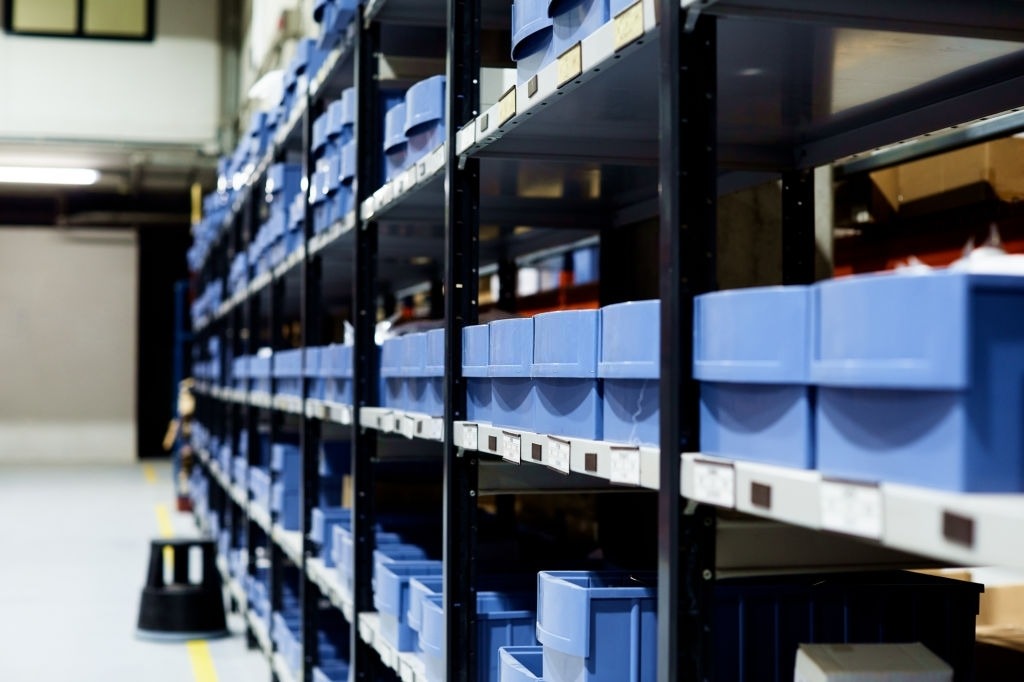
Many rolling mills rarely run short of consumables. What stops them is the one component nobody thought to stock: a pinion, a roll chock set, a drive coupling. The storeroom is full, the maintenance team is busy, and the mill still sits idle for weeks because the part on the failure report has a long delivery time. Good spare parts inventory planning for a rolling mill is less about holding more stock and more about holding the right quantity of the right parts, with a clear trigger for when to order the next one.
Rolling mill spare parts inventory planning is the process of deciding which critical components to keep on site, how many of each to hold, and when to reorder. The rule: hold a spare whenever the supplier’s lead time plus fitting time is longer than the stoppage your plant can absorb, and reorder the moment that spare is used.
That rule replaces guesswork with two numbers you can measure: how long a replacement really takes to arrive and be fitted, and how long your mill can afford to stand still. This guide shows how to put real figures on both. It then turns them into an answer on how many spare parts to stock for gearboxes, mill stands, shears, cooling beds and motors, and explains how to set reorder triggers that start the clock before a failure rather than after it.
Why “Just Stock More” Isn’t a Strategy
Stocking more of everything feels safe, but it quietly fails in two ways. Capital gets locked into parts that may never be used, and inventory carrying costs are commonly estimated at 20 to 30 per cent of an item’s value every year once storage, insurance, deterioration and obsolescence are counted. Meanwhile the shelf still has gaps, because a larger stock list does not tell you which absent part would stop the mill.
The more useful split is between parts that wear out predictably and parts that fail rarely but badly. Wear items such as shear blades, brushes, guides and liners are consumed on a rhythm, so a usage-based reorder rule handles them well. Rare-failure parts such as gearbox internals, bearings in a finishing stand or a main drive armature behave differently: you may go years without needing one, and the day you do, the lead time decides the outcome. These are the insurance spares, and they need a different logic from routine stock.
Many plants are well supplied with routine factory consumables yet thin on exactly the parts that carry the most downtime risk. This guide assumes you already know which components count as critical spares. If the question in front of you is whether to buy a part from the original manufacturer or an alternative source, that decision is covered separately below; here the focus is quantity and timing.
The One Number That Should Drive Your Stockholding: Supplier Lead Time
Replenishment lead time is the full period from placing an order to having a ready-to-install part on the shop floor. It includes manufacturing or machining, heat treatment and testing where relevant, transport, any import clearance, and your own receiving and inspection. Plants often plan around the figure in the quotation, but the number that matters is what actually happened on the last few orders. Quoted lead times tend to be optimistic, so it pays to record the order date and the receipt date for every critical part and plan around the slower of the recent results.
How long can lead times run? One published steel-plant maintenance guide puts replacement gearboxes for large finishing-mill stands on hot strip mills at six to eighteen months. That is a flat-product mill at the extreme end, and bar and section mill gearboxes are smaller, but the principle carries across: for precision-engineered parts, delivery is measured in weeks or months, not days.
The second number is the stoppage your plant can tolerate. Work it out from money rather than instinct. Hourly stoppage cost is roughly tonnes per hour multiplied by the contribution you earn per tonne, plus fixed costs that continue and orders that slip. As a placeholder, suppose a bar mill rolls 20 tonnes an hour and earns ₹3,000 a tonne after variable costs. One hour of stoppage costs ₹60,000 in lost contribution, and a ten-day outage of continuous running costs about ₹1.44 crore. Now suppose a spare assembly is priced at ₹15 lakh, with a carrying cost of 25 per cent a year, or ₹3.75 lakh. One such outage costs roughly 38 times the annual cost of holding the spare. These figures are illustrative, so replace them with your own, but the comparison is the one that justifies or rejects a spare.
| If replacement lead time plus fitting time is… | It means… | Stock position |
|---|---|---|
| Well inside your tolerable stoppage | The supplier can cover the gap | No complete spare on site; get the delivery commitment in writing |
| Close to your tolerable stoppage | One late delivery tips you over | Hold one spare, because lead time variability is the risk |
| Much longer than your tolerable stoppage | A failure means a long stoppage | Hold one complete assembly or full set of internals, and repair the failed unit as the next spare |
How Many Spare Parts to Stock, by Equipment Type
Spare parts inventory planning for a rolling mill works part by part, not across the whole storeroom. Three factors set the quantity for any part: how many identical positions share it, how bad the consequence is if it fails, and whether a failed unit can be repaired and reused. A spare that serves four identical stands is a far better investment than one that serves a single unique position, and a part that can be refurbished returns to stock instead of being scrapped. The quantities below are starting points to adjust against your own failure history and lead times, not fixed standards.
Gearboxes & Drive-Train Components
Gearbox trouble often starts inside, with wear on gear teeth, pinions and bearings rather than a cracked housing. A sensible baseline is to hold the failure-prone internals for each gearbox size, plus one complete spare gearbox per size when replacement lead time is far longer than your tolerable stoppage. Where several stands share the same gearbox size and ratio, one spare can cover them all. Treat the arrangement as a rotation: when the spare goes in, the removed unit is sent for overhaul and becomes the next spare. The same logic applies to DC motor armatures and commutator assemblies, where a spare armature can separate a short stoppage from a long one.
Mill Stand Components
For mill stands, the parts to protect are those that keep roll position and alignment: roll chocks, chock bearings, screw-down components and spindles. Hold at least one spare chock and bearing set for each roll size family, and hold more of the parts that wear faster, such as wear plates and liners, based on consumption. Where a plant runs housingless stands with changeable roll cartridges, a pre-assembled spare cartridge shortens a roll change from a repair job to a swap.
Shear & Cooling Bed Components
Shear blades are wear items and should be managed by usage rather than held as insurance. The drive components behind them are different. Keep a spare for the parts that would stop the shear, such as the clutch and brake assembly or the drive gearbox, because a stopped shear stops everything upstream. On cooling beds, the exposed parts are the moving elements and their drives: rake or chain components, bearings, and the drive motor or gearbox. A spare for each distinct drive type is usually enough, since many cooling bed positions share the same components.
| Equipment | What sets the quantity | Typical starting stock | Replenishment trigger |
|---|---|---|---|
| Gearbox internals and bearings | Number of identical gearbox positions; lead time | Full set of failure-prone internals per size; one complete gearbox where lead time is long | Reorder when a spare is used; overhaul the removed unit |
| DC motor armature and commutator | Motor rating; repair turnaround | One spare armature per rating on critical drives | Reorder or rewind when used |
| Mill stand chocks, bearings, spindles | Roll size families; wear rate | One set per size family; spare cartridge for quick-change positions | Usage-based plus inspection findings |
| Shear blades | Tonnage and cut count | Calculated from reorder point | Reorder point (see below) |
| Shear drive, clutch and brake | Consequence of a stopped shear | One spare for each critical assembly | Reorder when used |
| Cooling bed drives and moving parts | Drive types in use | One spare per distinct drive type | Reorder when used; inspection findings |
Setting a Reorder Point (Not Just a Minimum Stock Level)
A minimum stock level says how much to keep. A spare parts reorder point says when to act, and the gap between the two is the lead time. If you order only when the shelf has already dropped to the minimum, the supplier’s lead time starts running with no cushion left.
For wear items, the reorder point is average daily use multiplied by lead time, plus safety stock. As a worked example, suppose a plant consumes six sets of shear blades in 30 days, which is 0.2 sets a day, and actual deliveries take 21 days. Add a safety margin of seven days’ use. The reorder point is (0.2 × 21) + (0.2 × 7) = 5.6, so you reorder when stock falls to six sets. Base the safety margin on your worst recent delivery, not the quoted figure.
Insurance spares need a different trigger because they are used rarely and cannot be forecast from average consumption. The practical rule is one-for-one: the day a spare is fitted, the replacement order goes out. Better still, start the clock earlier. Inspection findings and condition monitoring give warning before failure, so build them into ordering. Signs such as those described in our guides to rolling mill gearbox failure signs and the critical signs a DC motor needs overhaul can justify ordering a part before the old one fails, so the delivery wait overlaps with running time instead of stopping production.
Planned inspections should feed this process too. Whatever a shutdown inspection flags as worn, add to the order book that week. A disciplined rolling mill maintenance routine turns the findings into dated orders, which is far cheaper than finding the same parts on a failure report.
Working With Your Supplier on a Parts Support Plan
A parts plan works best when the equipment maker is a partner rather than a last-minute source. Ask your supplier for a recommended spares list when equipment is ordered, with part numbers or drawings for each item, and confirm lead times for the critical ones in writing. For steel mill spare parts, that list is the starting point for every quantity decision in this guide, and it belongs in your CMMS or maintenance register so it is reviewed rather than forgotten. Where the plant needs priority delivery, discuss reserved stock or a standing arrangement, and ask whether failed units can be overhauled so they return to stock as rotable spares.
Schedule a review with the supplier at each planned shutdown. That is the moment to update lead times, adjust quantities in line with actual consumption and retire parts that no longer match the equipment. Routine items follow a simpler path, and our steel plant consumables range is handled on usage-based reorder rules rather than insurance stock. For equipment we build, Steefo’s spares and consumables program covers both categories from one supplier, with the drawings coming from the company that designed the equipment.
Linking Stockholding Back to Sourcing: OEM vs Third-Party
Where you buy a part directly shapes how long it takes to get. A supplier that holds the original drawings and manufactures in house can often shorten the lead time on a critical part, which lowers the stock you need to carry. A source working from a sample may need longer to qualify the first order. We cover that trade-off in detail in OEM vs third-party spare parts for rolling mills, and it is worth settling before you fix quantities.
Spare parts inventory planning for a rolling mill comes down to two measured numbers and one habit. Measure the real replacement lead time and the stoppage your plant can afford, hold a spare wherever the first exceeds the second, and reorder the day a spare is used. That is the most dependable way to prevent rolling mill downtime caused by a missing part. Plants that follow this approach tend to carry less unnecessary stock and are better placed for the failure that actually matters.
Frequently Asked Questions
How many spare gearboxes should a rolling mill keep in stock?
As a starting rule, hold one complete spare for each critical gearbox size when replacement lead time is longer than the stoppage your plant can tolerate, and treat the removed unit as the next spare after overhaul. If your supplier can deliver and fit within your tolerable window, hold the failure-prone internals instead of a whole gearbox.
What is the reorder point formula for rolling mill spares?
For parts that wear on a rhythm, reorder point equals average daily use multiplied by actual lead time, plus safety stock. For rarely used insurance spares, there is no average to apply, so reorder the day a spare is fitted and use inspection findings to order earlier.
Is it better to stock a complete assembly or its components?
It depends on what usually fails and how quickly you can repair. Components cost less and cover common wear, while a complete assembly protects against a long outage when lead time is long. Many plants hold the wear-prone components for every position and one complete assembly for each critical size.
How often should spare stock levels be reviewed?
Review them at every planned shutdown and whenever a supplier changes a lead time. Update quantities against actual consumption and failure history, and remove parts for equipment you have retired or modified.
Can Steefo help build a recommended spares list for our mill?
Yes. For the equipment Steefo manufactures, our team can advise on which spares to hold for your mill’s configuration and discuss lead times for the critical parts. Contact us with your equipment details to start.
Get in Touch
To plan a spares program for your rolling mill, contact The Steefo Group’s team, call +91 98240 76873, or write to marketing@thesteefogroup.com for advice on spares and lead times matched to your equipment.