
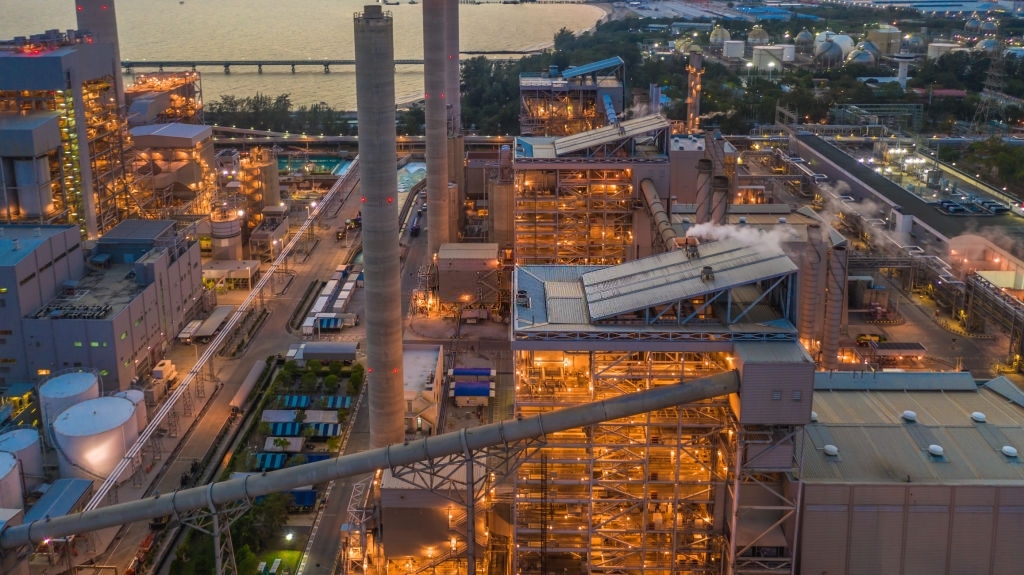
Building a highly profitable and efficient manufacturing facility does not happen by accident. It takes decades of trial, error, and relentless innovation to understand what works. Over the last fifty years, the metallurgical industry has evolved at a rapid pace. We have moved from manual operations to fully automated, high-speed production lines. Through all these changes, the fundamental principles of engineering a perfect steel plant remain rooted in experience and precision.
When you invest millions into heavy machinery and infrastructure, you cannot afford guesswork. Every single decision impacts your bottom line. A minor miscalculation in your layout can lead to daily material handling delays. A poor choice in furnace design will inflate your energy bills for decades.
At The Steefo Group, we have spent over five decades designing, manufacturing, and commissioning heavy machinery. We have seen what makes a facility thrive and what causes it to struggle. This deep industry knowledge provides a clear roadmap for success. Here are the core lessons we have learned about building a highly productive, sustainable, and profitable steel plant from the ground up.
How Half a Century of Experience Shapes a Modern Steel Plant
Experience is the greatest teacher in heavy engineering. Fifty years ago, the focus was purely on raw output. Today, the focus is on yield optimisation, energy efficiency, and metallurgical consistency. You have to produce more with less waste while meeting incredibly strict global quality standards.
The biggest lesson learned over the decades is that a steel plant operates as a single, living organism. You cannot look at the furnace, the roughing stands, and the cooling bed as isolated pieces of equipment. They must communicate and synchronise perfectly. If your reheating furnace discharges billets faster than your roughing mill can process them, you create a costly bottleneck.
A modern approach requires holistic thinking. We design every rolling mill with the entire production lifecycle in mind. This means calculating the exact flow of materials from the scrap yard or billet yard all the way to the final dispatch area. When you build with this level of foresight, you eliminate operational friction and drastically reduce your cost per ton.
Core Blueprints for a High-Yield Steel Plant
The foundation of your success is laid long before the first piece of machinery arrives on site. The planning and blueprint phase dictates your future profitability. You must get these core elements right.
1. Align Production Goals with Mill Capacity
Many investors make the mistake of buying equipment that does not perfectly match their market demands. If your goal is to produce 500,000 tons of high-grade rebar annually, every component must be rated for that exact continuous capacity. Oversizing your equipment leads to wasted capital and inefficient power use. Undersizing leads to machine fatigue and frequent breakdowns. You must define your product mix and target volume first. Then, you engineer the steel plant to meet those precise specifications without strain.
2. Prioritise Layout Efficiency from Day One
The physical layout of your facility dictates your daily operational costs. A poor layout forces cranes to travel further and requires unnecessary manual handling of hot materials. We engineer layouts that ensure a unidirectional flow of material. The raw billets should enter one end of the shed and exit as finished, bundled products at the other end. This straight-line flow reduces crane dependency, lowers the risk of workplace accidents, and speeds up the entire production cycle.
3. Invest in a Robust Foundation and Infrastructure
Heavy machinery generates massive amounts of vibration and torque. If your civil foundations are weak, that vibration will destroy your equipment from the bottom up. We have learned that over-engineering the concrete foundations for your mill stands and heavy drives is always a smart investment. A rigid foundation keeps your rolling mill perfectly aligned. Proper alignment reduces wear on bearings, prevents cobbles, and ensures the dimensional accuracy of your final product.
Why Equipment Selection Defines Your Rolling Mill Longevity
You can have the best layout in the world, but if your machinery cannot handle the brutal environment of a steel plant, you will fail. The temperatures are extreme. The dust is abrasive. The mechanical loads are immense. You need equipment that is built to endure these harsh realities day after day.
When selecting machinery for your rolling mill, you must look beyond the initial purchase price. Cheap equipment will cost you millions in unplanned downtime and frequent spare part replacements. You need robust, heavy-duty mill stands cast from high-grade steel. You need gearboxes designed with high service factors to handle sudden shock loads.
We have spent decades refining the metallurgy of our own machinery components. We know that investing in high-quality bearings, advanced water-cooling systems for rolls, and wear-resistant guides will keep a mill running continuously. The goal is to keep the hot metal moving. Every minute your line stops to replace a cheap, broken component is a minute of lost revenue.
Slash Energy Consumption Inside Your Steel Plant Heating Furnaces
Energy is one of the highest operational costs in any metallurgical facility. The reheating furnace is the heart of the operation, and it is also the biggest consumer of fuel. Fifty years of engineering have taught us that optimising this one area can transform your entire profit margin.
Older furnace designs lose massive amounts of heat through poor insulation and inefficient burners. To build the perfect steel plant, you must utilise advanced recuperator technology. Recuperators capture the waste heat from the exhaust gases and use it to preheat the combustion air. This single upgrade can slash your fuel consumption dramatically.
Furthermore, the design of the furnace must match the pace of your rolling mill. The billets must reach a uniform rolling temperature precisely when the roughing stand is ready to receive them. If billets sit in the furnace too long, you suffer from scale loss. Scale loss is literally your profit burning away into iron oxide. Proper thermal engineering minimises this scale formation and maximises your material yield.
Master the Art of a Profitable TMT Bar Rolling Mill
The demand for Thermo-Mechanically Treated bars is higher than ever due to global infrastructure growth. However, producing top-tier rebar requires a highly specialised approach. A perfect TMT bar rolling mill combines intense mechanical shaping with precise thermal control.
1. Control the Quenching Process for Superior Strength
The secret to high-quality TMT bars lies in the quenching box. As the red-hot bar exits the finishing stand, it must pass through a highly engineered water-cooling system. This rapid cooling hardens the outer surface into martensite while leaving the inner core soft and ductile.
You must control the water pressure and flow rate with absolute precision. If the cooling is uneven, the bar will lack the required tensile strength and fail quality testing.
2. Optimise Pass Design to Reduce Material Waste
Pass design is the complex geometry cut into the heavy rolls that shape the steel. Exceptional pass design smoothly reduces the cross-section of the billet without causing surface defects or internal stress. Over the decades, we have optimised these pass sequences to reduce the number of stands required. A highly efficient pass design reduces the electrical load on your motors and prevents the material from tearing or lapping during the reduction process.
3. Synchronise Speed Across All Mill Stands
In a continuous TMT bar rolling mill, the metal passes through multiple stands simultaneously. Because the bar gets thinner and longer with every pass, the speed of each subsequent motor must increase perfectly. If stand number six pulls faster than stand number five, the bar will stretch and snap. If it pulls slower, the hot metal will loop and cause a catastrophic cobble. Modern facilities use advanced drives to ensure this speed synchronisation is flawless.
Overcome Common Bottlenecks in the Roughing and Finishing Stages
Even the most well-designed steel plant will face operational challenges if the transition between rolling stages is ignored. The roughing stage takes the initial heavy impact of the thick billet. These stands must be rugged and powered by massive motors. If your roughing mill cannot process billets quickly enough, your entire finishing line will sit idle waiting for material.
Conversely, the finishing stands operate at incredibly high speeds. Vibration at these speeds will ruin the dimensional tolerance of your final product. You must use high-precision bearings and perfectly balanced rolls in the finishing zone.
We always recommend implementing flying shears and continuous dividing shears between these critical zones. These automated cutters crop the cold ends of the bars and slice the material at exact lengths without stopping the line. Eliminating manual cutting stops the line from pausing and keeps your production rate at maximum capacity.
Automation and Technology Drive Modern Steel Plant Success
The days of relying solely on manual operators to judge temperature and speed are over. The perfect modern facility relies heavily on smart automation. Integrating Programmable Logic Controllers and SCADA systems gives you total visibility over your entire operation.
Automation removes the risk of human error. Sensors track the temperature of the steel at every stage. Optical scanners measure the diameter of the finished bar in real-time. If a bar is even a fraction of a millimetre out of tolerance, the automation system can automatically adjust the roll gap on the fly.
This level of technology also provides invaluable data. Plant managers can track energy usage per ton, monitor motor vibrations to predict failures, and analyse yield rates shift by shift. When you build a steel plant today, you are essentially building a massive data network that processes heavy metal. Embracing this technology is non-negotiable for long-term survival in a competitive market.
The Hidden Costs of Poor Maintenance in a Steel Plant
You cannot engineer a perfect facility without engineering a perfect maintenance strategy. Heavy machinery degrades over time. That is an unavoidable law of physics. However, how you manage that degradation determines your profitability.
Reactive maintenance is a financial trap. Waiting for a component to break before fixing it results in massive production losses. A broken gear might only cost a few thousand dollars to replace, but the twelve hours of downtime required to install it will cost you tens of thousands in lost revenue.
Fifty years of experience prove that preventive and predictive maintenance are the only paths forward. You must build your rolling mill with accessibility in mind. Mechanics need safe, quick access to change rolls, lubricate bearings, and inspect guides. We design our equipment to allow for rapid roll changes, ensuring your maintenance windows are as short and efficient as possible.
How The Steefo Group Delivers Turnkey Excellence
Building a metallurgical facility is a massive undertaking with thousands of moving parts. Trying to source individual machines from different vendors and piecing them together often leads to integration nightmares. The communication breakdowns between different control systems can delay commissioning by months.
This is why The Steefo Group focuses on delivering comprehensive turnkey solutions. We handle the entire process, from initial layout engineering to final hot commissioning. When a single experienced entity oversees the mechanical, electrical, and civil requirements, the entire project flows smoothly.
We manufacture our equipment in-house under strict quality control protocols. We know how our furnaces communicate with our roughing stands. We know how our quenching boxes synchronise with our finishing lines. This unified approach guarantees that your steel plant will perform as promised from the very first day of production.
Build Your Next Generation Steel Plant with Proven Experts
The steel industry does not reward hesitation or poor planning. To dominate your local market and produce world-class materials, you need a facility built on a proven engineering foundation. You need machinery that works relentlessly, automation that optimises every variable, and a layout that maximises efficiency.
Leverage the half-century of expertise that The Steefo Group brings to the table. Whether you are upgrading an existing facility or building a brand-new, high-speed TMT bar rolling mill, we have the technology and the experience to make it a reality.
Contact our team at +91 87589 98607 or write to us at marketing@thesteefogroup.com to discuss your production goals and discover how we can help you build the perfect, high-yield manufacturing facility for the future.