
Every mill manager knows the frustration of a finished product that just barely misses the mark. You run the steel through the line and check the gauge, but the tolerances are off by a fraction of a millimetre. You adjust the screw-down, run it again, and face the same inconsistency. It is a battle against physics that eats into your production time and increases your scrap pile. This struggle often comes down to one critical component. The “spring” effect in your heavy machinery is fighting against you.
For decades, the steel industry has relied on conventional equipment to get the job done. These massive iron giants have built the modern world. However, as market demands for precision tighten in 2026, reliance on older designs is becoming a liability. This brings us to the core conflict in modern rolling mills. You have the traditional, conventional stands that are familiar yet flawed, and you have the housingless stands that represent the future of rolling technology.
Upgrading to housingless mill stands is not just about buying shiny new gear or keeping up with trends. It is a calculated strategic move. It is about securing higher precision, drastically lowering your operational costs, and ensuring your steel plant remains competitive in a market that no longer forgives inefficiency.
What Defines the Two Technologies
To understand why an upgrade is necessary, we must first look under the hood of these two distinct technologies. The difference is not just in how they look but in how they handle the immense forces of rolling steel.
Conventional Mill Stands
The conventional mill stand design has been the standard in rolling mills for over a century. These stands are characterised by their massive size and weight. They rely on heavy cast steel closed housings to contain the roll chocks. In this design, the chocks slide vertically inside the housing window to adjust the roll gap.
While they look indestructible, their sheer size is actually part of their limitation. The stress path travels through the long housing posts. The chocks are not rigidly fixed but float within the window with certain clearances. This design was sufficient when tolerance requirements were loose, but it struggles to meet the strict standards of today.
Housingless Mill Stands
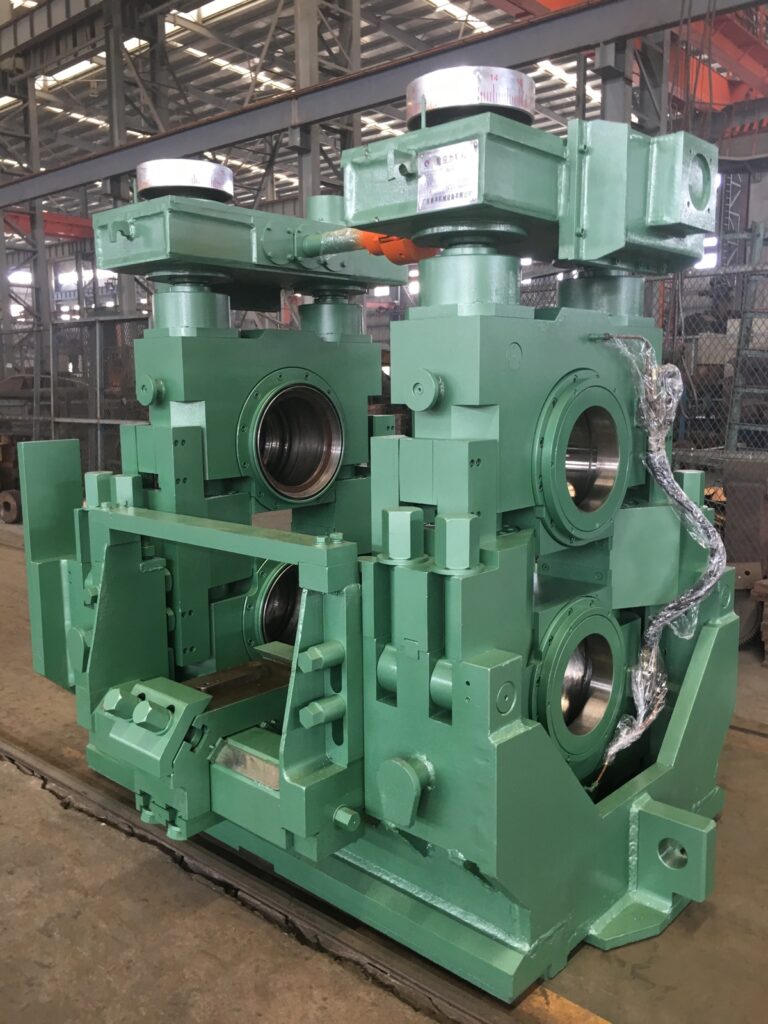
Housingless mill stands offer a radical departure from the heavy frame design. As the name implies, there is no massive outer housing. Instead, the roll chocks are connected directly to each other using sturdy tension bars or screws. The design is compact and significantly lighter.
In this configuration, the chocks and the tension bars form a tight, self-contained stress loop. There is no heavy frame to stretch or bend. The rolls are held in place with hydraulic pre-stressing or mechanical locking systems that eliminate internal movement. This creates a unit that acts as a single, solid block rather than a collection of loose parts rattling inside a frame.
The Hidden Flaws of Conventional Design
You might wonder why you should replace something that is still technically working. The answer lies in the invisible problems that occur during the rolling process. Conventional mill stands suffer from inherent mechanical flaws that are impossible to fix without a complete design change.
The Stretch Factor
Engineers refer to this as “mill spring.” When hot steel enters the roll bite, it exerts a tremendous separating force. It tries to push the rolls apart. In a conventional stand, this force travels through the chocks, the screws, and finally into the tall housing posts.
Because the housing posts are long, they stretch under this load. It acts exactly like a heavy spring. Even a fraction of a millimetre of stretch alters the gap between the rolls. This means the setting you adjusted while the mill was empty changes the moment steel enters the stand. This stretch factor makes it incredibly difficult to maintain consistent gauge control, especially when rolling high-strength alloys.
Hysteresis and Wear
The second major flaw is hysteresis. This is the unpredictable movement caused by the clearances between the chocks and the housing window. For the chocks to slide up and down for adjustments, there must be a small gap. Over time, dust, scale, and heat cause these gaps to widen.
When the load is applied, the chocks shift. When the load is removed, they do not always return to the same spot. This unpredictability creates a “hysteresis loop” where your control system thinks the rolls are in one position, but they are actually in another. This mechanical play leads to accelerated wear on the liners and plates, forcing your maintenance team to constantly shim and adjust the stands just to keep them functional.
5 Reasons to Upgrade to Housingless Stands
The transition from conventional to housingless technology is the single most impactful upgrade you can make to your long product mill. At The Steefo Group, we have seen this transition transform the profitability of numerous plants. Here are five specific reasons why housingless mill stands are the superior choice.
Reason 1: Superior Rigidity
The primary advantage of housingless mill stands is their incredible stiffness. This is due to the shortened “stress path.” In any mechanical structure, the longer the path the force has to travel, the more the material will stretch.
In a housingless design, the tension bars connecting the chocks are very short compared to the tall posts of a conventional housing. This creates a compact stress loop. The result is a stand that is significantly more rigid. When the steel bar hits the rolls, the stand does not yield. It holds its shape against the separating force.
This rigidity ensures that the roll gap remains constant regardless of the load. Whether you are rolling the front end, the middle, or the tail of the billet, the dimension remains stable. This stiffness allows rolling mills to produce strip and long products with tolerances that are impossible to achieve with older frames.
Reason 2: Faster Roll Changing
In the steel business, time is undeniably money. Every minute your mill is stopped for a size change is a minute you are not generating revenue. Conventional stands are notorious for long changeover times. You often have to disassemble parts of the stand, crane out heavy rolls, and manually adjust guides while the line is down.
Housingless mill stands revolutionise this process. They are designed for quick cartridge changes. The entire stand unit, including rolls, chocks, and guides, can be prepared offline in a workshop. When it is time for a change, the operators simply disconnect the drive spindles and fluid lines, lift out the old unit, and drop in the new pre-set cartridge.
This process can reduce changeover times from hours to mere minutes. For a flexible steel plant that handles multiple product sizes in a single shift, this feature alone can increase annual production capacity by a significant margin.
Reason 3: Better Product Tolerances
We touched on rigidity earlier, but let us connect that directly to your product quality. Modern construction projects and automotive manufacturers demand steel with extremely tight dimensional tolerances. They need TMT bars, wire rods, and perfectly uniform sections.
Because housingless mill stands suffer from negligible mill spring, they deliver superior gauge control. You avoid the heavy ends on bars that often occur with conventional stands. This precision reduces the amount of material that gets rejected by Quality Control.
Furthermore, it reduces the give away. When your equipment is not precise, you have to roll slightly on the heavier side to ensure you meet the minimum weight standard. With high-precision housingless stands, you can roll closer to the theoretical minimum weight. This saves a massive amount of raw material over a year, directly boosting your bottom line.
Reason 4: Compact Footprint and Foundation
Space is often a constraint in existing rolling mills. Expanding a line usually involves expensive civil work to reinforce foundations for heavy machinery. Conventional stands require massive, deep foundations to support their weight and absorb the vibrations.
Housingless mill stands are lighter and more compact. Because the stress is contained within the stand itself (the tension bars), less force is transmitted to the foundation. This means they can often be installed on lighter, less expensive foundations.
If you are retrofitting an existing plant, housingless stands are easier to slot into the available space. Their lower height also improves visibility for the operators, making it easier to monitor the rolling process and intervene if necessary. This compact nature simplifies the layout of the mill floor and reduces the initial civil engineering costs for new projects.
Reason 5: Lower Maintenance Needs
As we explained in our detailed guide on rolling mill maintenance best practices, maintenance is the silent killer of mill profitability.. Conventional stands require constant attention. You have to replace wear plates, machine the housing windows, and deal with broken screws or nuts caused by vibration.
Housingless mill stands have fewer moving parts to wear out. The absence of housing liners removes one of the most common maintenance headaches. Since the stand is pre-stressed and rigid, there is less vibration rattling the components.
The bearings in housingless designs also tend to last longer because they are not subjected to the uneven loading caused by chock movement. This leads to a lower Total Cost of Ownership (TCO). While the initial investment might be higher than refurbishing an old stand, the reduction in spare parts consumption and maintenance man-hours pays for the upgrade quickly.
The Economic Case for Upgrading
Deciding to upgrade your mill stands is a financial decision as much as a technical one. To understand the value, you must look at the Return on Investment (ROI).
You can calculate the savings by combining several factors. First, calculate the value of the increased uptime due to faster roll changes. If you gain just 30 minutes of production per day, that adds up to over 150 hours of extra production per year. Second, factor in the reduction in scrap and give away material. Saving just 0.5% of material yield in a high-capacity steel plant translates to millions in savings.
Finally, consider the market demands of 2026. Customers are no longer just looking for steel. They are looking for certified precision. An upgrade to housingless stands positions your mill to bid for high-value contracts that require strict adherence to international quality standards. It future-proofs your facility against rising quality expectations.
Conclusion
The evolution of steel manufacturing is moving relentlessly toward higher precision and efficiency. The era of the massive, flexible conventional frame is fading. In its place, the housingless design has emerged as the standard for modern high-performance rolling mills.
By upgrading to housingless mill stands, you are solving the problems of mill spring and hysteresis that have plagued production for years. You gain superior rigidity, faster changeovers, better product tolerances, a compact footprint, and significantly lower maintenance costs.
At The Steefo Group, we understand that upgrading is a major commitment. However, sticking with outdated technology is a risk that most plants cannot afford to take. The housingless stand is not just a piece of machinery. It is the heart of a profitable, precise, and future-ready rolling operation.
Frequently Asked Questions
1. What is the main difference between housingless and conventional mill stands?
The main difference lies in the frame construction. Conventional mill stands use a heavy outer cast steel housing to hold the roll chocks. Housingless mill stands eliminate this outer frame and connect the chocks directly using tension bars or screws, creating a more rigid and compact unit.
2. Why do housingless stands provide higher rolling precision?
They provide higher precision because they have a shorter stress path. This design significantly reduces “mill spring”, or the stretching of the stand under load. The increased rigidity ensures the gap between the rolls remains constant, delivering tighter dimensional tolerances on the final product.
3. How does upgrading to housingless stands reduce downtime?
Housingless mill stands are designed for rapid cartridge changing. Instead of disassembling the stand on the mill line, operators can swap the entire unit with a pre-assembled replacement in minutes. This offline preparation drastically cuts the downtime required for size or roll changes.
4. Is it difficult to retrofit housingless stands into an existing mill line?
Generally, it is easier than installing new conventional stands. Housingless mill stands have a smaller footprint and are lighter. They require less extensive foundation work, making them ideal for retrofitting into existing layouts without requiring major civil engineering changes.
5. Do housingless stands really lower long-term maintenance costs?
Yes. They eliminate the wear components associated with conventional housings, such as window liners and wear plates. The rigid design reduces vibration, which prolongs bearing life and reduces the frequency of component failure, lowering the overall maintenance burden for the steel plant.
Choose Steefo for High Quality Housingless Mill Stands
In the competitive steel landscape of 2026, your mill’s profitability hinges directly on precision and speed. Stop wrestling with the limitations of outdated conventional equipment and let superior engineering drive your growth. At The Steefo Group, we don’t just supply machinery; we engineer transformation for the modern steel plant. Our advanced housingless designs are built to eliminate mill spring, drastically reduce changeover downtime, and deliver the tight product tolerances that today’s market demands.
Upgrading your line is a strategic investment in your facility’s longevity and performance. With decades of expertise as a leading manufacturer in India, we ensure seamless integration and immediate impact on your bottom line. Don’t let inefficiencies erode your margins any longer. Take the decisive step toward modernisation today. Choose Steefo for High Quality Housingless Mill Stands and experience the difference that world-class engineering makes in your daily production. Contact our team at +91 87589 98607 or write to us at marketing@thesteefogroup.com now to engineer your success.