
Last updated: 24 November 2026
The reheating furnace sits at the head of the rolling line, and little downstream can fix what it gets wrong. A billet that leaves the furnace too cold, unevenly heated or scarred by skid marks arrives at the first stand already compromised. The pusher vs walking beam reheating furnace decision shapes how billets move, how evenly they heat, how much fuel the plant burns and how much floor space and capital the project needs.
A pusher furnace moves billets by pushing them in a butted stream along a hearth or skid rails, so each billet charged forces one heated billet out at the discharge end. A walking beam furnace keeps billets spaced apart and carries them forward in steps as movable beams lift, advance and lower them. Pusher furnaces cost less to install and maintain and suit lower-output mills making common grades such as rebar. Walking beam furnaces heat the bottom face of the billet, discharge at more uniform temperatures, reduce skid marks and handle mixed billet sizes better, at a higher price and with more demand on the layout. Combustion control, insulation and waste heat recovery affect fuel use as much as furnace type does. If billets reach the mill hot from a caster, the furnace may carry a much lighter duty.
Other continuous designs, such as walking hearth and rotary hearth furnaces, exist, but these two are the pair most buyers compare. This guide explains how each furnace works, where each one is strong and where it struggles, and how to choose between them for your output, billet size, product mix, fuel and budget. It is written for plant owners, engineers and procurement teams who are specifying a new furnace or replacing an old one.
In short:
- Pusher: lower installation and maintenance cost and a sturdy, simple design, but skid marks, hearth wear and no all-round heating.
- Walking beam: billets are spaced and moved by beams, which gives more even heating, fewer marks and more flexibility, at higher cost and with more layout demands.
- Not the whole story: combustion control, insulation and waste heat recovery move fuel use as much as furnace type does.
- Hot charging: if billets reach the mill hot from a caster, the furnace may carry a much lighter duty.
What a Reheating Furnace Must Do Before the First Stand
A reheating furnace takes billets from ambient temperature to rolling temperature. India’s Bureau of Energy Efficiency (BEE) gives a general range of 900 to 1,250 degrees Celsius for continuous reheating, and about 1,200 degrees for rolling mill furnaces. At that temperature the steel is plastic enough to be rolled, but only if the whole billet is hot, and not just its surface. A furnace that overheats the skin while the core lags wastes fuel and creates scale. One that under-heats loads the stands harder.
UNDP’s 2023 compendium on mini steel plants calls the reheating furnace the heart of a rolling mill, and it describes the typical Indian re-rolling mill as running a top-fired pusher-type furnace. That is the baseline most Indian buyers start from. For a broader look at how this furnace fits the whole line, see our basics of reheating furnaces guide. This article goes one step further and compares the two continuous designs buyers most often weigh against each other.
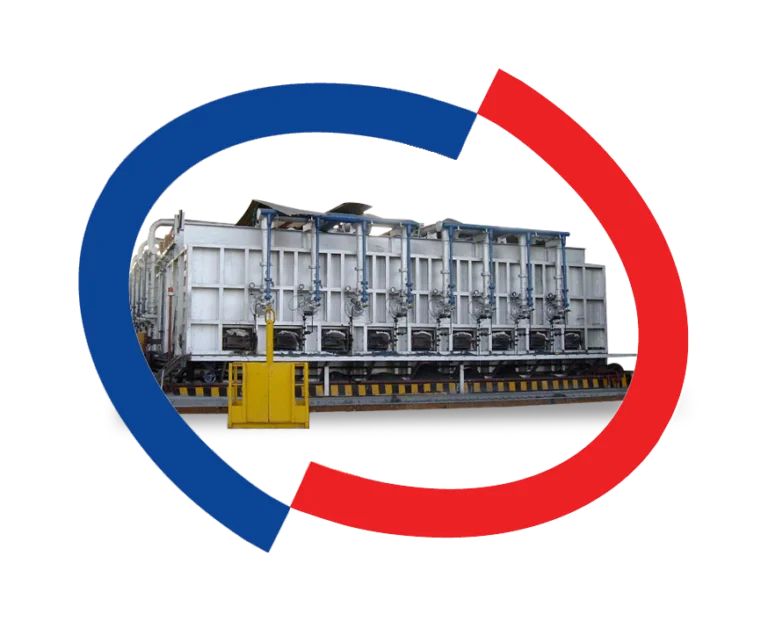
How a Pusher Type Reheating Furnace Works
Billet Movement and Skid Rails
A pusher furnace works like a queue. Billets are placed on a charging platform and a motorised or hydraulic pusher shoves them into the furnace at regular intervals, according to the discharge rate. The billets sit side by side, butted against each other, so each push moves the whole stream forward and forces one heated billet out at the discharge end.
 Pusher type reheating furnace by The Steefo Group
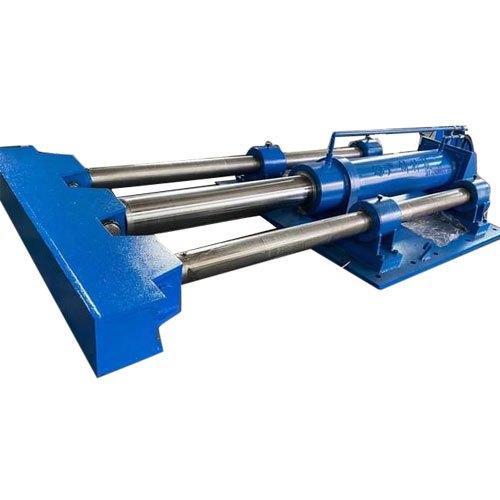 Hydraulic billet pusher
The billets can slide along a solid refractory hearth, or along skids with water-cooled supports. The second arrangement lets the furnace heat both the top and the bottom of the billet, which is why some pusher furnaces are fired from above and below. Because the billets travel through preheating, heating and soaking zones in sequence, the stock recovers some heat from the flue gases as it moves toward the discharge end.
Strengths and Limitations
BEE describes the pusher furnace as popular in the steel industry, with relatively low installation and maintenance costs compared with furnaces that move the hearth. SMS group, a major furnace supplier, calls pusher furnaces typically suitable for low-production mills making common grades, with rebar mills as an example, and describes them as an inexpensive, sturdy and reliable alternative to walking hearth and walking beam designs.
The same BEE guidance lists the drawbacks:
- Frequent damage to the refractory hearth, and skid marks on the material.
- Water cooling losses from the skids and supports in top and bottom fired furnaces, which hurt energy use.
- Discharge must be accompanied by charge, because the stream moves only when a billet is pushed in.
- Billet size, weight and furnace length are limited by friction and by the risk of pile-ups.
- All-round heating of the billet is not possible.
How a Walking Beam Reheating Furnace Works
The Beam Cycle: Lift, Advance, Lower
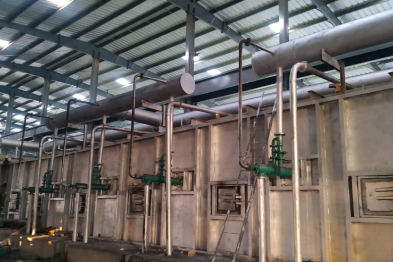
A walking beam furnace has two sets of beams: fixed beams and movable beams. In each cycle the movable beams rise, lifting the billets off the fixed beams, then move forward, lower the billets onto the fixed beams a step further along, and return to their starting position. Repeating this cycle carries the billets through the furnace in discrete steps. Because the billets are carried and not shoved, they sit apart from each other rather than touching.
 Walking beam type reheating furnace by The Steefo Group
That spacing changes the heating. BEE notes that the walking beam furnace overcomes many of the problems of pusher furnaces and permits heating of the bottom face of the stock. This allows shorter heating times and shorter furnaces, better control of heating rates, more uniform discharge temperatures and more operational flexibility.
Strengths and Limitations
A 1984 US patent on walking beam furnaces for tube stock (United States Steel and Bloom Engineering) explains the appeal. The walking beam moves discrete pieces at the desired speed and temperature in spaced relationship, reduces skid marks on the product, and removes the problem of pushing heavy product with light product, or long product with short. The patent adds that walking beam furnaces have particular application to bar, rod and tube stock. SMS group adds that its walking beam furnaces allow high production rates and top quality steel grades, and that special skid beams with cast alloy parts endure the temperatures and loads. Taken together, these are the main walking beam furnace advantages: more even heating, fewer marks, a shorter furnace and flexibility with mixed billets.
The trade-offs are real, and they are worth stating plainly:
- BEE notes that, as with top and bottom fired pusher furnaces, much of the furnace sits below the level of the mill, which can be a constraint in some layouts.
- Skid marks are reduced rather than eliminated, because the beams still contact the billet. Suppliers sell dedicated systems to minimise them.
- BEE rates pusher furnaces lower in installation and maintenance cost than furnaces that move the hearth, a group that includes walking beam designs, so expect a higher price and more mechanism upkeep.
Pusher vs Walking Beam Reheating Furnace: Side-by-Side Comparison
The table sets the two designs against the factors that usually decide a purchase. It reflects published guidance from BEE, UNDP and SMS group, and it is a starting point for conversations with a supplier.
| Factor | Pusher furnace | Walking beam furnace |
|---|---|---|
| How billets move | Pushed in a stream, butted together | Lifted, advanced and lowered by beams |
| Heating of the billet | Top only on a solid hearth; top and bottom on skids, but no all-round heating | Top and bottom, with billets spaced apart |
| Skid marks and hearth wear | Frequent skid marks and hearth damage | Reduced marks; beams still contact the billet |
| Mixed billet sizes | Limited by friction and pile-ups | Handles variety better |
| Charge and discharge | Discharge must accompany charge | Beam cycle carries billets, with no push from the charge end |
| Typical output | Lower-production mills; common grades such as rebar | Higher production rates and demanding grades |
| Furnace length and layout | Longer for the same output; top and bottom fired versions also sit largely below mill level | Shorter; much of the furnace below mill level |
| Investment | Lower | Higher |
| Maintenance | Hearth and skid repair | Beam mechanism upkeep |
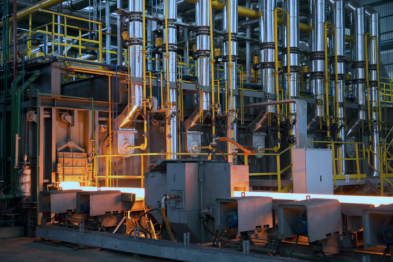
Fuel use deserves its own warning. It is tempting to assume one type simply burns less fuel than the other, but the sources we reviewed give no such ranking. UNDP puts the efficiency of a conventional Indian re-rolling furnace below 25 per cent and names flue gas as the largest loss, at 30 to 35 per cent of the heat input. How well the furnace burns its fuel, recovers waste heat and holds its heat has a large effect on fuel use, whichever way it moves the billet.
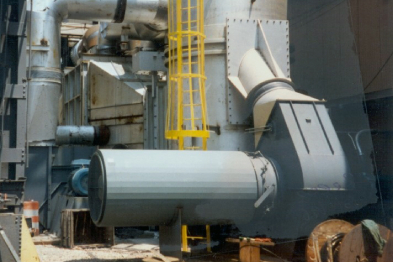 Furnace combustion system
How to Choose: Capacity, Product Mix, Billet Size, Fuel and Budget
Start from the plant, not from the furnace. The table below turns the main situations into a first-pass lean.
| Your situation | Lean towards | Why |
|---|---|---|
| Low to moderate output, common grades such as rebar, limited capital | Pusher | Lower installation and maintenance cost, and a sturdy design for lower-production mills |
| High output, demanding grades or surface requirements | Walking beam | Spaced billets, more uniform heating and higher production rates |
| Wide mix of billet sizes and lengths | Walking beam | Billets are carried, so size differences do not cause pile-ups |
| Hot billets arriving from your own caster | Check the duty first | The furnace may only need to handle cold charging or backup |
Then work through these questions with your supplier:
- What output in tonnes per hour do you need, and for how many hours a day?
- What billet sizes, lengths and weights will you charge, and how often will they change?
- Which steel grades and surface quality must you deliver?
- Which fuel will you use, and how secure is its supply and price?
- How much space is there between the billet yard and the first stand, and can the layout take a furnace partly below mill level?
- What is your budget, counting fuel over the life of the furnace and not only the purchase price?
Do Not Choose on Purchase Price Alone
UNDP’s worked example for a 15 tonne-per-hour re-rolling furnace makes the case clearly. It prices a conventional furnace at INR 50 lakh and the fuel it burns over a 15-year life at INR 5,756 lakh, more than a hundred times the furnace itself. It also states that an energy-efficient furnace design may cost almost 1.5 times as much as a conventional one. Whatever type you choose, specifying combustion control, insulation and heat recovery well will do more for lifetime cost than the type alone. Our guide to energy saving technology in rolling mill systems covers these measures in more detail.
Waste heat recovery is a good example. In UNDP’s 15 tonne-per-hour example, adding a metallic recuperator raises combustion air temperature from 35 to 350 degrees and cuts specific fuel consumption from 75 to about 64 kilograms per tonne. The compendium notes that each 22 degree rise in combustion air temperature saves roughly 1 per cent of fuel.
 Recuperator for waste heat recovery
When Hot Charging Changes the Question
If your melt shop feeds a continuous caster, billets can reach the mill hot, and the furnace’s role shrinks. UNDP lists hot charging, or direct rolling of hot billets from a continuous caster, as a way to eliminate the reheating furnace from the process. If your plant may still roll cold billets, for example when the caster is down, size the furnace for the cold-charging case you actually expect to run, not for a duty it will rarely see.
Layout and Planning
Furnace choice interacts with the layout of the whole mill, from the billet yard to the first stand. A deep furnace pit, which BEE notes for walking beam and for top and bottom fired pusher furnaces, and the distance between furnace discharge and the roughing stand both affect how the line is arranged. Our guide to rolling mill layout design and plant efficiency explains why that gap matters, and our TMT rolling mill setup guide shows where the furnace sits in the overall budget. For the process after the furnace, see our guide to the hot rolling mill process.
Pusher vs Walking Beam: The Short Version
The pusher vs walking beam reheating furnace choice comes down to output, product mix, quality demands and budget. Pusher furnaces are the sturdy, lower-cost choice for lower-output mills making common grades. Walking beam furnaces give more even heating, fewer marks and more flexibility, at a higher price and with more layout demands. Whichever you choose, the combustion system, insulation and heat recovery will decide how much fuel you burn over the years.
How Steefo Approaches Reheating Furnaces
As a reheating furnace manufacturer, The Steefo Group designs and builds furnaces for rolling mills as part of complete lines, and has made rolling mill equipment since 1976. A figure in UNDP’s 2023 compendium on mini steel plants credits our reheating furnace guide as its image source. Because the furnace feeds directly into the stands, drives and handling equipment we also manufacture, the furnace can be specified together with the mill it supplies.
If you are planning a new furnace or replacing an existing one, share your target output, billet size, product mix, fuel and available space with our engineering team. We will discuss the furnace configuration that suits your plant.
Frequently Asked Questions
What is the difference between a pusher furnace and a walking beam furnace?
In a pusher furnace, billets are pushed through in a butted stream along a hearth or skids. In a walking beam furnace, billets are spaced apart and carried forward by beams that lift, advance and lower them. Pusher furnaces cost less, while walking beam furnaces heat more evenly and mark billets less.
How does a pusher furnace work?
A pusher pushes billets from a charging platform into the furnace at regular intervals. The billets sit side by side, so each push moves the whole stream forward and forces one heated billet out at the discharge end. They pass through preheating, heating and soaking zones on a solid hearth or on skids.
Which reheating furnace causes fewer skid marks?
Walking beam furnaces generally cause fewer skid marks because billets are lifted and carried and not dragged along the hearth. The beams still touch the billet, so marks are reduced and not eliminated. Pusher furnaces are more prone to skid marks and hearth damage.
Which furnace is better for a rebar or TMT rolling mill?
It depends on output and quality demands. Published guidance describes pusher furnaces as suited to lower-production mills making common grades such as rebar, and top-fired pusher furnaces are typical in Indian re-rolling mills. Walking beam furnaces suit higher output and more demanding grades. Hot charging from a caster can change the duty entirely.
What temperature does a reheating furnace heat billets to?
Rolling mill reheating furnaces heat billets to about 1,200 degrees Celsius. India’s Bureau of Energy Efficiency gives a general range of 900 to 1,250 degrees for continuous reheating. The exact temperature depends on the steel grade and the product being rolled.
Is a pusher furnace cheaper than a walking beam furnace?
Pusher furnaces generally cost less to install and maintain, according to India’s Bureau of Energy Efficiency. The purchase price is only part of the cost, though. In UNDP’s 15 tonne-per-hour example, fuel over 15 years cost more than a hundred times the furnace itself, so combustion control, insulation and heat recovery matter as much as furnace type.
Does Steefo supply reheating furnaces for rolling mills?
Yes. The Steefo Group designs and builds reheating furnaces as part of rolling mill lines. Share your target output, billet size, fuel and available space with our engineering team to discuss the furnace configuration for your plant.
Get in Touch
To discuss a reheating furnace for your rolling mill, contact The Steefo Group’s engineering team, call +91 87589 98607, or write to marketing@thesteefogroup.com with your output, billet size and fuel.
Sources
- Bureau of Energy Efficiency, Government of India, Energy Efficiency in Thermal Utilities, Chapter 4: Furnaces.
- United Nations Development Programme, Low-carbon Technology Packages for Mini Steel Plants: A Compendium (2023), Section 1: Steel Re-Rolling Mills.
- SMS group, Reheating furnaces.
- US Patent 4,453,915 (United States Steel Corp. and Bloom Engineering, 1984), Method and apparatus for underfiring oil country tube reheat furnaces.