Categories
Rolling Mill

Rolling mills are the backbone of modern manufacturing. Without them, the metal products that form the foundation of industries like steel, automotive, construction, and even aerospace, would not exist in the forms or quality we depend on. Whether it’s a steel beam supporting a high-rise building or a thin sheet of metal used in automotive parts, rolling mills shape and strengthen metal products in ways that are essential to the functionality and durability of these industries.

In today’s world, metal manufacturing is one of the most critical sectors, supporting infrastructure, transportation, and machinery, and rolling mills are the machines that make it all happen. In this post, we will take a deep dive into the workings of rolling mills, how they shape and strengthen metals, the impact they have on industries, and the latest advancements in technology used in modern mills. We’ll also explore why rolling mills are essential for producing high-quality steel and how The Steefo Group’s rolling mill solutions lead the way in offering customised, efficient, and high-quality production processes.

What Are Rolling Mills?

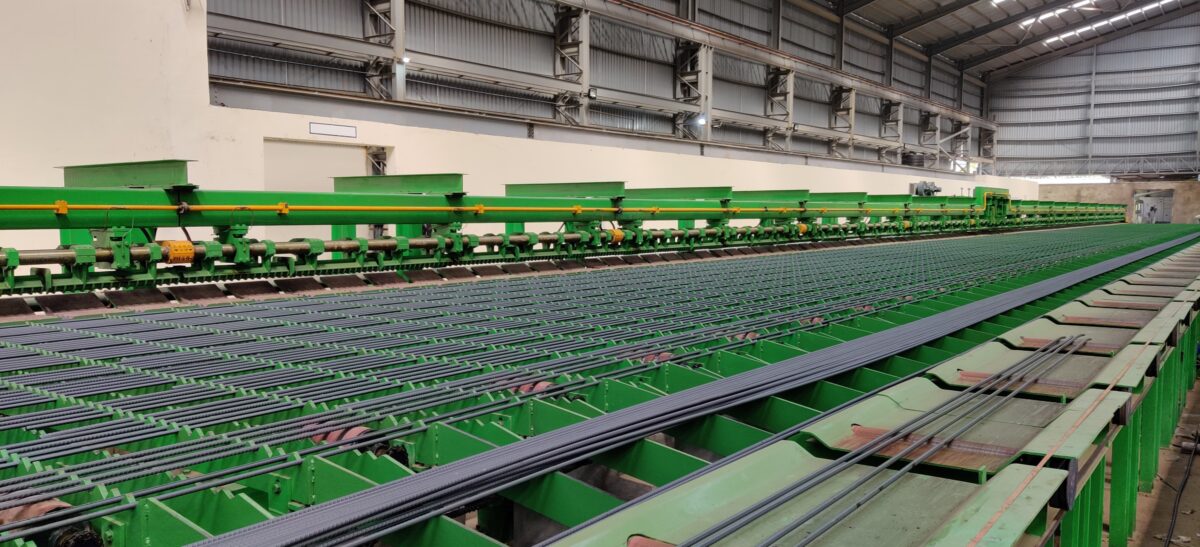
At the most basic level, rolling mills are machines used in the metal manufacturing process to shape and strengthen metal by passing it through a series of rollers. These machines apply heat, pressure, and mechanical force to metal, causing it to deform into specific shapes, such as sheets, bars, beams, and rods.

Function of Rolling Mills

The fundamental function of a rolling mill is to reduce the thickness of metal and elongate it while maintaining or adjusting its width. This transformation of metal into various shapes is known as rolling. In steel rolling mills, the process usually involves heating the metal to high temperatures to make it more malleable, although cold rolling can also be performed at room temperature for specific applications where tight tolerances and enhanced surface finishes are required.

Rolling mills are primarily used for producing metal products such as:

  • Steel sheets for automotive parts, structural applications, and appliances
  • Steel beams and reinforcement bars (like TMT bars) are used in construction.
  • Plates and coils for industrial machinery

How Rolling Mills Shape Metal

Rolling mills shape metal by applying mechanical pressure and, in some cases, heat, to compress and elongate it. This shaping process is what enables metal to be formed into products that can be used for diverse applications.

The Rolling Process

The process begins by heating the metal to the desired temperature, making it more ductile and easier to work with. Once the metal has reached the right temperature, it is passed through rollers that gradually compress it. The metal undergoes several stages of rolling, with each stage refining its thickness, shape, and finish.

The rolling process consists of multiple stages, including:

  1. Initial Heating: Metal is heated to a temperature where it becomes malleable but not molten. In steel rolling mills, this is often done in a furnace.
  2. Compression and Elongation: The metal is passed through a series of rollers, each set reducing the thickness further and stretching the metal.
  3. Cooling: In TMT bar rolling mills, rapid cooling is done after the shaping process to increase the strength of the material.
  4. Finishing: The final shape is achieved with high precision, depending on the type of rolling mill used.

Key Mechanisms Involved

The key forces at work in rolling mills include compression and deformation. These forces allow the metal to flow into the desired shape. As the metal passes through the rollers, the compression causes the metal to elongate while reducing its thickness. This is a crucial step in shaping metal products with uniform dimensions, ensuring they meet strict industry standards.

The deformation that takes place is critical in achieving the right grain structure within the metal. The controlled deformation process helps to make the material denser and more uniform, which directly contributes to its mechanical properties.

Surface Finish and Defect Removal

Rolling mills also play an important role in improving the surface quality of metal. Surface defects such as cracks, oxidation, and scale (a flaky layer of oxide that forms on the surface) are common during metalworking processes. The pressure applied during rolling helps smooth out these imperfections, resulting in a clean and uniform surface finish. This is especially important for industries like automotive and construction, where both the aesthetic and functional qualities of metal products are critical.

Strengthening Metal Through Rolling Mills

The process of shaping metal in rolling mills does more than change its dimensions. It also significantly strengthens the material, improving its mechanical properties and making it more suitable for demanding applications.

Mechanical Properties Enhanced by Rolling

When metal is passed through the rolling mill, it undergoes strain, which alters its mechanical properties. Rolling increases the strength, toughness, ductility, and fatigue resistance of the metal, which makes it better suited for the harsh conditions it may face in real-world applications.

  • Strength: The metal becomes stronger due to the grain refinement and strain hardening that occur during the rolling process. This makes it able to withstand greater forces without breaking or deforming.
  • Toughness: The toughness of the material is enhanced, improving its ability to absorb energy without fracturing. This is essential for parts used in high-stress environments, such as construction beams or automotive components.
  • Ductility: The rolling process enhances ductility, allowing the metal to be stretched and formed without cracking. This is particularly important for industries that require metal to be bent, twisted, or formed into intricate shapes.
  • Fatigue Resistance: Metals processed through rolling are more resistant to fatigue, meaning they can withstand repeated stress cycles without failing. This is critical in components that experience dynamic loading, such as suspension components in vehicles or structural beams in buildings.

Grain Structure and Durability

A major benefit of the rolling process is the improvement of the grain structure of the metal. As the metal is compressed and elongated, the grains (crystals) within the metal become more uniform in size and shape. This refinement in grain structure significantly increases the metal’s strength and durability. Rolling mills effectively make the metal more homogeneous, which helps it to resist wear and tear.

A uniform grain structure also improves the ductility and toughness of the metal, making it better able to withstand high loads, temperature variations, and impact stresses.

Impact on Real-World Applications

The benefits of these enhanced properties are immediately visible in industries like construction, automotive, and aerospace. Rolled steel beams in construction, for example, need to have high strength and durability to support heavy loads over long periods. The rolling process makes these beams capable of handling such loads without bending or breaking.

In the automotive industry, rolling mills produce parts that are designed to endure dynamic forces and harsh conditions, such as chassis and body components. Rolling mills ensure these parts are not only the right shape but also have the right mechanical properties to enhance performance and longevity.

Why Rolling Mills Are Essential for Quality Steel Production

Steel production requires a combination of precision, strength, and quality to meet the ever-demanding standards of the market. This is where steel rolling mills come into play, as they are instrumental in shaping and strengthening steel to meet these requirements.

Importance of Steel in Manufacturing

Steel is the most widely used metal in the world, and it is crucial in almost every industry. Whether it’s construction, transportation, or manufacturing, steel is at the core of the world’s infrastructure. Steel produced through rolling mills is essential for ensuring that the final products meet rigorous standards of strength, durability, and quality.

Key Benefits of Steel Rolling Mills

Steel rolling mills provide several benefits that directly influence the final product’s quality:

  • Consistent Thickness and Dimensions: Precision is key in steel production. Steel rolling mills ensure that the steel products have consistent thickness, which is vital for their strength and performance in applications like construction.
  • Improved Surface Quality: Rolling mills help improve the surface finish of the steel, ensuring that the steel products are free from defects like cracks, oxidation, or other surface blemishes.
  • Elimination of Defects: Steel products that go through the rolling mill process have fewer internal defects, such as porosity or slag, making them more reliable and stronger.

The Direct Impact on Strength and Durability

The advantages of rolling mills, such as uniform thickness, enhanced surface quality, and defect elimination, lead to stronger, more durable steel products that meet the stringent demands of various industries. Steel used in construction, for example, must resist extreme loads and environmental factors. Steel rolling mills ensure that the material is up to the task.

The Role of Technology in Modern Rolling Mills

The steel and metal manufacturing industries are rapidly evolving, and technology has played a crucial role in transforming how rolling mills operate today. Modern mills are equipped with cutting-edge technologies that improve both efficiency and the final product’s quality.

Automation and Innovation

Automation has revolutionised the rolling mill industry. Automated systems are used to control variables such as speed, pressure, and temperature, ensuring consistency and precision in every batch. These systems allow for real-time adjustments to the rolling process, reducing defects and improving overall production efficiency.

Sustainability and Energy Efficiency

With increasing environmental concerns, many rolling mills are focusing on sustainability. Advancements such as waste heat recovery, regenerative heating systems, and energy-efficient motors have helped reduce the environmental footprint of mills. These technologies not only reduce energy consumption but also lower emissions, making the steel rolling process more sustainable.

The Steefo Group’s Role in Rolling Mill Innovation

The Steefo Group stands at the forefront of rolling mill technology. Our steel rolling mills incorporate the latest advancements in automation, energy efficiency, and sustainability to provide clients with high-quality, cost-effective, and environmentally friendly solutions. At Steefo, we are committed to providing cutting-edge solutions that meet the demands of modern manufacturing.

Bottomline

Rolling mills are essential for shaping and strengthening metal products that are vital to industries worldwide. Whether producing steel for construction, automotive parts, or infrastructure, rolling mills play a critical role in ensuring metal products have the right properties for their intended use.

Through advancements in technology, automation, and sustainability, modern rolling mills continue to improve production efficiency, reduce environmental impact, and enhance product quality. Steefo Group is proud to lead the industry with innovative rolling mill solutions that meet the growing demands of the global market.

Frequently Asked Questions

1. What is a rolling mill?

A rolling mill is a machine that shapes metal by passing it through a series of rollers. The metal is either heated or processed at room temperature to reduce its thickness and change its shape.

2. How do rolling mills work?

Rolling mills work by applying heat and mechanical pressure to metal, causing it to elongate and compress, shaping it into the desired form.

3. What are the advantages of using rolling mills in steel production?

Rolling mills offer benefits like consistent thickness, improved surface quality, and the elimination of internal defects, which result in stronger, more durable steel products.

4. How are rolling mills used in the construction industry?

In construction, rolling mills produce steel products such as beams, rods, and reinforcement bars, ensuring that these materials meet the strength and durability requirements for building structures.

5. Why is Steefo’s Steel Rolling Mill Technology Ideal for Strengthening Metal Products?

Steefo’s rolling mills integrate advanced automation, energy-efficient systems, and sustainable practices to deliver high-quality, precise, and environmentally friendly metal products.

Get in Touch with The Steefo Group for Customised Rolling Mill Solutions

At The Steefo Group, we understand that every manufacturing process is unique. That’s why we offer customised rolling mill solutions tailored to your specific needs. Whether you’re in the steel, automotive, construction, or any other heavy industry, our innovative, high-quality rolling mills are designed to enhance your production efficiency, product quality, and sustainability.

With decades of experience, The Steefo Group combines advanced technology with expert craftsmanship to deliver solutions that help you achieve optimal results. Our team works closely with you to understand your challenges and provides a rolling mill system that meets your exact specifications. From energy efficiency to precision and durability, our mills are built to elevate your operations and improve your bottom line.

Reach out to us at +91 87589 98607 or send us an email to marketing@thesteefogroup.com and let us show you how our customised rolling mill solutions can transform your manufacturing process. Together, we can build a stronger, more efficient future for your business.
Categories
Blogs

In an industry as competitive and capital-intensive as steel manufacturing, operational efficiency, quality, and speed are crucial for success. This is especially true for companies operating TMT bar rolling mills, where production output and plant reliability directly affect market position. For these businesses, investing in turnkey solutions has emerged as a game-changing approach.

At the forefront of this transformation is The Steefo Group, a trusted rolling mill manufacturer in India. With a proven track record of delivering end-to-end turnkey projects, Steefo enables steel manufacturers to optimise operations, reduce lead times, and achieve consistent product quality—from concept to commissioning and beyond.

What Are Turnkey Solutions in the Steel Industry?

Turnkey solutions refer to comprehensive services provided by a single vendor, covering every aspect of a project’s life cycle—design, engineering, manufacturing, installation, and commissioning. In the steel industry, this approach eliminates the need for multiple contractors, streamlines project timelines, and enhances overall coordination.

For manufacturers looking to scale operations or modernise our rolling mills, turnkey services provide a seamless path to transformation. From reducing procurement complexity to ensuring smoother plant integration, the benefits are substantial. Businesses can focus on core functions while our technology partner manages the heavy lifting with a clearly defined scope, timeline, and performance outcomes.

Turnkey solutions are particularly impactful in TMT bar rolling mills setups. These systems require intricate alignment of mechanical components, temperature control, and automation. A turnkey provider ensures that each element—from reheating furnaces to quenching systems and finishing lines—is designed and delivered with precision, reducing the risk of delays and inefficiencies.

Steefo’s Turnkey Expertise: A Complete Overview

The Steefo Group brings decades of experience in delivering high-performance rolling mills and supporting steel plants with cutting-edge solutions. Our turnkey services are structured to offer single-point accountability, ensuring a cohesive execution across every phase of the project.

Here’s what’s included in Steefo’s turnkey offerings:

  • Project feasibility analysis and consulting
  • Plant layout and civil engineering support
  • Custom machinery design and manufacturing
  • Installation, commissioning, and trial runs
  • Training and technical handover
  • Post-installation support and service

By managing the entire project under one roof, Steefo maintains tight control over quality standards, safety protocols, and delivery schedules. Businesses benefit from reduced downtime, improved coordination, and a smoother path from blueprint to full-scale production.

Design & Engineering – Building Efficiency from the Ground Up

At the heart of every successful rolling mill project lies a meticulously crafted design. Steefo’s in-house engineering team leverages advanced 3D simulation, CAD modelling, and flow analysis to create plant layouts optimised for efficiency and scalability.

Every TMT bar rolling mill is engineered to meet the unique production goals and space constraints of the client. Whether it’s a greenfield project or a plant upgrade, Steefo customises the solution for maximum throughput, energy savings, and ease of maintenance.

Incorporating the latest in automation and energy-efficient technologies, Steefo ensures that its turnkey solutions are not just functional but future-ready, delivering sustainable, high-performance steel mills tailored to modern industry demands.

Manufacturing Excellence – Precision Meets Performance

A key pillar of Steefo Group’s turnkey solutions is its world-class in-house manufacturing capability. Every component that powers a modern TMT bar rolling mills—from the roughing stands to the shears and cooling beds—is designed and produced with exceptional attention to detail. This vertical integration ensures stringent quality control and allows Steefo to deliver tailor-made machinery aligned with the client’s production objectives.

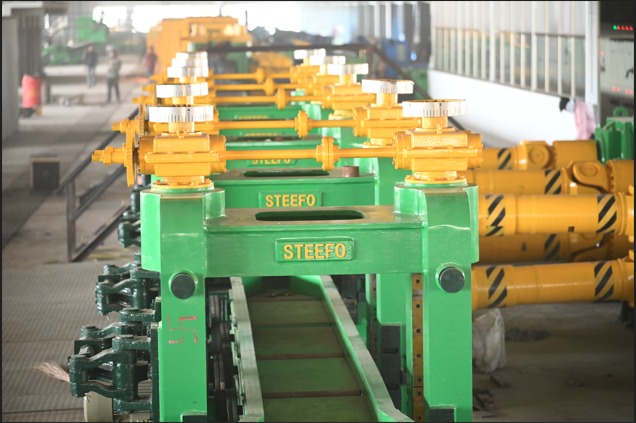
The company’s manufacturing facilities are equipped with advanced CNC machines, heat treatment systems, and precision assembly lines. These state-of-the-art tools are instrumental in creating robust, high-performance machinery capable of withstanding the demanding environment of steel rolling mills. Whether it’s the rolling stands, gearboxes, or loopers, each part is engineered for durability, energy efficiency, and operational continuity.

Steefo’s machinery is particularly acclaimed for optimising throughput in TMT bar mill operations. The design focuses on consistent product quality, lower maintenance requirements, and enhanced thermal and mechanical efficiency. This ensures a faster return on investment for mill owners and also lower lifetime operational costs—an essential consideration in today’s competitive steel market.

Installation & Commissioning – Timely Execution, Seamless Startups

A standout advantage of partnering with The Steefo Group for turnkey solutions is the efficiency and expertise it brings to the installation and commissioning phases. Once manufacturing is complete, the company’s expert teams take over the on-site execution with meticulous planning and precision.

From mechanical erection to electrical integration, every installation is supervised by seasoned engineers and technicians. Steefo’s approach is systematic, ensuring each part of the mill is correctly aligned, connected, and configured for maximum performance. This reduces the scope for errors and accelerates the transition from construction to production.

The commissioning process is swift, structured, and focused on minimising downtime. Steefo follows a robust testing protocol that includes load testing, safety checks, and full-system validation before handing over the mill for commercial operation. Compliance with safety regulations and industry standards is a top priority throughout the process, ensuring both reliability and peace of mind for mill operators.

Beyond Installation – Training, Support & AMC

Steefo’s commitment doesn’t end at commissioning. As part of its turnkey solutions, the company offers comprehensive post-installation support that empowers clients to operate and maintain their mills with confidence.

Operator training is a standard part of every project handover. Experienced trainers work directly with on-ground staff to ensure complete knowledge transfer on machine operation, troubleshooting, and routine maintenance procedures. This reduces dependence on external support and boosts overall plant efficiency.

For long-term reliability, Steefo offers Annual Maintenance Contracts (AMC) and performance monitoring services. These programs include periodic inspections, preventive maintenance, and performance audits, keeping the TMT bar rolling mills in optimal condition throughout its lifecycle.

In addition, Steefo continues to support its clients with software updates, mechanical upgrades, and access to technical expertise. This ongoing partnership ensures that businesses not only launch successfully but also continue to thrive in a competitive landscape.

Why Choose The Steefo Group for Turnkey Solutions?

  • Proven Global Experience: Steefo has successfully executed turnkey projects for TMT bar mills and other steel plants across India, Africa, the Middle East, and Southeast Asia, showcasing its global competence and reliability.
  • Single-Point Accountability: From design and manufacturing to installation and after-sales service, Steefo ensures complete responsibility throughout the project lifecycle, minimising risks and ensuring streamlined execution.
  • Client Satisfaction & Long-Term Relationships: Repeat business and client testimonials highlight Steefo’s ability to deliver high-quality steel mills with consistent performance and unmatched technical support.
  • Customised, Performance-Driven Solutions: Each project is tailored to specific production goals, site conditions, and business needs—maximising output, efficiency, and return on investment.
  • In-House Manufacturing & R&D Strength: Steefo’s integrated manufacturing units and dedicated R&D team ensure control over quality, innovation, and timely delivery—key advantages in turnkey solutions.
  • Fast Commissioning & Technical Expertise: The company’s skilled on-site teams enable quicker commissioning and smoother startups, reducing downtime and accelerating plant profitability.
  • Cost-Efficient & Scalable Execution: Whether setting up a greenfield plant or upgrading an existing one, Steefo offers scalable, cost-effective solutions with clear long-term benefits.

Future-Ready Solutions for TMT Bar Rolling Mills

As the steel industry evolves, Steefo is leading the charge toward Industry 4.0 with intelligent automation, real-time monitoring systems, and smart process control integration. These advancements enhance plant efficiency and also improve decision-making through data-driven insights.

Steefo’s turnkey solutions also emphasise sustainability, incorporating energy-efficient motors, water recycling systems, and low-emission technologies. Backed by an active R&D division, the company continually innovates to meet emerging market demands and regulatory standards.

With a clear focus on the future, The Steefo Group ensures that every TMT bar rolling mill it delivers is not just functional for today but built to adapt to tomorrow’s challenges, making it a true partner in long-term growth and technological transformation.

Partner with The Steefo Group for Trusted Turnkey Solutions

When it comes to building or upgrading a TMT bar rolling mills, choosing the right partner can make all the difference. The Steefo Group offers more than just machinery—it delivers complete turnkey solutions backed by decades of engineering expertise, global experience, and a commitment to excellence. From design and manufacturing to installation, training, and long-term support, Steefo ensures your project is executed with precision, efficiency, and accountability.

Our approach is simple: streamline your project by managing every phase under one roof. This minimises delays and errors and enhances overall performance and cost-effectiveness. With a sharp focus on Industry 4.0, sustainability, and future-ready technologies, we don’t just build rolling mills—we build smart, scalable production systems that stand the test of time.

Whether you’re launching a greenfield project or modernising an existing facility, Steefo is ready to support your goals with innovative, reliable, and custom-engineered solutions. Join the many steel manufacturers around the world who trust Steefo to power our growth.

Let’s build your next rolling mill the right way—on time, on budget, and beyond expectations. Contact The Steefo Group today at +91 87589 98607 or email us at marketing@thesteefogroup.com to get started.

Categories
Blogs


Steel is a critical material employed in numerous industries, from automotive and aerospace to construction and manufacturing. However, creating superior-quality steel requires a complex procedure involving various stages involving rolling, melting, casting, and more. The rolling process is the most vital step in deciding the final shape and proportions of steel products. Structural mills specialize in this process stage, and they can benefit from turnkey solutions to enhance their output and efficiency while lowering costs.

What Are Turnkey Solutions for Structural Mills?

A turnkey solution is a complete system that supplies everything required to install and utilize a steel rolling mill, starting from concept planning, design, engineering, and its conception to installation, commissioning, execution, and training. Turnkey solutions benefits everyone, who needs more assistance and experience or basic technical and industry-specific know-how in the steel industry.

A turnkey provider for structural mills generally shows a spectrum of services, which includes site inspection, task management, gear selection, operation optimization, mechanization, and upkeep. By selecting turnkey solutions, customers can profit from an efficient method that reduces hazards, expenses, and delays. Turnkey solutions also allow the customer to concentrate on their core business while leaving the technical elements of the steel rolling mill to the specialists.

How Can Turnkey Solutions Enhance Efficiency and Output in Structural Mills?

Structural mills are facilities that are created specifically to deliver a wide variety of structural steel products, like channels, beams, rails, and angles. The output and overall efficiency of a structural mill rely on various elements:

  • Raw materials quality.
  • Equipment operation and design. 
  • Skills of the workforce.

Turnkey solutions for structural mills can enhance efficiency and output in various ways. A turnkey solution provider like The Steefo Group can comprehensively examine the customer’s demands and necessities and develop a custom-made solution that improves the whole operation, from material management to product packaging. This can assist in decreasing waste, lowering downtime, and boosting throughput.

Further, turnkey solutions can assist in enhancing the steel products’ quality created by the structural mill. Providers like The Steefo Group also combine state-of-the-art technologies and automation procedures that improve the rolling process’s accuracy and consistency. This can assist in creating steel products that satisfy or surpass the mandated specifications, improving their value.

How Can Turnkey Solutions Lower Prices in Structural Mills?

Lowering expenses is vital for any business, and rolling mills are no exception. Turnkey solutions can support decreased expenditures in numerous ways, like:

1. Optimal Equipment Selection

The Steefo Group helps in choosing the ideal equipment for the consumers’ requirements and funding, considering aspects such as maintenance necessities, energy efficiency, and implementation.

2. Process Optimization

 Providers can also support in optimizing the total process, from material management to finished packaging, to decrease waste and labor prices.

3. Automation

They can also integrate progressive automation systems that downsize the need for manual engagement, lowering labor costs and enhancing productivity.

4. Maintenance

Providers also offer complete maintenance assistance to ensure the equipment is in optimal shape, decreasing the chances of downtime and breakdown.

Advantages of Turnkey Solutions for Structural Mills

The advantages of turnkey solutions for structural mills are considerable, including:

1. Streamlined and Efficient Process

Turnkey solutions allow the consumer to concentrate on their primary business actions while leaving the technological elements of the steel rolling mill to the specialists. This can end in an efficient procedure that decreases the risks, delays, and costs.

2. Customized Solutions

Providers also give customized solutions to the consumers’ precise needs and necessities regarding budget, materials, volume, and demand.

3. Improved Quality and Consistency

Turnkey solutions combine technologies and automation that improve the rolling process’s accuracy and consistency. It also helps create good-quality products that satisfy or outmatch the standards, increasing marketability.

4. Reduced Costs

Turnkey solutions can help reduce costs by optimizing the entire process, selecting the most suitable equipment, incorporating advanced automation systems, and providing comprehensive maintenance services.

5. Faster Time-to-market

Turnkey solutions can accelerate the time-to-market of the client’s steel products by minimizing delays, improving efficiency, and ensuring high-quality standards.

Understanding The Steefo Group’s Products 

The Steefo Group specializes in everything, from turnkey projects to modular projects, relying on the demands of your business. From TMT bar rolling mills, structural mills, and wire rod mills to products such as mill stands, rolling mill gearboxes, reheating furnaces, and more.

Our turnkey projects experience stringent testing and quality checks to provide the best-in-class products. Our focus on technology and innovation also provides you with the most up-to-date products for your rolling mill.

To learn more about the Steefo Group and their products and how they can improve your productivity and profits, contact +91 98240 76873 or drop a mail at marketing@thesteefogroup.com.