
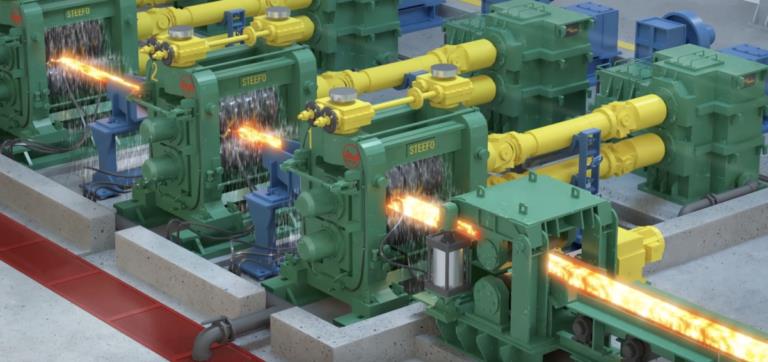
Choosing the right rolling mill for your business is one of the most important decisions you will make in the steel production process. The performance and efficiency of the rolling mill will affect the quality of your products, the speed of your manufacturing process, and ultimately, your business’s bottom line. Whether you are producing plates, bars, rods, or coils, selecting the right mill requires a comprehensive understanding of your production needs, material requirements, and product specifications.
In this blog post, we will guide you through the factors that matter when selecting the right rolling mill, with a particular focus on hot rolling mills. We will also discuss how The Steefo Group, a leader in the hot rolling mill industry, can provide solutions that align with your specific needs.
The Significance of Choosing the Right Hot Rolling Mill
The rolling mill is the heart of steel production in many industries. Hot rolling mills, specifically, are used to process steel at high temperatures, shaping the metal into different forms, such as sheets, plates, coils, and bars. The right mill not only determines the quality of the final product but also influences the efficiency, cost, and overall competitiveness of your business.
When choosing a hot rolling mill, several factors must be considered, ranging from the type of steel you plan to process to the scale of production and the specific product requirements. Making the correct choice ensures that your operations are efficient, cost-effective, and able to meet the needs of your customers, both now and in the future.
Key Factors to Consider When Choosing a Hot Rolling Mill
Steel Grade: Impact on Mill Selection
The first significant factor to consider when selecting a rolling mill is the steel grade you will process. Different grades of steel, such as carbon steel, alloy steel, stainless steel, or high-strength steel, have unique characteristics that will influence the performance of your mill. For example, stainless steel has higher alloy content and is more challenging to process than carbon steel. Therefore, you will need a mill that can handle high temperatures and pressures to produce a finished product of the required quality.
The steel grade will determine the type of equipment and features that your hot rolling mill should have. For instance, high-strength low-alloy (HSLA) steel demands precise temperature control and robust mechanical strength, which could lead you to choose a mill with advanced automation features for better control over temperature and speed.
In the case of The Steefo Group, our hot rolling mills are designed to cater to a variety of steel grades, ensuring that customers can process everything from basic carbon steels to advanced alloys with ease and efficiency. By using high-quality materials and precision engineering, Steefo ensures that each mill is optimally designed for the specific steel grade you work with.
Production Scale: Small vs. Large-Scale Operations
Another key factor in selecting the right rolling mill is your production scale. The type of mill you choose will vary depending on whether you are running a small-scale operation or a large-scale manufacturing facility.
- Small-Scale Production: If you are running a small business, you may need a compact, lower-capacity mill that can handle smaller batches. These mills are typically more affordable and easier to maintain. Hot rolling mills designed for small-scale operations are ideal for producing specialised products or for businesses that require a high degree of flexibility.
- Large-Scale Production: For larger facilities, you need a rolling mill that can handle high volumes of steel without compromising quality or efficiency. Hot rolling mills for large-scale production are often designed to run continuously, with a focus on automation, speed, and minimal downtime. These mills are built to withstand high-volume production demands and deliver consistent results over time.
Product Variety: Meeting Diverse Production Needs
The hot rolling mill you choose should be compatible with the types of products you plan to produce. Different products, such as plates, rods, bars, and coils, require specific equipment features. For example:
- Plates: When producing plates, you need a mill that can handle thick slabs of steel and can provide precise thickness control. The hot rolling mill for plate production should have heavy-duty components to withstand high temperatures and pressures during rolling.
- Wire Rods: Wire rod mills require a mill that ensures consistency in production while maintaining rigidity. The mill must be capable of running at high speeds without compromising the shape, size, or strength of the wire.
- Bars and Coils: The production of bars and coils requires precise control over the rolling process to maintain uniformity and meet dimensional requirements. Here, high-speed mills with automated features are often the best option.
When selecting a hot rolling mill, it is crucial to match the mill’s capabilities to your product type. The Steefo Group offers customised solutions for a wide range of products, ensuring that each mill is capable of meeting the specific requirements of your manufacturing needs.
Production Process: Adaptation to Specific Needs
Each hot rolling mill is designed to meet the unique requirements of different production processes. For example, plate rolling may require a multi-pass mill, while bar rolling might need a more continuous process.
The mill’s configuration, such as the number of stands, roll arrangements, and pass design, will vary depending on whether the process involves flat or long products. By thoroughly understanding your production process, you can select the mill that best meets your needs.
Detailed Analysis of Hot Rolling Mill Process Design
Structural Type of Hot Rolling Mill
The structure of the rolling mill plays a vital role in its performance. There are several types of hot rolling mills, each suited for specific applications:
- 2-High Mills: These are the simplest type of mills and are ideal for smaller-scale operations. They are typically used for rolling thicker products like beams or plates.
- 4-High Mills: These mills are more versatile and are used for producing thinner products like sheets and foils. They offer better control over thickness and can be used for both ferrous and non-ferrous metals.
- 6-High Mills: These are ideal for high-precision work and are often used in applications where accuracy is critical, such as the production of high-end alloys or fine sheets.
Each structural type has its advantages, and your choice will depend on the material properties, product thickness, and precision required for your application.
Number of Rolling Mills Required
Large-scale operations may require multiple hot rolling mills to handle various tasks simultaneously. Multiple mills can work in tandem to produce different products or to handle higher volumes of material. For example, a multi-stand mill setup allows for coiled steel to be processed efficiently, while an additional bar mill may handle steel bars.
Determining the number of mills required will depend on your production needs, material types, and the range of products you produce. The Steefo Group offers both single and multi-stand hot rolling mills that can be customised to suit your operational requirements.
Laying Method: Best Practices for Mill Layout
The layout of the hot rolling mill in your facility is crucial to maximising efficiency. A well-designed layout minimises the distance between operations, reduces material handling time, and ensures smooth production flow. Factors such as equipment placement, accessibility for maintenance, and integration with other plant operations should all be considered when designing the layout.
Technical Parameters: Speed, Temperature, and Size
Hot rolling mills are designed to operate within specific technical parameters, including:
- Rolling Speed: Higher speeds improve productivity but can affect the quality of the finished product if not appropriately controlled.
- Temperature Range: The ability to maintain the correct temperature during rolling is critical for the material’s quality.
- Mill Size: The size of the mill should match the production scale and product dimensions.
Choosing a hot rolling mill that offers flexibility in these parameters can help ensure that the final product meets your exact specifications.
Factors Affecting Hot Rolling Mill Performance
Equipment Utilisation & Production Efficiency
Maximising equipment utilisation is key to ensuring the efficient operation of your rolling mill. Downtime due to maintenance, equipment failure, or other issues can significantly reduce productivity and increase operating costs. Therefore, choosing a mill with high efficiency and reliability is critical. Automated systems and predictive maintenance features can also help optimise the mill’s performance.
Product Quality: Maintaining Standards
A hot rolling mill must ensure the product meets industry standards and customer specifications. This involves precise control of temperature, speed, and material thickness. The Steefo Group’s hot rolling mills are designed to maintain strict tolerances and produce high-quality materials that meet both national and international standards.
Automation & Mechanisation: Enhancing Efficiency
Automation in hot rolling mills can improve production speed, reduce human error, and increase safety. Modern mills are equipped with automated systems that adjust process parameters in real-time, improving overall consistency and minimising variations in the final product.
Selecting a Hot Rolling Mill Based on Product Type
Plate Rolling Mills
For plate rolling, precision is paramount. Plates are often used in critical applications, such as in the automotive or construction industries, where strength and accuracy are essential. The hot rolling mill for plates should offer precise control over thickness, width, and surface quality.
Wire Rod Mills
Wire rod mills are designed for the high-speed production of wire rods, which require a mill capable of maintaining consistency and rigidity during rolling. These mills are designed to operate continuously, reducing production costs while maintaining product quality.
Maintenance Considerations for Hot Rolling Mills
Ease of Maintenance & Spare Parts Availability
Maintenance is a critical aspect of ensuring the long-term performance of hot rolling mills. A mill that is easy to maintain and has readily available spare parts can reduce downtime and keep production running smoothly. The Steefo Group’s hot rolling mills are designed for easy maintenance and come with a comprehensive support system for spare parts.
Long-Term Performance
Choosing a high-quality rolling mill ensures long-term performance with minimal breakdowns. Investing in a well-built mill reduces the likelihood of frequent repairs and ensures that your equipment runs at peak efficiency over its lifespan.
Why Choose The Steefo Group for Hot Rolling Mill Equipment?
Experience & Reputation
With over 45 years of experience, The Steefo Group is a trusted name in the hot rolling mill industry. As a Star Export House, Steefo has established itself as a leader in the field, providing cutting-edge technology and high-quality mills to clients worldwide.
Quality & Innovation
The Steefo Group is committed to providing rolling mills that meet the highest standards of quality. Their hot rolling mills are designed using the latest technology, ensuring that your production process remains efficient and reliable.
Customer Success
Steefo’s reputation for excellence is reflected in the success of its customers. From steel manufacturers to automotive suppliers, businesses worldwide trust Steefo for their hot rolling mill needs.
Key Takeaway
Selecting the right rolling mill is a critical decision that directly impacts your steel production process, influencing everything from product quality to production efficiency. The right hot rolling mill ensures that your operation runs smoothly, reduces downtime, and consistently delivers high-quality results. By carefully considering factors like steel grade, production scale, and the specific requirements of your products, you can make an informed decision that supports long-term business success. A well-chosen rolling mill optimises your production flow, enhances profitability, and positions your business for continued growth in a competitive market.
The Steefo Group Can Help You Make an Informed Decision on Choosing the Right Hot Rolling Mill
When it comes to choosing the right hot rolling mill for your business, having the right expertise and guidance is crucial. The Steefo Group is dedicated to helping you make an informed decision, ensuring that your rolling mill meets all your production needs. With over four decades of experience in the industry, Steefo has become a trusted name in providing high-quality hot rolling mills that offer unmatched performance, efficiency, and reliability.
Choosing the right rolling mill is more than just about equipment. It’s about ensuring the mill’s features and performance are tailored to meet your business objectives. Whether you’re producing plates, bars, rods, or coils, Steefo’s team of experts will help you navigate through every decision, from understanding your material requirements to selecting the correct specifications for your production scale.
With The Steefo Group by your side, you gain access to customised solutions tailored to your specific needs, supported by our proven track record of success. Our dedication to customer satisfaction means that we provide not just equipment, but long-term partnerships that ensure your mill operates at peak efficiency for years to come.
Contact The Steefo Group at +91 87589 98607 or write to us at marketing@thesteefogroup.com and take the first step toward optimising your production line.