Categories
Blogs Rolling Mill

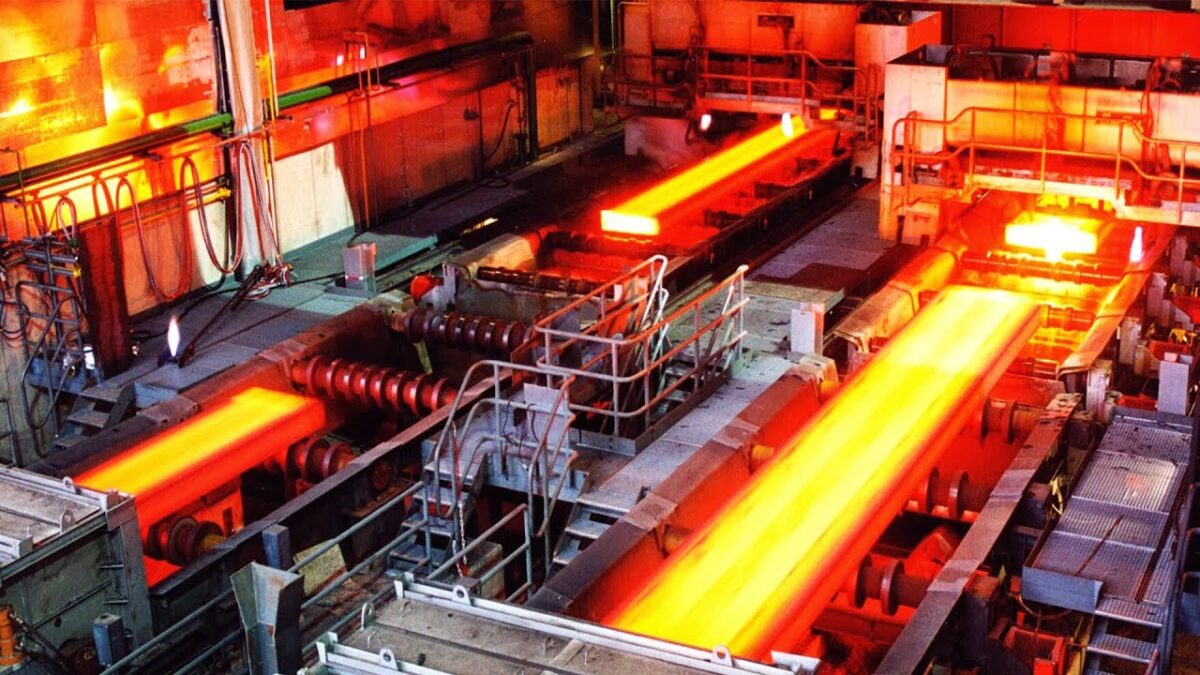
A finished steel bar does not come out of a steel plant in one step. It begins as a billet and then moves through heating, descaling, rolling, cooling, cutting, inspection, bundling, and dispatch. Every stage affects the next. That is why a rolling mill must be designed as a complete process, not as isolated machines.

Quick Answer:

In a rolling mill, a steel billet is heated, descaled, passed through roughing, intermediate, and finishing stands, shaped into the required bar size, cooled on a cooling bed, cut to length, inspected, bundled, and prepared for dispatch. Each stage controls the steel’s shape, surface quality, dimensional accuracy, and final usability.

For manufacturers, project consultants, and plant owners, this journey matters because it shows how steel quality is built step by step. The Steefo Group works in rolling mill and steel plant engineering with that full-process view in mind.

What Is a Billet in a Steel Plant?

A billet is a semi-finished steel product. It is usually square or rectangular in cross-section and is used to make long products such as bars, rods, flats, and structural sections.

In a rolling mill, the billet is the starting material. Its quality has a direct impact on the final bar. Chemical composition, surface condition, internal soundness, and dimensional consistency all matter. If the billet has defects, those issues can travel through the process and appear in the finished product.

That is why billet control is not a small detail. It is the foundation of the entire steel plant production flow.

Stage 1: Billet Inspection Before Rolling

The journey starts before heating. Every billet should be checked for size, grade, surface condition, and traceability. This first inspection helps confirm that the raw material is fit for rolling.

Typical checks include:

  • Billet size and cross-section
  • Grade verification
  • Surface cracks or folds
  • Bends or twists
  • Excess scale or contamination
  • Batch identification and traceability

This stage matters because a poor billet can create problems later in the line. No amount of precise rolling can fully compensate for a defective input. In a well-run rolling mill, billet acceptance is treated as a quality gate, not a formality.

For long-product manufacturers, this early control step helps reduce rejection, rework, and instability in production. It also supports consistency across batches, which is essential for every modern steel plant.

Stage 2: Reheating the Billet for Rolling

A billet must be heated before rolling so it becomes easier to deform. Steel that is cold is much harder to shape. When heated correctly, it becomes more plastic and can pass through the stands with less resistance.

The reheating furnace plays a major role here. It must deliver a uniform temperature across the billet. If the billet is heated unevenly, one section may roll differently from another. That can affect shape, surface quality, energy use, and mill productivity.

Good reheating supports:

  • Lower rolling force
  • Better deformation behaviour
  • Reduced risk of cracking
  • More stable mill operation
  • Improved output consistency

In practical terms, reheating is where the billet becomes ready for transformation. The better the temperature control, the smoother the rest of the rolling mill process will be.

Stage 3: Descaling Before the Billet Enters the Rolling Stands

During billet heating, an oxide layer develops on the steel surface due to exposure to high temperatures. Scale is a natural oxide layer, but it should not stay on the billet surface before rolling. If it does, it can be pressed into the steel and affect the finish quality.

That is why descaling is an important step. It removes the scale before the billet enters the stands. This may be done through water descaling or other scale-removal methods, depending on the line design.

Poor descaling can lead to:

  • Surface marks
  • Rolled-in scale
  • Rough finish
  • Higher reject risk
  • More cleaning issues later

This stage may look simple, but it has a strong effect on the final bar. In a well-designed rolling mill, descaling protects product quality before the main deformation begins.

Stage 4: Roughing Mill — The First Major Shape Change

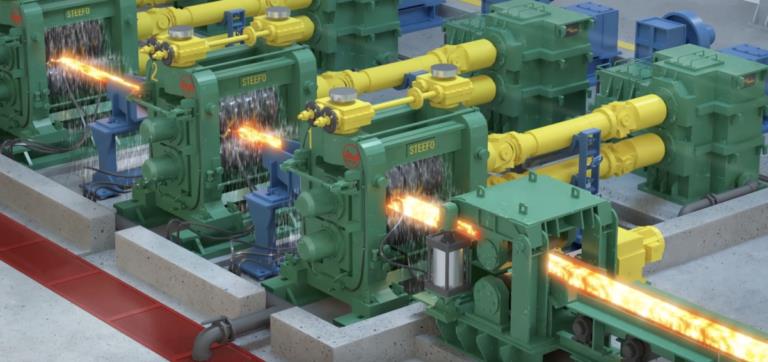
The roughing mill is where the billet undergoes its first major transformation. Here, heavy-duty stands reduce the cross-section and increase the length. The steel begins moving away from billet form and toward bar form.

This stage handles major deformation. That means the equipment must be strong, aligned, and stable. Guides, drives, gearboxes, and roller systems all need to work together so the billet moves smoothly through the line.

The roughing mill is important because it:

  • Breaks down the billet quickly
  • Starts the elongation process
  • Prepares the stock for later passes
  • Reduces the cross-section in controlled steps

The first shape change is not the final one. It is the foundation for everything that follows in the rolling mill sequence.

Stage 5: Intermediate Rolling — Controlling Shape and Size

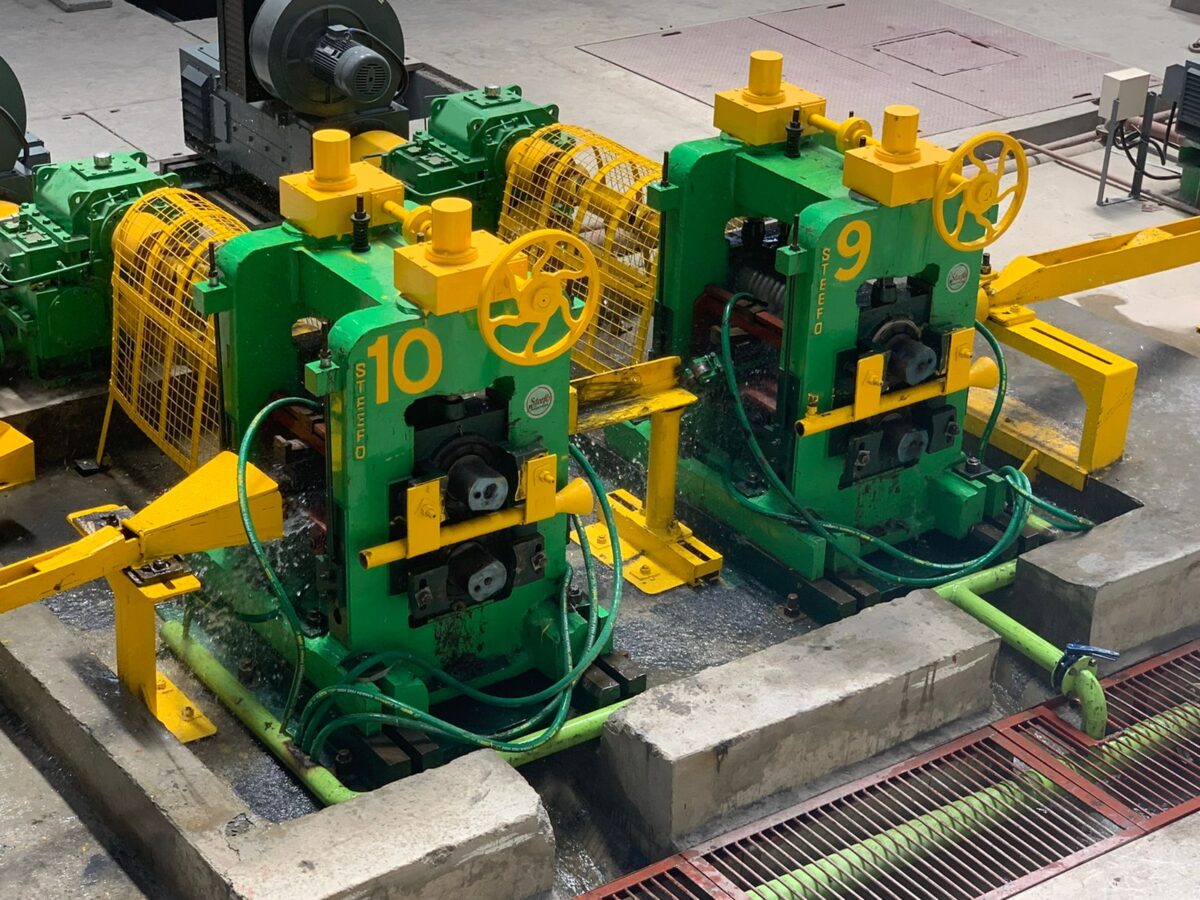
After roughing, the bar enters the intermediate stands. Here, the focus shifts from heavy reduction to control. The product continues to reduce in size, but now shape stability becomes more important.

This is where the bar gets closer to its target profile. The stands, guides, and pass design help maintain the correct movement and geometry. Speed coordination is also important because the bar must flow continuously without tension problems or misalignment.

Intermediate rolling helps with:

  • Further cross-section reduction
  • Better profile control
  • Smoother transfer between stands
  • Improved dimensional stability
  • Preparation for finishing passes

This stage is often the bridge between strength and precision. In a properly engineered rolling mill, the process is steady before the final sizing stage.

Stage 6: Finishing Mill — Achieving the Final Bar Profile

The finishing mill is where the steel gets its final shape and size. This stage is responsible for dimensional accuracy, surface quality, and consistency. The product now moves into its market-ready profile.

Depending on the product being made, the finishing mill can produce:

  • TMT bars
  • Round bars
  • Flats
  • Squares
  • Other long steel profiles

The finishing stands work with a precise roll pass design to deliver the required result. This is the stage where the bar becomes a finished product, not just a reduced section of steel.

The finishing mill must deliver:

  • Final size control
  • Consistent profile
  • Good surface finish
  • Stable line speed
  • Uniform output quality

This is one of the most important stages in the entire rolling mill process because it defines the product that buyers see and use.

Stage 7: Quenching or Controlled Cooling for TMT Bars

This stage is used when the product is a TMT bar. After the final finishing stand, the hot bar passes through a controlled cooling or quenching system. The outer surface cools quickly, while the inner core stays hotter for a little longer.

That difference creates the strength-flexibility balance needed in TMT reinforcement bars. The surface gains higher hardness, while the inner core retains better flexibility and toughness. This is why TMT bars are widely used in construction.

Controlled cooling helps achieve:

  • Strong outer surface
  • Ductile inner core
  • Better load performance
  • Improved bendability
  • Construction-grade reinforcement quality

Not every finished bar follows this exact path, but for TMT production, it is a key part of the rolling mill process.

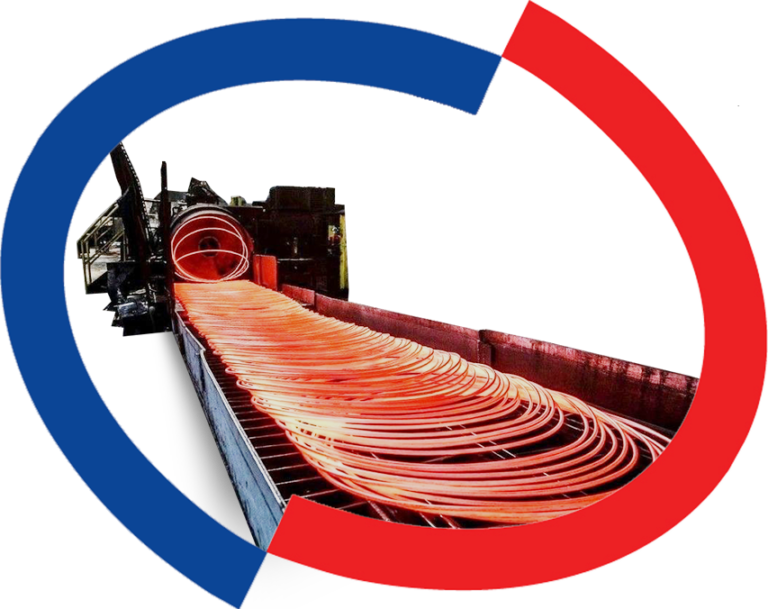
Stage 8: Cooling Bed — Bringing the Bar to a Stable Temperature

After rolling or quenching, the bar is transferred to the cooling bed. Here, the product cools in a controlled way before later handling steps.

The cooling bed helps:

  • Stabilise the bar temperature
  • Reduce distortion
  • Support straightness
  • Maintain dimensional consistency
  • Prepare the bar for cutting and bundling

This stage should not be treated as a waiting area. It is part of quality control. If the cooling is uneven or uncontrolled, the bar may twist, bend, or lose uniformity.

A good rolling mill line uses the cooling bed as a stabilising stage, not just a storage stage.

Stage 9: Cutting the Finished Bar to Saleable Lengths

Once the bar has cooled enough, it must be cut to saleable lengths. This can be done with hot shears during rolling or cold shear systems after cooling, depending on the process setup.

Cutting matters because buyers need standard lengths that are easy to transport, store, and use in fabrication or construction. Clean cutting also helps remove uneven ends and improves product handling.

This stage ensures:

  • Correct saleable length
  • Better dimensional accuracy
  • Cleaner bundle formation
  • Reduced waste and irregular ends

In a serious rolling mill, cutting is part of product finalisation, not just a finishing touch.

Stage 10: Inspection, Bundling and Dispatch

The last stage is inspection and dispatch. Finished bars are checked for surface condition, straightness, dimensions, and grade identification. Then they are counted, bundled, weighed, tagged, and prepared for storage or shipment.

Typical final checks include:

  • Size and profile verification
  • Surface inspection
  • Straightness check
  • Bundle counting
  • Weighing and tagging
  • Dispatch readiness

This stage completes the steel journey. By the time the bar leaves the plant, it should already be verified for quality and traceability. That is what turns a processed bar into a reliable commercial product from a modern steel plant.

Key Rolling Mill Equipment Used in the Billet-to-Bar Journey

Equipment Process Role

Why It Matters

Reheating furnace Heats the billet Makes steel easier to roll
Descaling system Removes surface scale Improves surface finish
Roughing stands First major reduction Starts shape transformation
Intermediate stands Controls size and flow Improves profile accuracy
Finishing stands Final shaping Delivers final dimensions
Guides and rollers Direct material flow Maintain alignment
Pinch rollers Support movement Improve line control
Loopers Manage tension and speed Help smooth transfer
Gearboxes and drives Power the stands Support a stable rolling force
Shearing machines Cut bars to length Create a saleable product
Cooling bed Stabilises hot bars Helps straightness and quality
Bundling systems Count and pack bars Prepare for dispatch

This equipment works as one line, not as separate units. That is why a rolling mill must be planned as an integrated system inside the steel plant.

What Determines the Quality of the Finished Bar?

A finished bar is only as good as the process that created it. Quality is not controlled by one machine alone. It comes from many decisions working together.

The main factors include:

  • Billet quality
  • Reheating temperature control
  • Pass design
  • Roll alignment
  • Speed control
  • Tension control
  • Cooling method
  • Cutting accuracy
  • Maintenance discipline
  • Operator skill
  • Automation and monitoring

This is where experience matters. A quality rolling mill does not rely on guesswork. It relies on controlled process design, proper equipment matching, and disciplined operation.

Why Rolling Mill Design Matters in the Final Output

A rolling mill must be engineered as a connected production system. If the layout is weak, the line becomes slow or unstable. If the equipment is mismatched, the plant may face bottlenecks, maintenance issues, or uneven output.

A strong design improves:

  • Production flow
  • Output consistency
  • Maintenance access
  • Energy use
  • Operator efficiency
  • Plant reliability

That is why steel plant owners should think beyond individual equipment. The best results come from a line where the furnace, stands, drives, guides, shears, cooling bed, and automation all work together.

For The Steefo Group, this system-based approach is central to rolling mill and steel plant engineering.

Choosing the Right Rolling Mill in Ahmedabad

Ahmedabad is one of India’s important industrial and manufacturing hubs. For buyers searching for a rolling mill in Ahmedabad, the right choice should be based on more than machine supply.

A reliable partner should offer:

  • Complete process understanding
  • Customised or turnkey solutions
  • Long-product engineering capability
  • Support for TMT, bar, structural, and section projects
  • After-sales service and spare support
  • Flow design from billet to dispatch

The most important point is this: the right partner should understand the entire steel journey, not just one machine. When that happens, the rolling mill becomes a production advantage, not just a capital purchase.

Conclusion

The journey from billet to finished bar is a connected process. Every stage matters. Billet quality, heating, descaling, roughing, intermediate rolling, finishing, cooling, cutting, inspection, and bundling all shape the final result.

When the rolling mill is designed and operated properly, the output becomes more consistent, more usable, and more reliable. That is what steel buyers, plant owners, and project decision-makers need from a modern steel plant.

Frequently Asked Questions (FAQs)

1. What is the journey of steel in a rolling mill?

Steel begins as a billet and moves through inspection, heating, descaling, roughing, intermediate rolling, finishing, cooling, cutting, inspection, bundling, and dispatch.

2. What is the first step in the rolling mill process?

The first step is billet inspection and acceptance before heating.

3. Why is a billet heated before rolling?

A billet is heated so it becomes more plastic and easier to deform during rolling.

4. What is the role of roughing, intermediate, and finishing stands?

Roughing starts the main reduction, intermediate improves shape control, and finishing gives the bar its final profile and accuracy.

5. What equipment is used in a rolling mill?

A rolling mill uses a reheating furnace, descaling system, rolling stands, guides, drives, shears, cooling bed, and bundling equipment.

6. What affects the quality of finished steel bars?

Billet quality, temperature control, pass design, alignment, speed, cooling, cutting, maintenance, and operator skill all affect the final bar.

7. How do I choose a rolling mill manufacturer in Ahmedabad?

Choose a manufacturer with complete process knowledge, customised engineering capability, support services, and experience in long-product steel plant projects.

Build a Rolling Mill That Delivers Consistent Steel Output

Looking to build or upgrade a rolling mill for reliable and efficient steel bar production? The Steefo Group delivers engineering-driven rolling mill and steel plant solutions designed to support productivity, operational stability, and long-term performance.

From billet handling and reheating to rolling, cooling, cutting, and dispatch, every system is developed to work as one connected process line. With experience across TMT bar mills, section mills, and long-product applications.

The Steefo Group focuses on helping manufacturers improve output quality, reduce downtime, and achieve smoother plant operations. Partner with a team that understands complete rolling mill flow, not just individual machinery. Contact us today.

Categories
Blogs Rolling Mill

Choosing the right rolling mill for your business is one of the most important decisions you will make in the steel production process. The performance and efficiency of the rolling mill will affect the quality of your products, the speed of your manufacturing process, and ultimately, your business’s bottom line. Whether you are producing plates, bars, rods, or coils, selecting the right mill requires a comprehensive understanding of your production needs, material requirements, and product specifications.

In this blog post, we will guide you through the factors that matter when selecting the right rolling mill, with a particular focus on hot rolling mills. We will also discuss how The Steefo Group, a leader in the hot rolling mill industry, can provide solutions that align with your specific needs.

The Significance of Choosing the Right Hot Rolling Mill

The rolling mill is the heart of steel production in many industries. Hot rolling mills, specifically, are used to process steel at high temperatures, shaping the metal into different forms, such as sheets, plates, coils, and bars. The right mill not only determines the quality of the final product but also influences the efficiency, cost, and overall competitiveness of your business.

When choosing a hot rolling mill, several factors must be considered, ranging from the type of steel you plan to process to the scale of production and the specific product requirements. Making the correct choice ensures that your operations are efficient, cost-effective, and able to meet the needs of your customers, both now and in the future.

Key Factors to Consider When Choosing a Hot Rolling Mill

Steel Grade: Impact on Mill Selection

The first significant factor to consider when selecting a rolling mill is the steel grade you will process. Different grades of steel, such as carbon steel, alloy steel, stainless steel, or high-strength steel, have unique characteristics that will influence the performance of your mill. For example, stainless steel has higher alloy content and is more challenging to process than carbon steel. Therefore, you will need a mill that can handle high temperatures and pressures to produce a finished product of the required quality.

The steel grade will determine the type of equipment and features that your hot rolling mill should have. For instance, high-strength low-alloy (HSLA) steel demands precise temperature control and robust mechanical strength, which could lead you to choose a mill with advanced automation features for better control over temperature and speed.

In the case of The Steefo Group, our hot rolling mills are designed to cater to a variety of steel grades, ensuring that customers can process everything from basic carbon steels to advanced alloys with ease and efficiency. By using high-quality materials and precision engineering, Steefo ensures that each mill is optimally designed for the specific steel grade you work with.

Production Scale: Small vs. Large-Scale Operations

Another key factor in selecting the right rolling mill is your production scale. The type of mill you choose will vary depending on whether you are running a small-scale operation or a large-scale manufacturing facility.

  • Small-Scale Production: If you are running a small business, you may need a compact, lower-capacity mill that can handle smaller batches. These mills are typically more affordable and easier to maintain. Hot rolling mills designed for small-scale operations are ideal for producing specialised products or for businesses that require a high degree of flexibility.
  • Large-Scale Production: For larger facilities, you need a rolling mill that can handle high volumes of steel without compromising quality or efficiency. Hot rolling mills for large-scale production are often designed to run continuously, with a focus on automation, speed, and minimal downtime. These mills are built to withstand high-volume production demands and deliver consistent results over time.

Product Variety: Meeting Diverse Production Needs

The hot rolling mill you choose should be compatible with the types of products you plan to produce. Different products, such as plates, rods, bars, and coils, require specific equipment features. For example:

  • Plates: When producing plates, you need a mill that can handle thick slabs of steel and can provide precise thickness control. The hot rolling mill for plate production should have heavy-duty components to withstand high temperatures and pressures during rolling.
  • Wire Rods: Wire rod mills require a mill that ensures consistency in production while maintaining rigidity. The mill must be capable of running at high speeds without compromising the shape, size, or strength of the wire.
  • Bars and Coils: The production of bars and coils requires precise control over the rolling process to maintain uniformity and meet dimensional requirements. Here, high-speed mills with automated features are often the best option.

When selecting a hot rolling mill, it is crucial to match the mill’s capabilities to your product type. The Steefo Group offers customised solutions for a wide range of products, ensuring that each mill is capable of meeting the specific requirements of your manufacturing needs.

Production Process: Adaptation to Specific Needs

Each hot rolling mill is designed to meet the unique requirements of different production processes. For example, plate rolling may require a multi-pass mill, while bar rolling might need a more continuous process.

The mill’s configuration, such as the number of stands, roll arrangements, and pass design, will vary depending on whether the process involves flat or long products. By thoroughly understanding your production process, you can select the mill that best meets your needs.

Detailed Analysis of Hot Rolling Mill Process Design

Structural Type of Hot Rolling Mill

The structure of the rolling mill plays a vital role in its performance. There are several types of hot rolling mills, each suited for specific applications:

  • 2-High Mills: These are the simplest type of mills and are ideal for smaller-scale operations. They are typically used for rolling thicker products like beams or plates.
  • 4-High Mills: These mills are more versatile and are used for producing thinner products like sheets and foils. They offer better control over thickness and can be used for both ferrous and non-ferrous metals.
  • 6-High Mills: These are ideal for high-precision work and are often used in applications where accuracy is critical, such as the production of high-end alloys or fine sheets.

Each structural type has its advantages, and your choice will depend on the material properties, product thickness, and precision required for your application.

Number of Rolling Mills Required

Large-scale operations may require multiple hot rolling mills to handle various tasks simultaneously. Multiple mills can work in tandem to produce different products or to handle higher volumes of material. For example, a multi-stand mill setup allows for coiled steel to be processed efficiently, while an additional bar mill may handle steel bars.

Determining the number of mills required will depend on your production needs, material types, and the range of products you produce. The Steefo Group offers both single and multi-stand hot rolling mills that can be customised to suit your operational requirements.

Laying Method: Best Practices for Mill Layout

The layout of the hot rolling mill in your facility is crucial to maximising efficiency. A well-designed layout minimises the distance between operations, reduces material handling time, and ensures smooth production flow. Factors such as equipment placement, accessibility for maintenance, and integration with other plant operations should all be considered when designing the layout.

Technical Parameters: Speed, Temperature, and Size

Hot rolling mills are designed to operate within specific technical parameters, including:

  • Rolling Speed: Higher speeds improve productivity but can affect the quality of the finished product if not appropriately controlled.
  • Temperature Range: The ability to maintain the correct temperature during rolling is critical for the material’s quality.
  • Mill Size: The size of the mill should match the production scale and product dimensions.

Choosing a hot rolling mill that offers flexibility in these parameters can help ensure that the final product meets your exact specifications.

Factors Affecting Hot Rolling Mill Performance

Equipment Utilisation & Production Efficiency

Maximising equipment utilisation is key to ensuring the efficient operation of your rolling mill. Downtime due to maintenance, equipment failure, or other issues can significantly reduce productivity and increase operating costs. Therefore, choosing a mill with high efficiency and reliability is critical. Automated systems and predictive maintenance features can also help optimise the mill’s performance.

Product Quality: Maintaining Standards

A hot rolling mill must ensure the product meets industry standards and customer specifications. This involves precise control of temperature, speed, and material thickness. The Steefo Group’s hot rolling mills are designed to maintain strict tolerances and produce high-quality materials that meet both national and international standards.

Automation & Mechanisation: Enhancing Efficiency

Automation in hot rolling mills can improve production speed, reduce human error, and increase safety. Modern mills are equipped with automated systems that adjust process parameters in real-time, improving overall consistency and minimising variations in the final product.

Selecting a Hot Rolling Mill Based on Product Type

Plate Rolling Mills

For plate rolling, precision is paramount. Plates are often used in critical applications, such as in the automotive or construction industries, where strength and accuracy are essential. The hot rolling mill for plates should offer precise control over thickness, width, and surface quality.

Wire Rod Mills

Wire rod mills are designed for the high-speed production of wire rods, which require a mill capable of maintaining consistency and rigidity during rolling. These mills are designed to operate continuously, reducing production costs while maintaining product quality.

Maintenance Considerations for Hot Rolling Mills

Ease of Maintenance & Spare Parts Availability

Maintenance is a critical aspect of ensuring the long-term performance of hot rolling mills. A mill that is easy to maintain and has readily available spare parts can reduce downtime and keep production running smoothly. The Steefo Group’s hot rolling mills are designed for easy maintenance and come with a comprehensive support system for spare parts.

Long-Term Performance

Choosing a high-quality rolling mill ensures long-term performance with minimal breakdowns. Investing in a well-built mill reduces the likelihood of frequent repairs and ensures that your equipment runs at peak efficiency over its lifespan.

Why Choose The Steefo Group for Hot Rolling Mill Equipment?

Experience & Reputation

With over 45 years of experience, The Steefo Group is a trusted name in the hot rolling mill industry. As a Star Export House, Steefo has established itself as a leader in the field, providing cutting-edge technology and high-quality mills to clients worldwide.

Quality & Innovation

The Steefo Group is committed to providing rolling mills that meet the highest standards of quality. Their hot rolling mills are designed using the latest technology, ensuring that your production process remains efficient and reliable.

Customer Success

Steefo’s reputation for excellence is reflected in the success of its customers. From steel manufacturers to automotive suppliers, businesses worldwide trust Steefo for their hot rolling mill needs.

Key Takeaway

Selecting the right rolling mill is a critical decision that directly impacts your steel production process, influencing everything from product quality to production efficiency. The right hot rolling mill ensures that your operation runs smoothly, reduces downtime, and consistently delivers high-quality results. By carefully considering factors like steel grade, production scale, and the specific requirements of your products, you can make an informed decision that supports long-term business success. A well-chosen rolling mill optimises your production flow, enhances profitability, and positions your business for continued growth in a competitive market.

The Steefo Group Can Help You Make an Informed Decision on Choosing the Right Hot Rolling Mill

When it comes to choosing the right hot rolling mill for your business, having the right expertise and guidance is crucial. The Steefo Group is dedicated to helping you make an informed decision, ensuring that your rolling mill meets all your production needs. With over four decades of experience in the industry, Steefo has become a trusted name in providing high-quality hot rolling mills that offer unmatched performance, efficiency, and reliability.

Choosing the right rolling mill is more than just about equipment. It’s about ensuring the mill’s features and performance are tailored to meet your business objectives. Whether you’re producing plates, bars, rods, or coils, Steefo’s team of experts will help you navigate through every decision, from understanding your material requirements to selecting the correct specifications for your production scale.

With The Steefo Group by your side, you gain access to customised solutions tailored to your specific needs, supported by our proven track record of success. Our dedication to customer satisfaction means that we provide not just equipment, but long-term partnerships that ensure your mill operates at peak efficiency for years to come.

Contact The Steefo Group at +91 87589 98607 or write to us at marketing@thesteefogroup.com and take the first step toward optimising your production line.

Categories
Blogs Rolling Mill

Mill stands are one of the most crucial pieces of equipment in the entire rolling mill process. A mill stand is usually fit with numerous rolls via which the workpiece bar goes through, achieving its necessary cross-section. Several mill stand designs serve different purposes in the rolling process.

Housing-less Mill Stand

A Housing-less mill stand is specifically designed to create superior quality TMT bars, wire rods, channels, bars, universal beams, angles and more. The housing-less mill stand can do this effortlessly due to its rigidity and roll change abilities. These mill stands are usually also equipped with complete automation, especially during the connection and disconnection of fluid utilities and spindles. This automation assists the mill stand in becoming more efficient and quick in comparison to others. Housing-less mill stands also have a reduced stress path, screw-down automation, axial roll adjustment abilities along with complete automation, self-balancing spindle and reduced backlash. Roll change is easier in the same.

2-HI Conventional Mill Stand

A 2-HI conventional mill stand has two work rolls that are pressed together with enormous force. The 2-HI mill stand contains non-reversing rolls that rotate in the same direction, which means that the workpiece bar cannot be fed from the other direction. A 2-HI stand either has to be a vertical or a horizontal stand.

3-HI Conventional Mill Stand

A 3-HI mill stand is essentially needed in hot rolling reversing mills without switching the order of rotation of the rolls. In this type of mill stand, there are three working rolls. The top and bottom roll rotate in the same direction; meanwhile, the centre roll turns in the opposite direction. This is important as the workpiece bar keeps passing back and forth alternately through the rolls without reversing the direction in which the roll turns.

Pre-Stressed Mill Stand

Pre-stressed mill stands are different from conventional mill stands. In this case, the mill is already pre-stressed with the help of hydraulic four nuts. This allows them to be prepared with the highest force needed for rolls operating during the rolling period. The process allows any deflection of the mill stand to be avoided, especially under the rolling load.

Universal Mill Stand

A universal mill stand is a rolling stand that rolls in four ways. It is used in the rolling section where the section is shaped from all four sides. There are two vertically and horizontally mounted rolls in a universal mill stand. The vertical rolls are inactive and are positioned amid the bearing chocks of the horizontal rolls in the vertical plane. The vertical rolls are essentially present to manage the width of the bar during the rolling process.

Convertible Stands

Convertible mill stands allow conversion in the positioning. The stand allows either vertical or horizontal positioning during the intermediate finishing, depending on the production requirements. Convertible mill stands are convenient due to their speed during changing positions. It takes less than two minutes to do so. The stand rigidity is also an added advantage. The quick stand change system also does require any crane support and is equipped with reduced fountain depth.

Cantilever Stand

A cantilever stand is quite similar to a block mill, has both horizontal and vertical configurations, and can be configured to meet the client’s design requirements. The sleeve bearing on which the rolls are mounted can achieve high speeds and produce wire rods ranging from 5.5mm to 8mm.  The rolls are essentially small discs placed on the cantilever shafts and are available for one or two passes. The material o the roll is often hard and is created out of tungsten carbide.

Vertical Mill Stand

This up-drive type comprises a roll stand, mill spindles, a vertical gear reducer, a pinion stand, and a motor. To protect them from the roll cooling water and mill scale, the gear reducer and motor are installed on a concrete frame. There is also a lifting device under the roll stand that is installed to manage the position of the caliber to pass the level. The roll stand can be moved to the work side during stand changing.

Horizontal Mill Stand

The horizontal mill stand comprises of a roll stand, mill spindles, a pinion stand, a gear reducer and a motor. In the case of a regular pass line, the roll stand slides on the exterior of the sole plate. In a low-speed rolling mill with less than 10 m/sec, the pinion stand and gear reducer are from a single unit. A cross pin joint is used for the mill spindle and is supported by the spindle carrier during rolling.

Bottom Line

In a rolling mill, rolling mill stands are used for several purposes, including generating billets, slabs, blooms, bars, plates and other sheet products. Rolling mill stands were initially used for steel casting, but today they are usually created from cast slabs or rolled plates.