Demand for high-strength Thermo Mechanically Treated (TMT) bars is surging across the global construction sector. From towering residential skyscrapers to massive public infrastructure projects, the market requires unparalleled volumes of structural steel. This creates immense daily pressure on steel plant managers and floor operators. The objective is clear and relentless. Facilities must push for maximum daily output without ever compromising the structural integrity or quality of the steel.
Older manufacturing setups struggle significantly under these harsh, modern demands. Traditional heavy frames create severe bottlenecks and precision issues during continuous, high-speed production runs. The huge cast iron housings found in older equipment stretch and flex under heavy loads. This flexing leads to gauge variations, causing the final TMT bars to fall outside strict weight and dimensional tolerances. When precision drops, profitability immediately follows.
The core solution for overcoming these industrial bottlenecks lies in modern mechanical upgrades. Switching your primary equipment to a housingless mill stand is the most reliable way to guarantee uniform TMT bar dimensions. Furthermore, this specific upgrade drastically cuts down on expensive plant downtime. The modern engineering behind these units transforms how a heavy manufacturing facility operates daily.
The Engineering Behind Modern TMT Manufacturing
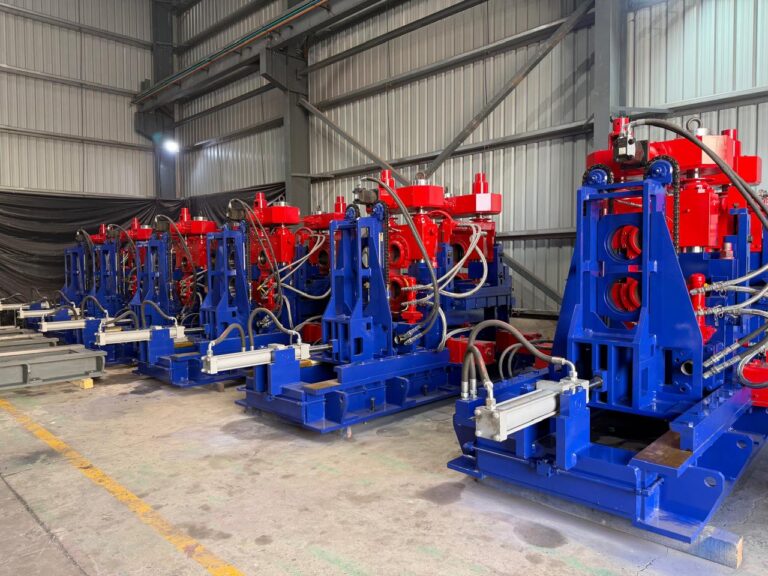
Understanding why a housingless mill stand outperforms legacy equipment requires a close look at its stripped-down, highly efficient design. This industrial unit entirely removes the outer cast housing that defines conventional setups. Instead of relying on a bulky, heavy frame to contain the rolling forces, the roll chocks connect directly to each other via high-strength, pre-stressed tension screws. This creates an incredibly rigid and compact rolling module. The top and bottom chocks are locked together firmly, ensuring the rolls remain where they need to be during heavy operation.
The fundamental engineering principle driving this efficiency is the short stress path. In traditional mill stands, the extreme separating force generated by the hot steel billet travels through a long route. It moves from the rolls to the chocks, up the pressure screws, into the cast housing, and finally back down. This long path acts like a giant, heavy spring. Under extreme pressure, the housing stretches slightly. This elastic stretch causes the rolls to part, which ruins the dimensions of the steel.
A housingless mill stand dramatically shortens this stress path. The intense rolling force only travels through the rolls, the chocks, and the immediately connecting tension screws. A shorter stress path means the machine absorbs rolling forces far more effectively than conventional equipment found in older rolling mills. Because the tension screws are short and highly rigid, their elastic elongation is practically zero. This eliminates the mill spring effect.
How a Housingless Mill Stand Upgrades TMT Bar Quality
The precision that a housingless mill stand provides translates immediately into superior steel products. Upgrading your facility guarantees three direct improvements to the final product.
1. Attain High Dimensional Accuracy
Minimal roll deflection keeps the hot metal exactly within the required tolerance from the very first pass. Traditional rolling mills often produce bars that are slightly overweight due to roll parting under load. This forces manufacturers to give away free steel to meet minimum length requirements. The hyper-rigid design of a housingless mill stand eliminates this costly issue. The rolls hold their gap under maximum load. This extreme dimensional accuracy is a non-negotiable factor for standard TMT ribbed profiles to meet strict international building codes.
2. Guarantee Uniform Metal Deformation
Inside a housingless mill stand, the structural rigidity ensures flawless shaping. The hot steel billet gets shaped perfectly and evenly from the first roughing pass to the final finishing block. Uniform deformation is critical for the internal grain structure of the metal. When the steel is compressed evenly, its tensile strength and yield strength become highly consistent across the entire length of the bar. There are no weak spots or uneven zones caused by mechanical flex.
3. Deliver a Flawless Surface Finish
Consistent pressure across the highly stable rolls prevents structural flaws on the final steel bars. Any vibration or shifting in traditional mill stands can cause surface tearing, uneven rib formation, or lap defects. By eliminating mechanical play, the rolls bite the steel smoothly. This guarantees that the transverse ribs—which are essential for concrete bonding in construction—are formed at the required depth and spacing.
Drive Plant Floor Efficiency
Beyond product quality, incorporating a housingless mill stand on the floor revolutionises operational speed. The focus shifts strictly to the speed of maintenance and uninterrupted running times.
Unplanned production stops are the biggest profit drain in modern steel plants. Every minute a line sits idle, the facility bleeds potential revenue. Traditional setups require hours of manual labour to fix issues or adjust guides. In contrast, modern equipment is designed to keep the red-hot steel moving at maximum velocity. Fast maintenance protocols ensure that the line rarely stops for long.
The mechanics of quick roll changes completely transform the shift changeover process. In older facilities, changing worn rolls meant shutting down the line and dismantling heavy components right on the floor. Every modern housingless mill stand supports an offline standby method. While the active unit is running, floor staff prepare the next unit in the workshop area. When a roll change is required, operators disconnect a single utility plate. An overhead crane lifts the entire spent module out of the line and drops the pre-aligned new unit into place. This turns an exhausting two-hour mechanical swap into a swift fifteen-minute procedure.
This speed directly maximises continuous rolling operations. Modern equipment handles incredibly long production runs without needing constant manual adjustments from the floor staff. Because the rolls do not flex or part, operators do not have to constantly tweak the screw-down mechanisms to compensate for wear or gauge variation. The machine simply runs seamlessly until the scheduled changeover time.
Mechanical Superiority and Equipment Longevity
Every housingless mill stand engineered for heavy industry is built to survive brutal conditions while protecting its most delicate internal components.
Better load distribution directly protects the internal bearings from premature failure and excessive wear. Heavy-duty spherical roller bearings or multi-row cylindrical bearings sit inside the chocks. Because the short stress path prevents the rolls from bending, the load on these bearings remains perfectly even. There is no edge-loading or twisting force applied to the bearing races. This extends bearing life under heavy loads significantly, saving plants lakhs of rupees in replacement parts every quarter.
Furthermore, these modern units excel at eradicating backlash. A housingless mill stand features self-balancing spindle mechanisms and automated screw-down features. Traditional setups often suffer from mechanical play between the threads and the chocks. When the steel billet hits the rolls, this gap snaps shut, causing a shockwave through the machine. Modern roll balance systems use powerful hydraulic cylinders to keep the chocks constantly pressed against the screw-downs. This completely prevents mechanical play or shock during heavy operation.
Finally, operators benefit from built-in automated utility connections. Built-in hydraulic lines, grease lubrication channels, and water cooling mechanisms are routed through a single multi-coupling block. This automated defence protects the machinery automatically without relying on operators to manually connect dozens of individual hoses. If a line needs to be swapped, the utilities disconnect and reconnect flawlessly in seconds.
Optimise Steel Plant Layout
Integrating new machinery into an existing industrial space is often a logistical nightmare. However, installing a housingless mill stand offers plant managers incredible flexibility.
1. Adapt to Compact Footprints
A housingless mill stand requires significantly less floor space compared to bulky traditional frames. By removing the giant cast iron housing, the overall volume of the machine shrinks by nearly half. This allows steel manufacturers to fit more rolling passes into a shorter building. It also frees up vital floor space for safer operator walkways and better material handling logistics.
2. Leverage Horizontal and Vertical Configurations
Modern mills must eliminate the twisting of the hot steel bar between passes. Twisting causes surface defects and slows down the line speed. These modern units offer the flexibility of being installed in alternating horizontal and vertical configurations. The universal design allows the same base cartridge to operate perfectly in either orientation to perfectly suit the existing mill setup.
3. Integrate Seamlessly Into Existing Lines
Plant managers do not need to completely rebuild their facility to see immediate benefits. Upgrading specific weak points in a line is highly viable. You can seamlessly replace an ageing finishing block with a continuous train of these advanced units. The compact base plates can be engineered to fit precisely onto your existing foundations.
Track the Financial Returns of a Housingless Mill Stand Upgrade
Ultimately, upgrading to a housingless mill stand translates into significant financial gains across three major operational pillars.
First, these units actively lower annual maintenance budgets. The extended component lifespan of high-end bearings and the vast reduction in moving parts lead to direct annual cost savings. There are no housings to inspect for micro-fractures. The offline maintenance model means fewer tools and fewer emergency mechanical interventions on the hot floor.
Second, this equipment directly boosts overall production capacity. Faster roll changes mean the line operates for more hours every single week. Continuous running without manual gauge adjustments directly increases the total daily tonnage of finished TMT bars. Capturing an extra hour of rolling time per day yields substantial revenue increases over a fiscal year.
Finally, facilities experience noticeable reductions in energy consumption during operations. Because a housingless mill stand operates with incredibly low friction and zero mechanical binding under load, it draws far less power. The main drive motors do not have to fight against the internal flexing of the machine. This highly efficient design lowers the electrical draw during heavy metal deformation cycles, shrinking the plant’s monthly utility overhead.
Conclusion
The implementation of a housingless mill stand represents the peak of modern hot rolling technology. The construction industry will only continue to demand higher volumes of flawless TMT bars. Steel plants relying on outdated, cast housings will inevitably face higher maintenance costs and lower production ceilings. By embracing the rigid, compact, and efficient engineering of modern tension-screw setups, plant managers can eliminate costly bottlenecks. From protecting bearing life to ensuring perfect dimensional accuracy, this equipment secures a plant’s profitability for decades to come.
Frequently Asked Questions
1. How does a Housingless Mill Stand improve TMT bar dimensions?
The rigid design relies on short tension screws rather than a large cast housing. This creates a very short stress path that prevents the rolls from flexing or parting under extreme pressure. This precise gap maintenance guarantees the final TMT bar matches exact weight and dimensional tolerances.
2. Why is the short stress path important for hot rolling mills?
A short stress path eliminates mill spring. It prevents the heavy rolling force from travelling through a large, elastic frame. Instead, the force is contained within a compact loop, allowing the machine to absorb heavy loads without distorting the final product.
3. Can we install a Housingless Mill Stand in our existing TMT production line?
Yes. These units are highly adaptable due to their compact footprint and versatile base designs. You can upgrade specific sections of your existing line without needing to rebuild the entire facility or pour entirely new foundations.
4. How much time is actually saved during a quick roll change?
Traditional setups can take hours to dismantle and reassemble on the floor. With the modern offline standby method, an overhead crane swaps an entire pre-assembled cartridge in roughly fifteen minutes. This gets the production line moving again almost instantly.
5. Does this equipment really reduce overall maintenance costs?
Absolutely. The design ensures better load distribution, which dramatically extends the lifespan of expensive internal bearings. Furthermore, the use of hydraulic roll balancing eradicates mechanical shock and backlash, significantly lowering the frequency of emergency repairs.
Upgrade Your TMT Production Line with The Steefo Group’s Advanced Housingless Mill Stands Today
Are you tired of costly downtime and inconsistent steel quality eating into your profits? The construction sector demands absolute perfection, and legacy equipment holds your capacity back. It is time to transform your floor efficiency.
At The Steefo Group, we engineer industry-leading solutions in Ahmedabad. Our highly rigid equipment eliminates mill spring, guarantees dimensional accuracy, and drastically slashes maintenance times. Stop worrying about roll deflection and start maximising your daily finished tonnage.
Partner with a manufacturer that understands the harsh realities of high-speed operations. We will help you integrate our robust units seamlessly into your existing layout.
Ready to boost your total output and secure a competitive edge? Contact The Steefo Group now. Speak with our technical experts at +91 87589 98607 or email us at marketing@thesteefogroup.com to request a custom quote.