Categories
Blogs Rolling Mill

When we talk about reliable experts in steel forming, the only name that comes to the forefront is The Steefo Group. Our reputation stems from the word steel forming. Our origins are rooted in excellence and superior production, both in national and international export markets. 

The Origins of The Steefo Group 

The Steefo Group has humble beginnings; we started our journey four decades ago in 1976.  With Mr K.K Agarwal laying the foundation of the  Steefo Industries in 1976, starting our first order in 1979 to achieving our first export order in 1991, we have always had an upwards trajectory. The only goal that we had in mind was to provide precision in design and manufacturing and produce superior quality products and turnkey solutions that fit our clients’ expectations and standards. 

We aimed to become the one-stop shop for all steel rolling and melting industries. We have expanded our services and products since 1976, and now we have a group of expert engineers catering to numerous sections of this ever-demanding industry.

The Steefo Group Quality

One thing that we have pledged to maintain and have never compromised on is quality. The name of The Steefo Group is recognised worldwide today because we are consistent in provisioning high-quality products. We hold ourselves to the strictest standard and norms possible to ensure that only products of the highest grade products to our clients. 

We have a dedicated quality assurance team that performs quality checks and rigorous testing from raw materials to the finished products. This is done to ensure that we stay true to the promise of being your reliable steel forming partners. We take a quality-based approach to quality commitment.  

Our Commitment to Innovation 

From its very inception, Steefo has been dedicated to growth and innovation.  We believe that innovation can transform change into new beginnings and fruitful opportunities. Innovation is more than just developing new products but rather producing cohesive design and technology that comply with the constant evolution. Our team of dedicated and experienced design engineers have the vision and talent to delve into undiscovered and uncertain aspects of the world of steel forming to discover and develop new processes, systems, and management methods to positively impact the growth, productivity, and profitability of our clients. 

When you partner with us, you invest in premium grade products and are consistently provided with a workforce that offers the skill to produce the best output in the competitive steel forming market. 

Research and Development

The Steefo Group is known worldwide because of our drive toward developing and improving our R&D and design capabilities. We invest our resources in technical improvements because we know that only development in the field of technology guarantees consistent improvement in our manufacturing speed and product quality. Only the most advanced technology can cater to and match the demands of our varied clients. We utilise software such as CAD and Kissoft and more to procure future-ready equipment that complies with industry 4.0. 

How Has The Steefo Group Solutions Transformed the Steel Rolling Industry?

The Steefo Industry has become synonymous with innovative and unique turnkey solutions that transform rolling mill solutions worldwide. From concept to commissioning of rolling mills and integrated steel plant, we have complete expertise in all aspects of the field. Multiple turnkey projects are supplied with plant equipment and execution, including erection and commissioning to obtain the maximum desired production value. 

1. TMT Bar Rolling Mill 
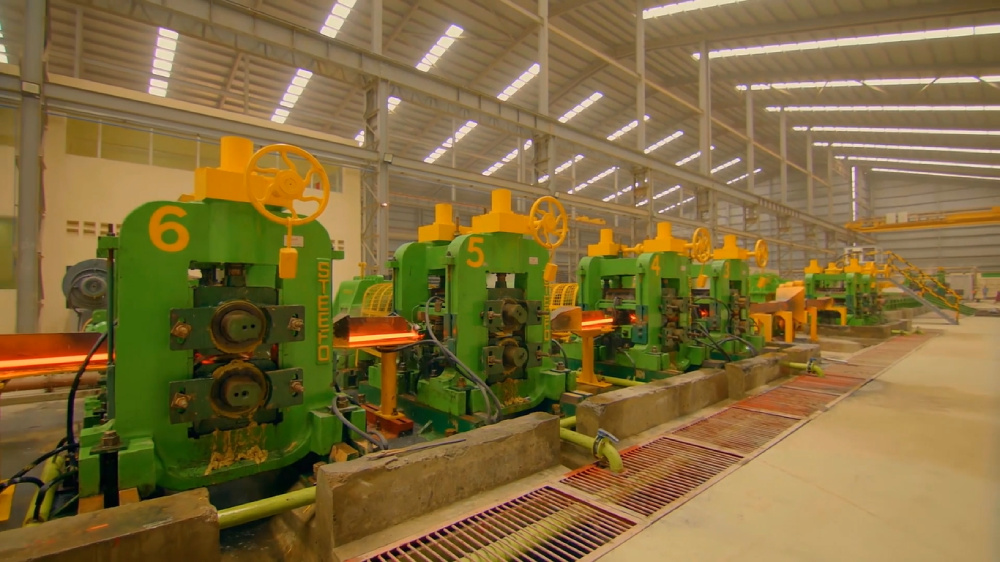
Steefo Group - TMT bar rolling mill

For The Steefo Group, TMT bar rolling mills have been ingrained in our DNA. Being your one-stop-shop for all your rolling mill solutions, we ensure that we provide our clients with innovative and modern designs in our turnkey solutions. Our expert engineers can handle these projects from concept to commissioning. We constantly customize our products according to the demands and needs of our clients and have production capabilities ranging from 80 TPH to 100 TPH. We ensure that productivity is boosted and ensure faster ROI.

2. Structural Rolling Mill 
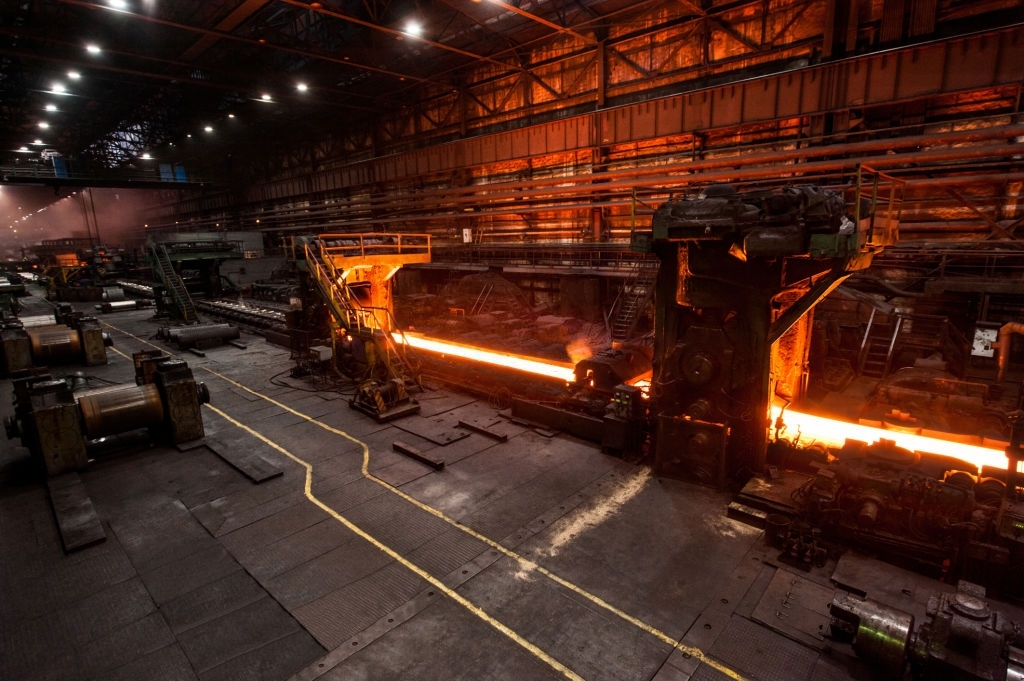
The production process in the rolling mill

The Steefo Group is a front runner amongst companies known to produce end-to-end solutions for structural rolling mills. We guarantee that our structural rolling mills have the most incredible performance capacity and shortest downtimes.

3. Wire Rod Mill

Wire rod mill solutions

We have mastered wire rod mills over four decades and have become a trusted name in this industry when it comes to the production of wire rod mills. From cost-effectiveness to flexibility, the growing demand for wire rods is being matched by our support in creating impeccable wire rod mills to allow large production capacities. The Steefo Group creates wire rod mills that are not only high speed but are also capable of rolling themselves into the smaller dimension to increase production rates.

The Services of The Steefo Group That Sets Them Apart

For anything related to steel, you can trust The Steefo Group. From process analysis to optimization and up-gradation, our skilled engineers are here to help you from start to finish. Our end goal is to drive our clients towards success and profitability.

1. Product Design and Engineering

As your reliable steel-forming partner, you can trust us as we are equipped with worldwide experience in implementing turnkey solutions. Our technical departments come together to customise the project to your exact requirements. From individual to products to complete solutions, we provide it with all to ensure that our clients do not face any disadvantage in any step of the process.

2. Spares and Consumables 

We have provided superior customer support and client satisfaction throughout the project lifecycle. We understand how demanding the process is, and that is why we are there every step of the way. We are not only involved in turnkey projects; we also offer spare parts and consumable products to our customers to ensure prolonged service and consistent performance and endurance.

3. Technical Support and Repairs

The Steefo Group always ensures that the steel plants are always equipped with advanced technology to maintain and raise the bar in terms of quality and production. Our team of engineers works closely to keep an eye on the project until the output production stage to prevent downtime and cost overruns.

4. Service Agreement Program

Surviving the rapidly evolving steel market is not an easy task. We meet the demands of the evolving market and rapidly proceed to optimise and improve the efficiency and quality of the plant. It includes adopting the best practices and maintaining equipment and machinery pristine and well maintained. Our company provides a complete service program to ensure that your products reach peak performance levels. The entire process involves evaluating equipment and improving them whenever deemed necessary.

Why Work with The Steefo Group?

Today, The Steefo Group has reached this level of success due to its relentless drive toward excellence and an uncompromising attitude towards quality. We are constantly evolving and trying to improve our current products and solutions, and therefore, we have transformed into the leading innovation in the world of rolling mills.

When you work with us, you get high-quality products and receive constant support from our team of professionals. Join the world of success. To learn more, call us at +91 98240 76873 or drop us a mail at marketing@thesteefogroup.com.

Categories
Blogs Rolling Mill


In the metalworking industry, rolling is a crucial process. The metal stock passes through a pair of heavy rolls in this process. This gives it the desired shape and thickness and imparts desired geometrical dimensions and mechanical properties. The idea is similar to rolling dough with a rolling pin. 

What is Hot Rolling?

Hot Rolling is a process in metalworking during which the metal is rolled above the recrystallisation temperature. The minimum temperature at which metal is recrystallised is 1700 degrees Fahrenheit. The hot rolling process makes the metal more malleable and easier to shape into desired geometrical dimensions and material properties while maintaining the same volume. 

During this process, as the name suggests, a billet of metal is heated and passed between two rolls to flatten and lengthen it. This process helps the metal obtain uniform thickness and reduces the cross-sectional area.  

What Are the Advantages of Hot Rolling? 

1. Improvement in Mechanical Properties

When metal is heated and rolled above the high temperature of 1700 degrees Fahrenheit, the metal gains a lot of new properties due to the hot rolling process. Some of the changes include toughness, resistance to shock, ductility, elongation percentage, and more. 

2. Elimination of Porosity and Refined Grain Structure

A significant advantage of the hot rolling process is the removal of defects which include welding pores, coarse grains, and more. During the recrystallisation process, the coarse grain converts into refined grains, causing changes in the properties of the metal. 

The pores are also removed during this time, causing a strong and uniform structure.

3. Uniform Distribution of Impurities

During the hot rolling process, any impurities that might be present gets removed from the metal, such as slag and others. The removal of such impurities makes the metal more durable. Had there been impurities, it would have made certain sections weaker. 

4. High Production Rate

When the metal is heated at a high temperature, the raw material’s deformation resistance is lowered, and thermoplasticity increases. This process increases the production rate as the machinery and motor get less worn out due to the malleability of the metal at that given point. 

What Are the Disadvantages of Hot Rolling?

1. High Cost of Equipment

The process of hot rolling might increase the production rate but does raise the cost of production, from expensive tools to trained professionals who need years of experience to operate the machinery properly. 

2. Maintaining Accurate Temperature

The majority of the hot rolling process depends on the correct temperature. Maintaining 1,700 Fahrenheit can be a challenging task. If the right temperature is not maintained, it might cause damage to the metal being produced. 

3. Surface Finish and Texture 

The high temperature causes the surface to have a poor finish as the high temperature increases the oxidation and scaling process. 

What is Cold Rolling?

The alternative to hot rolling is known as the process of cold rolling. Metal passes through the roller below the recrystallisation temperature in the cold rolling process. This process increases the strength and durability of the metal. The metal is less malleable because it remains at room temperature than the recrystallisation temperature, but this labour-intensive process reduces the grain size of the metal. 

What Are the Advantages of Cold Rolling?

1. Surface Finish

Due to the absence of high temperatures, the metal coating of the metal is not damaged. It also has a flat and smooth surface with fewer deformations. 

2. Lower Cost

For cold rolling, there is no requirement for expensive tools and machinery. Since the cold rolling process doesn’t need to maintain a specific temperature, the expertise required is also significantly reduced. 

3. High Yield Point

Due to the cold rolling process, metal can produce large plastic deformation, which increases the yield of the metal.

4. Close Tolerance Point

With the cold rolling process, the tolerance point of the metal can go as close as  0.025 mm.

5. Strength

Since the cold rolling process does not require high temperatures, the metal maintains its structural integrity and doesn’t turn weak. 

What Are the Disadvantages of Cold Rolling?

1. High Cost

The cold rolling process takes longer to produce than the hot-rolling process. The metal is more difficult to manipulate and takes longer to process. That is why the price increases. 

2. No Distribution of Impurities

When the metal is heated for the hot rolling process, impurities get the chance to distribute evenly. In the cold rolling process, impurities don’t get the opportunity to redistribute. 

3. Grain Size

The reduction size of the grain is necessary to obtain strength and durability. During the hot rolling process, metal receives a refined grain structure, but in the cold rolling process, there is no significant reduction in the size of grain due to the lack of high temperature. 

4. Width

The cold rolling process provides minimal leeway to correct things post-production. Width is one of the primary examples of it. In the case of rolled metal, you can shave down unnecessary portions easily. You need to begin with the correct measurement for cold-rolled metal, as customising it might be problematic later. 

Which One is Better: Hot Rolling or Cold Rolling?

The question of which process is better is a question that does not have a definite answer. As we discussed, the hot rolling and the cold rolling process both have their advantages and disadvantages. To obtain the answer of which process is better, you need to know what you intend to manufacture in the first place. 

The metal we get during the hot rolling process is necessary for railroads, construction steel bars, beams, and more. Due to its appearance, the hot-rolled metal is used more for structural works. 

On the other hand, cold-rolled metal would be too brittle for railroads. Instead, due to the close tolerance point, the sheets are thinner. This process creates metal sheets appropriate for furniture, household appliances, cabinets, beverage cans and more. 

FAQs

1. What is hot rolling in metalworking?

Hot rolling is a metal forming process where steel is rolled at a temperature above its recrystallization point, usually over 1700°F (926°C). This makes the metal easier to shape and results in products like sheets, beams, and structural steel with slightly rounded edges and less precise tolerances.

2. What is cold rolling, and how is it different from hot rolling?

Cold rolling is done at or near room temperature and follows hot rolling. It increases the strength and hardness of the metal through strain hardening and produces a smoother, more precise finish. Unlike hot rolling, cold rolling improves dimensional accuracy and surface quality.

3. What are the main differences between hot rolling and cold rolling?

The key differences are:

  • Temperature: Hot rolling occurs above recrystallization temperature; cold rolling is done below.
  • Surface finish: Cold-rolled steel has a smoother, shinier surface.
  • Precision: Cold rolling offers tighter tolerances and better dimensional accuracy.
  • Applications: Hot rolling is used for structural parts; cold rolling for precision components.

4. Which is stronger: hot rolled or cold rolled steel?

Cold rolled steel is generally stronger than hot rolled steel due to the strain hardening process during cold reduction. It also has a higher yield point, making it ideal for applications requiring strength and tighter tolerances.

5. What are the advantages of hot rolling?

Advantages of hot rolling include:

  • Cost-effectiveness for large-scale production
  • Ability to shape large structural components
  • Improved malleability for thick sheets and heavy sections

6. What are the benefits of using cold rolled steel?

Cold rolled steel offers:

  • Enhanced mechanical properties (hardness and strength)
  • Superior surface finish
  • Higher dimensional accuracy
  • Ideal for applications in appliances, automotive panels, and furniture

7. When should you choose hot rolled over cold rolled steel?

Choose hot rolled steel when:

  • Precision is not critical
  • You need large quantities at lower cost
  • The application involves heavy-duty structural parts like I-beams or rails

8. Is hot rolled steel cheaper than cold rolled steel?

Yes, hot rolled steel is typically more affordable than cold rolled steel because it requires fewer processing steps and less energy. However, the trade-off is lower surface quality and precision.

9. Can cold rolled steel be used in outdoor or structural applications?

While cold rolled steel can be used outdoors, it is more prone to corrosion due to its smoother finish. For structural applications, hot rolled steel is often preferred unless surface finish and precision are a priority, in which case protective coatings are necessary.

10. What industries commonly use hot and cold rolling processes?

  • Hot rolling is widely used in construction, infrastructure, and shipbuilding.
  • Cold rolling is used in automotive, appliances, furniture, and precision engineering where surface finish and tight tolerances are crucial.

Why Choose The Steefo Group?

The name of The Steefo Group has become synonymous with premium quality in rolling mill services. With its foundation going back around four decades, we have built our reputation based on our quality. Recognized by the Government of India as the Star Export House and international clientele, we intend to be your reliable partner for all your steel-forming needs. To enquire more about our products and services, contact marketing@thesteefogroup.com or give us a call at +919824076873