Categories
Blogs Rolling Mill

A wire rod mill is a high-speed rolling mill that converts reheated steel billets into coiled wire rod through a continuous hot-rolling process. In practice, it is one of the most important mills in long-product steel production because it sets the quality standard for downstream wire drawing, forming, and fabrication.

For steel producers, a well-designed wire rod mill is not just about output. It is about dimensional accuracy, surface quality, coil consistency, and the ability to serve different end-use grades reliably. That is why buyers, plant owners, and project teams often evaluate the entire line — from reheating to cooling — before choosing equipment or a supplier.

Direct Answer: A wire rod mill reheats billets, rolls them through a sequence of stands, guides the hot strand through a laying head, and cools it in controlled conditions before it is coiled and shipped for further processing. The output is typically supplied as coiled wire rod rather than as finished wire products.

What Is a Wire Rod Mill?

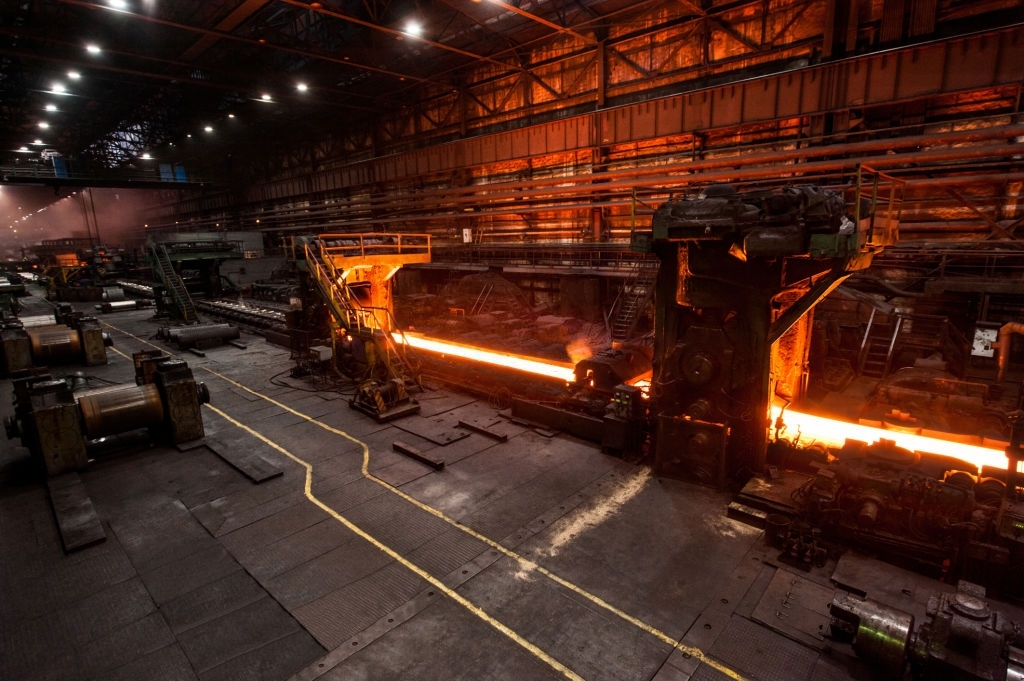
A wire rod mill is a rolling mill designed to produce wire rod from billets by hot rolling them through multiple passes in a continuous line. Modern mills are built for high speed, tight tolerances, and stable product quality — because the rod is usually rolled above 1,000°C and must still hold its shape and metallurgical properties as it travels through the line.

The output is typically wound into coils. Wire rod mills commonly produce coils weighing up to 2.5 tons, and the wire rod itself is generally supplied in small diameters for downstream use. To understand what a rolling mill is at its most fundamental level, it helps to first understand how different mill types serve different product families — wire rod being one of the most demanding.

Where It Fits in Steel Manufacturing

A wire rod mill sits after billet production and reheating. The billet is the input material, and the mill’s job is to reduce it progressively until it becomes a finished coiled rod. That rod is usually not the end product. It is a semi-finished feedstock for wire drawing, forging, and other secondary processing.

This is why the mill matters so much. If the rod leaves the line with poor surface finish, uneven cooling, or unstable dimensions, downstream processors will feel the impact immediately. Understanding the complete journey of steel through a rolling mill helps plant owners and buyers make more informed equipment and process decisions.

Wire Rod Mill Process: Step-by-Step

The wire rod mill process is continuous, fast, and tightly controlled. In a modern mill, the billet does not stop and start between every stage. Instead, it moves through roughing, intermediate, and finishing sections in one coordinated flow. Modern wire rod rolling may involve around 25 to 30 passes in a continuous mill.

Stage What Happens Why It Matters
Billet reheating Billets are heated uniformly before rolling Supports surface quality and stable deformation
Roughing mill Initial size reduction begins Prepares the billet for further rolling
Intermediate mill Further reduction and shape control Keeps the line stable at high speed
Finishing block Final dimensions are achieved Sets tolerance and product consistency
Pinch roll and laying head Guides the hot strand into coils Ensures clean coil formation
Controlled cooling Coil properties are adjusted during cooling Helps define microstructure and mechanical properties
Coiling and inspection Coil is checked, handled, and packed Confirms quality before dispatch

Step 1 — Billet Preparation and Reheating

The process begins with billet preparation. The billet must be reheated evenly before it enters the mill, because inconsistent temperature creates quality problems later in the line. Temperature control is especially important for surface condition, grain structure, and head-to-tail consistency.

In wire rod production, temperature management is not a minor detail. For smaller diameters, rolling time is longer, so the temperature drop from the head to the tail becomes more critical. The basics of reheating furnaces — from heating zones to temperature uniformity — directly determine how well the mill performs across the full rolling line.

Step 2 — Roughing Mill

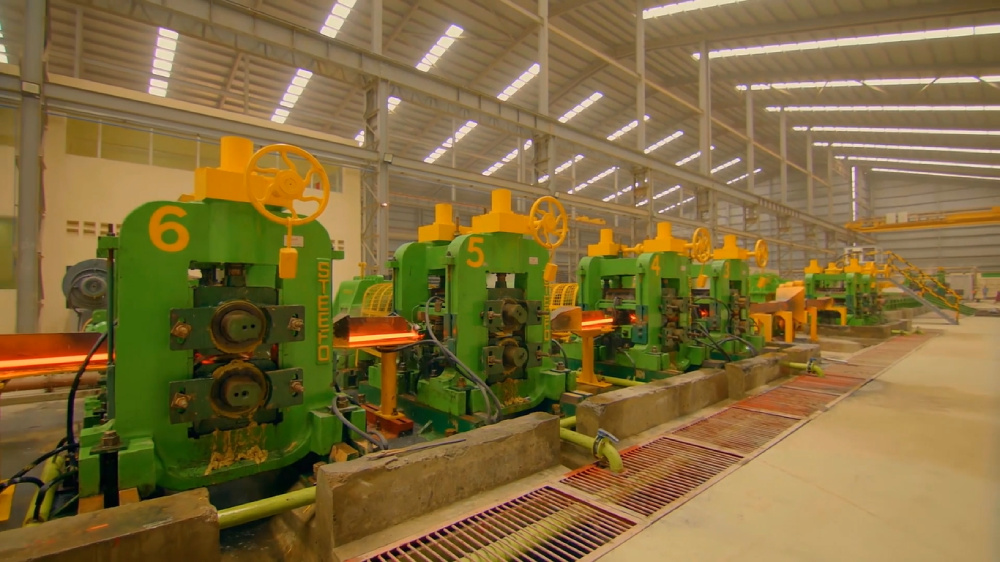
The billet first enters the roughing section, where its cross-section is reduced, and its shape is prepared for the rest of the line. This stage starts the deformation process and sets up the metal for more precise reduction in the next stages.

In simple terms, roughing is the “first shaping” stage of the wire rod mill. The product is still far from its final size, but the line is already building the consistency needed for high-speed finishing.

Step 3 — Intermediate Mill

The intermediate stands reduce the section further and refine the shape before the strand reaches the finishing block. This stage is where speed synchronisation becomes critical, because the mill must keep tension, roll speed, and temperature under control across multiple stands.

A modern wire rod mill depends on stable coordination here. If the speed between stands is not managed properly, the rod can suffer from dimension variation, surface issues, or unstable coil formation later in the process. The hot rolling mill process demands continuous synchronisation — and wire rod mills push that requirement to its limit given the high operating speeds involved.

Step 4 — Finishing Block

The finishing block brings the rod to its final diameter and tolerance. This is one of the most defining parts of the wire rod mill, because it is where the line combines speed with precision. Modern wire rod mill systems are designed for high-speed production and typically incorporate reducing and sizing mills, advanced cooling technologies, and precise process control. This highlights the critical role of the finishing stage in achieving dimensional accuracy, surface quality, and consistent mechanical properties.

Step 5 — Pinch Roll and Laying Head

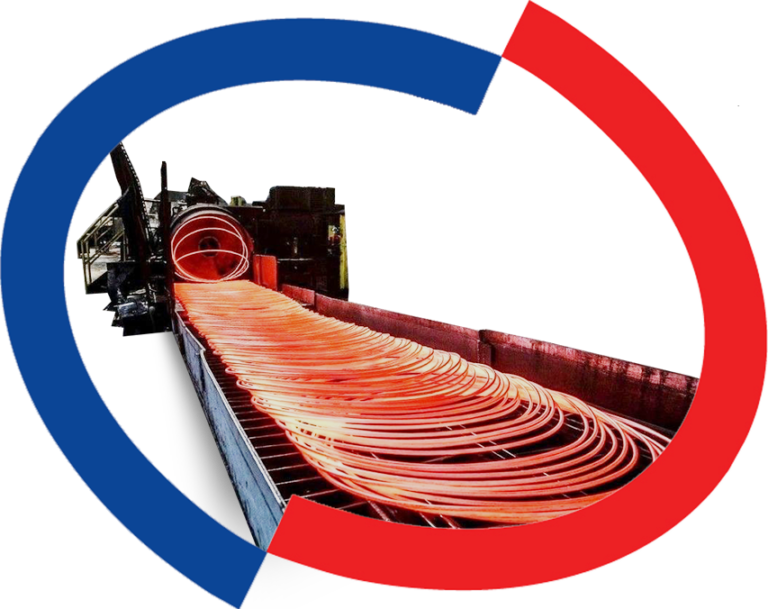
After the finishing stand, the rod is controlled by the pinch roll and the laying head. Their job is to guide the hot strand smoothly and form it into a consistent coil pattern as it leaves the mill. Positioned after the finishing block, the laying head controls rod tension and deposits the hot rod in a consistent coil pattern, supporting efficient cooling and coil formation.

Pinch rollers play a much more active role than many plant teams initially expect — they directly influence coil shape, tension consistency, and the way the rod enters the cooling conveyor. A poor coil pattern means handling problems, quality loss, and downtime. Good coil formation is one of the clearest signs of a well-run wire rod mill.

Step 6 — Controlled Cooling / Stelmor Cooling Conveyor

Cooling is not simply about reducing temperature. In a wire rod mill, controlled cooling helps shape the final microstructure and mechanical properties of the rod. Modern controlled cooling systems can accommodate different cooling rates for alloy, carbon, and stainless steel grades, helping manufacturers achieve the desired mechanical properties and microstructure.

That flexibility matters because different grades need different cooling rates. A line that can only cool one way is far less useful than one that can adapt to product grade, size, and performance requirements. The difference between hot rolling and cold rolling is particularly relevant here — because controlled cooling in a wire rod mill is what bridges the gap between the raw hot-rolled property and the final mechanical specification the customer needs.

Step 7 — Coiling, Inspection, and Packaging

Once cooled, the rod is inspected, handled, and prepared for dispatch. At this stage, coil shape, surface quality, and dimensional accuracy all matter because the product is about to move into downstream operations. Modern mills increasingly use automated systems to improve repeatability and section monitoring.

The value of a wire rod mill is not just that it produces metal in coil form. It produces consistent coils that downstream customers can process with less waste and fewer interruptions.

Main Components of a Wire Rod Mill

A wire rod mill is best understood as a system, not a single machine. Each component has a separate role, and all of them must work together.

  • The reheating furnace heats billets uniformly before rolling.
  • Roughing and intermediate stands progressively reduce section size and prepare the strand for finishing.
  • The finishing block delivers final dimensions at high speed.
  • Pinch roll and laying head guide the strand and lay it into clean coils.
  • A controlled cooling conveyor manages cooling rate and final rod properties.
  • Automation and control systems maintain speed, synchronisation, temperature, and section consistency across the line.

A strong wire rod mill depends heavily on automation. Reliable control systems are essential for improving size tolerances, mechanical properties, surface finish, tension control, and roll speed management. For complete wire rod and block mill equipment, Steefo supplies dedicated block mill systems for wire rod and TMT production that are built around these exact operational priorities.

What Comes Out of a Wire Rod Mill?

A wire rod mill produces hot-rolled steel rod that is collected and supplied in coil form. These coils are the form most buyers expect, because wire rod is usually moved to another plant for drawing, forging, or further forming.

In many mills, the rod falls within the small-diameter range used for long-product applications. Wire rod outputs are typically in the range of 5 mm to 12.5 mm in coil form, although actual product ranges depend on mill design and customer specifications.

It is essential to understand the difference between wire rod and finished wire products. Wire rod is the starting material; finished wire is the result of drawing and secondary processing. That is why wire rod quality must be high before it reaches downstream customers.

Uses of Wire Rod

Wire Drawing and Downstream Wire Products

The main use of wire rod is as feedstock for wire drawing units. During drawing, the rod is reduced to a smaller diameter and made into products suited for specific industrial or construction uses.

Common Applications

Wire rod is widely used to make products such as:

  • Fasteners
  • Springs
  • Wire ropes
  • Wire mesh
  • Barbed wire
  • Electrodes
  • Cable and reinforcement-related products
  • Automotive and hardware components

Industry Relevance

Different grades of wire rod serve different downstream industries. Wire rod grades can range from low carbon and mild steel to medium carbon, high carbon, and low-alloy steels — which explains why the same mill platform can support a wide variety of customer needs.

For engineering, automotive, construction, and manufacturing users, this flexibility is a major advantage. It allows the wire rod mill to serve multiple markets without changing the core production logic.

Why Process Control Matters in Wire Rod Mills

The quality of a wire rod mill product depends on the entire chain: reheating, rolling, laying, cooling, and automation. If one stage is inconsistent, the rest of the line cannot fully compensate. That is why modern mills are built around process reliability and operational flexibility.

Three factors matter most:

  • Temperature affects surface condition, rolling behaviour, and final structure.
  • Speed determines productivity and affects tension and coil formation.
  • Controlled cooling shapes the final properties and microstructure.

A practical example helps here. Wire rod coils can reach up to 2.5 tons and lengths up to 10 km, while rolling speed can go as high as 140 m/s in high-speed mills. Those figures show why control is so important: at that speed, small variations can quickly become quality issues.

Wire Rod Mill vs. Bar Mill

A wire rod mill is designed for continuous high-speed coil production. A bar mill, by contrast, is generally oriented toward straight long products. The difference sounds simple, but it changes mill layout, cooling design, finishing equipment, and handling systems.

Feature Wire Rod Mill Bar Mill
Product form Coils Straight bars
Rolling style High-speed continuous rolling Longer product handling
Key end equipment Laying head, cooling conveyor Straightening and bar handling systems
Main focus Coil quality, speed, consistency Straightness, length accuracy, and handling

This comparison helps plant teams understand why a wire rod mill is not just a smaller version of a bar mill. It is a different production concept built around a different output. For buyers evaluating how TMT bar rolling mills compare in cost and operational structure, the wire rod line adds an entirely different performance dimension.

Conclusion

A wire rod mill is a highly specialised rolling line that transforms billets into coiled wire rod through a continuous process of reheating, rolling, laying, cooling, and coiling. Its performance depends on how well each stage is controlled, because the final rod is only as strong as the process that produced it.

For manufacturers, the real value lies in consistency. A well-designed wire rod mill contributes to superior coil consistency, tighter dimensional accuracy, and smooth downstream processing for various steel grades.

Frequently Asked Questions (FAQs)

1. What is a wire rod mill used for?

A wire rod mill is used to convert heated steel billets into coiled wire rod for downstream drawing, forging, and fabrication.

2. What are the main parts of a wire rod mill?

The main parts are the reheating furnace, roughing stands, intermediate stands, finishing block, pinch roll, laying head, controlled cooling conveyor, and automation system.

3. Why is controlled cooling important?

Controlled cooling helps manage the rod’s microstructure and mechanical properties. It also allows the mill to adapt cooling rates to different grades.

4. What products are made from wire rod?

Wire rod is used to make fasteners, springs, wire ropes, mesh, barbed wire, electrodes, cable-related products, and automotive components.

5. Is wire rod a finished product?

No. Wire rod is usually a semi-finished product that is further drawn or processed before final use.

Looking for a Trusted Partner for Your Wire Rod Mill Project?

If you are planning a new wire rod mill project, upgrading an existing line, or evaluating turnkey solutions for long-product production, the right technology partner matters. The Steefo Group is a leading rolling mill manufacturer in India with manufacturing facilities in Changodar, Ahmedabad, and a strong focus on rolling mill design, manufacturing, and turnkey project execution.

As a trusted name for plant engineering and rolling mill projects in Ahmedabad and across the globe, Steefo Group supports clients with rolling mill plants, wire rod lines, and turnkey solutions for steel plants. Beyond supplying equipment, the company works closely with customers to address technical, operational, and project execution requirements.

Talk to us at +91 87589 98607 or email us at marketing@thesteefogroup.com to discuss your wire rod mill requirements and explore solutions designed for productivity, quality, and long-term performance.

Categories
Blogs Rolling Mill


Setting up a structural mill is a complex undertaking that requires expert guidance and support from reliable rolling mill manufacturers. Turnkey solutions provide a comprehensive approach, offering a ready-to-use solution that saves time, effort, and resources. 

This article delves into the step-by-step process of consulting a rolling mill manufacturer in India for turnkey solutions. Each stage of the journey, from project assessment to commissioning, plays a crucial role in ensuring a successful and seamless implementation of a structural mill.

Initial Contact and Information Exchange

The first step in consulting a rolling mill manufacturer for a turnkey solution is to establish initial contact and share essential project details. This phase involves reaching out to the manufacturer to express interest in their services and provide comprehensive information about the project. Key project details to provide at this stage include:

Project Goals and Objectives

Clearly define the objectives of your rolling mill project. Specify the desired production capacity, types of products to be manufactured, and any unique requirements. Understanding the project goals allows the manufacturer to tailor the solution accordingly.

Technical Specifications

Share technical specifications, such as the size and weight of the materials to be rolled, rolling speeds, and quality standards required. This information assists the manufacturer in selecting appropriate machinery and equipment.

Project Timelines

Outline the timeline for the project, including milestones and deadlines. A well-defined timeline allows both the manufacturer and the client to plan effectively and stay on track during the implementation process.

Budget Constraints

Indicate budgetary specifications and discuss the manufacturer’s requirements to deliver techno commercial proposals. Transparent communication about budget specification helps in finding cost-effective turnkey solutions without compromising on quality.

Project Assessment and Feasibility Study

After gathering the necessary project details, the rolling mill manufacturer conducts a comprehensive assessment and feasibility study. This evaluation is crucial as it determines the project’s viability and helps identify potential challenges. The project assessment includes the following:

Technical Evaluation

The manufacturer assesses whether their rolling mill machinery and equipment align with the project’s technical requirements. This evaluation ensures that the selected machinery is capable of handling the specified material and production capacity.

Project Challenges

During the feasibility study, the manufacturer should identify any potential challenges that may arise during the project’s execution. Whether it’s related to material specifications, production volume, or automation requirements, addressing these challenges early on is essential for a smooth implementation.

Cost Estimation

Based on the project assessment, the manufacturer provides a detailed cost estimation for the turnkey solution. This includes the cost of rolling mill machinery, installation, automation systems, and other related expenses. As a client, you can then evaluate the financial feasibility of the project and plan accordingly.

Customisation and Design

Once the feasibility study is complete, the focus shifts to customisation and design. A reputable rolling mill manufacturer will collaborate closely with the client to tailor the solution to meet their specific requirements and industry standards. This phase involves the following:

Collaborative Approach

Designing a turnkey solution requires a collaborative approach between the manufacturer and the client. This ensures that the solution aligns with the client’s expectations and allows for valuable input from both parties. The manufacturer’s expertise and the client’s insights combine to create an optimized solution.

Equipment Selection

Selecting appropriate rolling mill machinery and equipment is a critical aspect of the design phase. The manufacturer considers factors such as material compatibility, production capacity, automation capabilities, and cost-effectiveness to ensure the chosen equipment meets the project’s needs.

Integration Planning

Efficient integration of various components within the rolling mill is essential for its smooth operation. During the design phase, the manufacturer plans how different components, such as automation systems, sensors, and other technologies, will be seamlessly integrated into the turnkey solution.         

Proposal Presentation and Agreement

With the design and customisation finalized, the rolling mill manufacturer presents a comprehensive proposal to the client. This proposal outlines the scope of work, project timeline, payment terms, and deliverables. You should carefully review and evaluate the proposal before entering into a formal agreement with the manufacturer. Key elements of the proposal and agreement include:             

Scope of Work

The proposal should provide a detailed breakdown of the scope of work to avoid misunderstandings later on. It should specify the tasks to be completed, the responsibilities of each party, and the expected deliverables.  

Project Timeline

Establishing a clear and achievable project timeline is essential to track progress effectively. The timeline should include milestones and deadlines to help both parties monitor the project’s status.

Payment Terms

Agreeing on transparent payment terms is crucial for a successful collaboration. The proposal should outline the payment schedule based on project milestones, ensuring fair compensation for the manufacturer’s efforts.               

Intellectual Property Rights

Addressing intellectual property rights is crucial, especially if the turnkey solution involves custom designs or proprietary technologies. The agreement should clearly define the ownership and usage rights of any intellectual property resulting from the project.    

Technical Expertise and Experience

Before proceeding with the project, it is vital to assess the rolling mill manufacturer’s technical expertise and experience. This step ensures that the chosen manufacturer has the necessary skills and knowledge to deliver a successful turnkey solution. Key aspects to consider include:

Relevant Experience

The manufacturer should have relevant experience in the design, manufacturing, and commissioning of rolling mill machinery and turnkey solutions. Experience in similar projects demonstrates their understanding of the industry’s specific requirements.

Industry Certifications

Verify if the manufacturer holds industry certifications and accreditations that signify adherence to quality standards and industry best practices. Certifications can provide added assurance of their capabilities.

Testimonials and Client Reviews

Gather feedback from previous clients regarding their experiences with the manufacturer. Testimonials and client reviews provide valuable insights into their professionalism, responsiveness, and commitment to delivering high-quality solutions.

Integration and Commissioning Planning

The integration and commissioning phase is critical for ensuring the success of the turnkey solution. During this stage, the rolling mill manufacturer plans and prepares for the installation and integration of various components. Key considerations include:

Alignment with Project Timeline

The integration and commissioning plan must align with the project timeline to avoid delays and downtime. Adequate planning and coordination between the manufacturer and the client are essential to meet project deadlines.

Quality Assurance

Discuss the manufacturer’s quality assurance processes, testing protocols, and safety measures during the installation and commissioning. A thorough quality assurance approach ensures that the rolling mill functions as intended and meets the specified quality standards.

Training Programs

Inquire about the training programs the manufacturer offers to the client’s team for the operation and maintenance of the hot rolling mill. Proper training is crucial for the client’s personnel to utilise the turnkey solution efficiently and avoid unnecessary downtime due to operational issues.

Project Management and Support

A well-executed turnkey solution requires effective project management and ongoing support. During this step, the manufacturer and the client establish clear communication channels and responsibilities for efficient project execution. Key components of project management and support include:    

Project Coordination

Establish a dedicated team responsible for coordinating all aspects of the project. Effective project coordination ensures that tasks are completed as scheduled, and potential roadblocks are addressed promptly.

Regular Updates

Schedule regular progress updates and meetings to keep all stakeholders informed. Effective communication between the manufacturer and the client fosters a collaborative environment and ensures transparency throughout the project.

After-Sales Support

Discuss the after-sales support and maintenance services offered by the manufacturer. Post-commissioning support is essential for addressing any operational issues that may arise and ensuring the smooth functioning of the hot rolling mill.

Training and Knowledge Transfer

The success of a turnkey solution also depends on the client’s ability to operate and maintain the rolling mill effectively. To facilitate this, the manufacturer should provide comprehensive training to the client’s team. Training and knowledge transfer should include:

Operational Training

Train the client’s operators on the correct usage and operation of the rolling mill machinery and automation systems. Proper training ensures that the personnel can operate the equipment safely and efficiently.

Maintenance Training

Educate maintenance personnel on routine maintenance tasks and troubleshooting techniques. Well-trained maintenance teams can proactively address potential issues, minimising downtime and extending the life of the rolling mill.

Documentation

Provide detailed documentation, manuals, and reference materials for future reference. Comprehensive documentation aids in troubleshooting, regular maintenance, and the implementation of best practices.

Unlock Success with Our Turnkey Solutions for Hot Rolling Mills

Are you ready to unlock the path to unparalleled success in the hot rolling mill industry? Look no further! Embrace our expertise as a leading hot rolling mill manufacturers in India, offering top-notch turnkey solutions tailored to your unique needs. 

Our team of skilled engineers and industry experts will guide you through every step of the process, from initial consultation to commissioning. Witness the seamless integration of cutting-edge rolling mill machinery, automation systems, and unparalleled customer support that empowers your business to achieve exceptional productivity and quality standards. 

Contact us at +91 87589 98607 or email us at marketing@thesteefogroup.com today to learn more about how our turnkey solutions can help you business!

Categories
Blogs Rolling Mill

When we talk about reliable experts in steel forming, the only name that comes to the forefront is The Steefo Group. Our reputation stems from the word steel forming. Our origins are rooted in excellence and superior production, both in national and international export markets. 

The Origins of The Steefo Group 

The Steefo Group has humble beginnings; we started our journey four decades ago in 1976.  With Mr K.K Agarwal laying the foundation of the  Steefo Industries in 1976, starting our first order in 1979 to achieving our first export order in 1991, we have always had an upwards trajectory. The only goal that we had in mind was to provide precision in design and manufacturing and produce superior quality products and turnkey solutions that fit our clients’ expectations and standards. 

We aimed to become the one-stop shop for all steel rolling and melting industries. We have expanded our services and products since 1976, and now we have a group of expert engineers catering to numerous sections of this ever-demanding industry.

The Steefo Group Quality

One thing that we have pledged to maintain and have never compromised on is quality. The name of The Steefo Group is recognised worldwide today because we are consistent in provisioning high-quality products. We hold ourselves to the strictest standard and norms possible to ensure that only products of the highest grade products to our clients. 

We have a dedicated quality assurance team that performs quality checks and rigorous testing from raw materials to the finished products. This is done to ensure that we stay true to the promise of being your reliable steel forming partners. We take a quality-based approach to quality commitment.  

Our Commitment to Innovation 

From its very inception, Steefo has been dedicated to growth and innovation.  We believe that innovation can transform change into new beginnings and fruitful opportunities. Innovation is more than just developing new products but rather producing cohesive design and technology that comply with the constant evolution. Our team of dedicated and experienced design engineers have the vision and talent to delve into undiscovered and uncertain aspects of the world of steel forming to discover and develop new processes, systems, and management methods to positively impact the growth, productivity, and profitability of our clients. 

When you partner with us, you invest in premium grade products and are consistently provided with a workforce that offers the skill to produce the best output in the competitive steel forming market. 

Research and Development

The Steefo Group is known worldwide because of our drive toward developing and improving our R&D and design capabilities. We invest our resources in technical improvements because we know that only development in the field of technology guarantees consistent improvement in our manufacturing speed and product quality. Only the most advanced technology can cater to and match the demands of our varied clients. We utilise software such as CAD and Kissoft and more to procure future-ready equipment that complies with industry 4.0. 

How Has The Steefo Group Solutions Transformed the Steel Rolling Industry?

The Steefo Industry has become synonymous with innovative and unique turnkey solutions that transform rolling mill solutions worldwide. From concept to commissioning of rolling mills and integrated steel plant, we have complete expertise in all aspects of the field. Multiple turnkey projects are supplied with plant equipment and execution, including erection and commissioning to obtain the maximum desired production value. 

1. TMT Bar Rolling Mill 

Steefo Group - TMT bar rolling mill

For The Steefo Group, TMT bar rolling mills have been ingrained in our DNA. Being your one-stop-shop for all your rolling mill solutions, we ensure that we provide our clients with innovative and modern designs in our turnkey solutions. Our expert engineers can handle these projects from concept to commissioning. We constantly customize our products according to the demands and needs of our clients and have production capabilities ranging from 80 TPH to 100 TPH. We ensure that productivity is boosted and ensure faster ROI.

2. Structural Rolling Mill 

The production process in the rolling mill

The Steefo Group is a front runner amongst companies known to produce end-to-end solutions for structural rolling mills. We guarantee that our structural rolling mills have the most incredible performance capacity and shortest downtimes.

3. Wire Rod Mill

Wire rod mill solutions

We have mastered wire rod mills over four decades and have become a trusted name in this industry when it comes to the production of wire rod mills. From cost-effectiveness to flexibility, the growing demand for wire rods is being matched by our support in creating impeccable wire rod mills to allow large production capacities. The Steefo Group creates wire rod mills that are not only high speed but are also capable of rolling themselves into the smaller dimension to increase production rates.

The Services of The Steefo Group That Sets Them Apart

For anything related to steel, you can trust The Steefo Group. From process analysis to optimization and up-gradation, our skilled engineers are here to help you from start to finish. Our end goal is to drive our clients towards success and profitability.

1. Product Design and Engineering

As your reliable steel-forming partner, you can trust us as we are equipped with worldwide experience in implementing turnkey solutions. Our technical departments come together to customise the project to your exact requirements. From individual to products to complete solutions, we provide it with all to ensure that our clients do not face any disadvantage in any step of the process.

2. Spares and Consumables 

We have provided superior customer support and client satisfaction throughout the project lifecycle. We understand how demanding the process is, and that is why we are there every step of the way. We are not only involved in turnkey projects; we also offer spare parts and consumable products to our customers to ensure prolonged service and consistent performance and endurance.

3. Technical Support and Repairs

The Steefo Group always ensures that the steel plants are always equipped with advanced technology to maintain and raise the bar in terms of quality and production. Our team of engineers works closely to keep an eye on the project until the output production stage to prevent downtime and cost overruns.

4. Service Agreement Program

Surviving the rapidly evolving steel market is not an easy task. We meet the demands of the evolving market and rapidly proceed to optimise and improve the efficiency and quality of the plant. It includes adopting the best practices and maintaining equipment and machinery pristine and well maintained. Our company provides a complete service program to ensure that your products reach peak performance levels. The entire process involves evaluating equipment and improving them whenever deemed necessary.

Why Work with The Steefo Group?

Today, The Steefo Group has reached this level of success due to its relentless drive toward excellence and an uncompromising attitude towards quality. We are constantly evolving and trying to improve our current products and solutions, and therefore, we have transformed into the leading innovation in the world of rolling mills.

When you work with us, you get high-quality products and receive constant support from our team of professionals. Join the world of success. To learn more, call us at +91 98240 76873 or drop us a mail at marketing@thesteefogroup.com.