
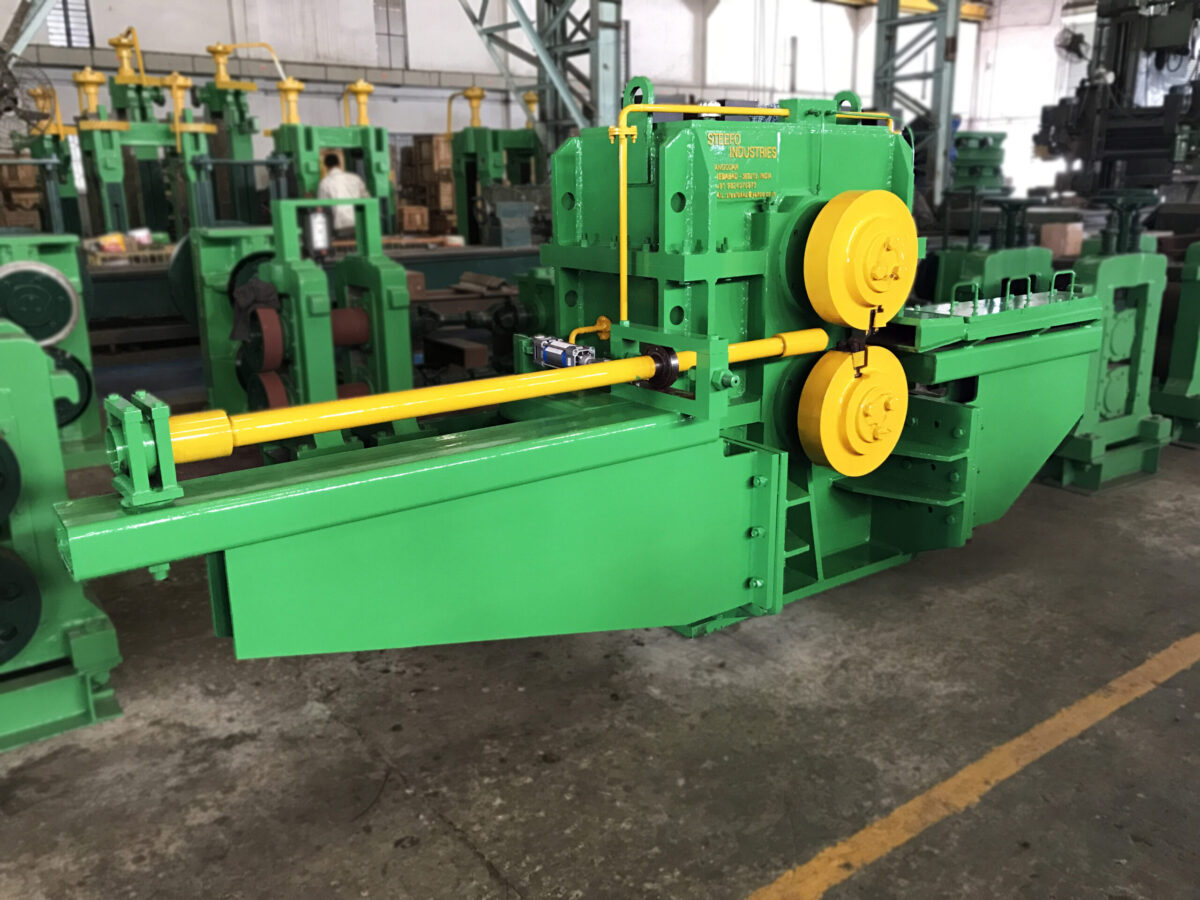
The environment inside a high-speed hot rolling mill is incredibly fast and demanding. Red-hot steel moves down the production line at blistering speeds. Even a microsecond delay can cause catastrophic material pile-ups.
Seamless material flow is the backbone of plant throughput. The critical transition from the finishing stands to the cooling beds determines your final daily output. Conventional shears simply cannot keep up with today’s high-speed production lines.
What Do Automated Shearing Machines Do?
Automated shearing machines are advanced precision metal cutting systems that use programmable logic controllers and smart sensors to cut moving steel at exact lengths without stopping the production line. These intelligent systems eliminate bottlenecks and transform raw metal into finished products seamlessly.
Let us explore how automation turns these heavy-duty machines into highly predictable profit drivers.
The Evolution of Shearing Machines in Modern Steel Plants
Steel manufacturing has transformed drastically over the last few decades. Upgrading from manual interventions to fully automated setups is now mandatory for survival. You must adopt advanced technologies to remain competitive.
Early steel plants relied heavily on basic mechanical leverage. Today, modern operations connect continuous casting directly to intelligent cutting systems.
Why Manual Mechanical Shears Fall Behind
Manual and semi-automated mechanical shears rely heavily on human intervention. Operators must manually trigger levers to cut the incoming metal.
These slow lever responses inevitably cause severe production bottlenecks. Human reaction times cannot match the speed of a high-capacity rolling mill.
This delay creates inaccurate cuts and inconsistent lengths. These errors often result in structural bar deformities that fail quality control checks. Your rejection rates climb, and your profits shrink.
How Automation Redefines Continuous Mill Operations
Automation introduces true continuous non-stop processing on your factory floor. The metal flows from the furnace to the cooling bed without a single pause.
Automated machinery adapts instantly to sudden changes in rolling mill speed. If the upstream stands speed up, the cutting blades accelerate to match the pace.
This creates a synchronised dance of heavy machinery. It completely removes the guesswork from metal cutting accuracy and ensures optimal plant throughput.
Technical Systems Powering Automated Shearing Machines
The true magic of automation lies inside the hardware and software architecture. Advanced electronics take complete control of the mechanical components.
Understanding these internal systems helps plant engineers optimise their daily cycle time.
1. PLC Integration for Split-Second Blade Synchronisation
Programmable Logic Controllers (PLCs) act as the brain of modern shearing machines. These industrial computers calculate the exact linear speed of the incoming hot steel bar.
PLCs use advanced closed-loop feedback to process data in milliseconds. They ensure perfect synchronisation between the blade movement and the moving metal.
This high-speed blade actuation guarantees a perfectly clean cut every single time. Continuous line speeds remain stable because the cutting mechanism never lags behind.
2. Smart Sensors for Exact Crop Optimisation
Infrared pyrometers and laser sensors monitor the steel continuously. They detect the exact head and tail ends of the hot billets as they approach the crop shears.
This real-time measurement drives aggressive crop optimisation. The sensors tell the blade exactly where to cut to remove only the defective ends.
Precise cutting prevents excessive metal loss during the cropping phase. You retain more usable steel and dramatically improve your overall yield.
3. Intelligent Human-Machine Interface (HMI) for Real-Time Data Display
HMI systems give operators a crystal-clear view of the production floor. These digital touchscreens display real-time metrics about blade health and daily cut counts.
Operators can monitor the entire cutting process from a safe distance. They never have to step near the active hot zone to check machine status.
Intelligent HMIs also display specific diagnostic error codes. This instantly points maintenance teams to the problem and lowers overall troubleshooting time.
Direct Production Benefits for Billet and TMT Manufacturers
Upgrading your plant machinery requires a solid business case. The financial return on investment is the most critical factor for plant owners.
Automated shearing machines deliver massive cost savings and immediate revenue boosts.
1. Higher Material Yield with Minimal End-Crop Waste
Precise automated cuts maximise the total number of sellable TMT bars per billet. Yield optimisation is the fastest way to increase your profit margins.
Let us look at a practical steel industry metric.
Imagine a hot rolling mill producing 500,000 tons of steel annually.
Reducing scrap waste by just 0.5 per cent saves 2,500 tons of steel every single year. This fraction of a per cent translates into millions in recovered revenue.
2. Uninterrupted High-Speed Rolling Mill Performance
Automatic flying shears prevent devastating material blockages on the mill floor. They cut the steel while it is moving and instantly return to their starting positions.
This creates a smooth and predictable cycle time. The continuous flow of cut steel keeps the downstream processing moving without delays.
Consistent performance ensures the entire cooling bed operates at peak capacity. You get more finished products out the door every single shift.
3. Enhanced Dimensional Accuracy Across Every Batch
Automated controls maintain strict compliance with global construction standards. Builders demand exact bar lengths for their engineering projects.
Smart shearing machines deliver unparalleled metal cutting accuracy across every single batch. The finished TMT bars are uniform and ready for market.
This precision eliminates the need for manual secondary trimming processes. You save labour costs and speed up your final delivery timelines.
Manual vs. Automated Shearing Machines: Performance Metrics
|
Metric |
Manual Shearing Machine |
Automated Shearing Machine |
| Cut Accuracy | Highly variable | Millimeter precision |
| Scrap Generation | High end-crop waste | Optimised minimum waste |
| Mill Synchronisation | Poor | Instant adaptation |
| Labor Requirement | High manual intervention | Minimal remote monitoring |
How Predictive Maintenance Protects Heavy-Duty Blade Lifespans
Heavy-duty cutting machinery undergoes immense physical stress daily. Friction and extreme heat constantly degrade the internal components.
Automation introduces predictive maintenance to protect your investment. Plant engineers can fix problems before a breakdown happens.
Vibration and Temperature Sensors for Wear Analysis
Automated systems track the physical stress on shearing machines during heavy operation. Sensors constantly measure bearing vibrations and motor temperatures.
Software compares this data against safe operational thresholds. It sends immediate alerts to maintenance crews if a machine runs too hot or shakes too much.
This proactive approach allows you to schedule repairs during planned downtime. You successfully prevent total blade failure and avoid massive repair bills.
Automated Lubrication Systems That Reduce Human Error
Proper lubrication is essential for high-speed billet shears. Timed mechanical oiling extends the lifespan of internal gears and moving knife holders.
Automated pumps deliver the required amount of grease at specific intervals. The system guarantees that no moving part runs dry.
Contrast this with manual lubrication schedules that often get missed during hectic shifts. Automated oiling removes human error and keeps the machine running smoothly.
Boost Safety and Operational Efficiency on the Mill Floor
A modern rolling mill poses severe hazards to floor workers. Moving metal, extreme heat, and flying debris are constant threats.
Automation drastically improves workforce safety and helps you meet strict regulatory compliance.
Remote Operator Booths Away From Hazardous Zones
Automated controls allow personnel to manage the equipment from enclosed climate-controlled spaces. Operators rely on cameras and HMIs instead of standing next to the machinery.
This distance keeps workers safe from flying sparks and hot scale debris. The risk of accidental burns drops to nearly zero.
Emphasising remote operations leads to a drastic reduction in workplace injuries. Your employees feel safer, and your insurance premiums often decrease.
Instant Shut-Off Triggers During Material Jams
Cobbles and material jams are an unfortunate reality in steel manufacturing. Loop sensors act as the first line of defence when a blockage occurs.
These sensors identify immediate line blockages and halt the shearing machines instantly. The system reacts much faster than any human pressing an emergency stop button.
This automated safety step protects neighbouring hot rolling mill equipment from collateral damage. You save hundreds of thousands of dollars in secondary equipment repairs.
Upgrade Your Existing Production Line With Automation
Plant owners often face a difficult decision when modernising. You must choose between a factory retrofit and a completely new turnkey installation.
Old mechanical shearing machines can often receive powerful PLC retrofits. Engineers can install new servo motors and sensors onto your existing heavy iron frames.
This approach extends your plant capabilities without initial capital expenditure. You gain the benefits of automated crop optimisation and high-speed cutting for a fraction of the cost of new equipment.
However, older frames may eventually limit your maximum production speed. Consult with industry engineers to determine if a retrofit or a new installation offers the best long-term return.
Conclusion
Automation transforms shearing machines from high-risk bottlenecks into predictable profit drivers. Upgrading your cutting systems ensures continuous casting flow, drastic scrap reduction, and guaranteed dimensional accuracy. You protect your workers while maximising your daily plant throughput and total yield.
Stop letting outdated machinery dictate your production limits. Consult with specialised rolling mill engineering experts today to audit your current layout and discover the perfect automation solution for your plant.
Frequently Asked Questions
1. What is the main function of shearing machines in a rolling mill?
Automated shearing machines cut hot steel billets and TMT bars to exact lengths during continuous production. They use smart sensors to optimise cuts, minimise scrap waste, and ensure smooth material flow across the hot rolling mill floor.
2. How does automation improve billet crop shear efficiency?
Automated systems use programmable logic controllers and infrared sensors to detect the precise ends of moving steel. This real-time synchronisation guarantees clean cuts, reduces end-crop waste, and prevents downstream blockages.
3. Can you retrofit older hot rolling mill cutting equipment?
Yes, plant engineers can upgrade older mechanical shearing machines with modern PLC retrofits, servo motors, and automated lubrication systems. This cost-effective solution increases cutting accuracy and plant throughput without requiring a completely new installation.
4. Why is predictive maintenance important for metal cutting blades?
Continuous high-speed cutting creates significant physical stress. Predictive sensors monitor motor temperatures and blade vibrations in real time. This alerts maintenance teams to potential wear early and prevents total machine failure during active shifts.
5. How do automated flying shears increase worker safety?
They allow operators to control heavy machinery from remote, climate-controlled booths. This removes personnel from hazardous active zones and drastically reduces the risk of workplace injuries caused by hot metal, flying scale, and moving parts.
6. How do automated shearing machines impact long-term plant ROI?
By minimising end-crop scrap and eliminating manual secondary trimming, these systems directly maximise material yield. The drastic reduction in unplanned operational downtime and material waste ensures rapid capital recovery for the hot rolling mill.
7. What ensures cutting precision when a rolling mill runs at peak speed?
Advanced PLC integration handles split-second blade synchronisation. High-speed closed-loop feedback systems calculate the exact linear speed of the moving steel bar, ensuring the blade matches the identical pace required for millimetre-perfect cuts.
Transform Your Mill Floor with Steefo Engineering Excellence
In a highly competitive global market, minor equipment delays can quickly drain your daily profits. The Steefo Group designs robust, high-speed shearing machines and integrated hot rolling mill systems built specifically to eliminate production bottlenecks. Our role goes far beyond delivering industrial hardware. Our team delivers customised turnkey engineering solutions that maximise material yield, reduce scrap waste, and lower long-term operational costs.
Our advanced automated components sync seamlessly with your continuous operations to protect your workforce and boost cutting precision. Whether your plant requires a powerful technical retrofit or a completely new turnkey facility design, our decades of engineering expertise ensure your investment drives immediate financial returns.
Contact our specialised engineering consultant at +91 87589 98607 or email us at marketing@thesteefogroup.com to schedule a comprehensive facility audit. Let us build a more profitable, safer, and highly efficient production future together.